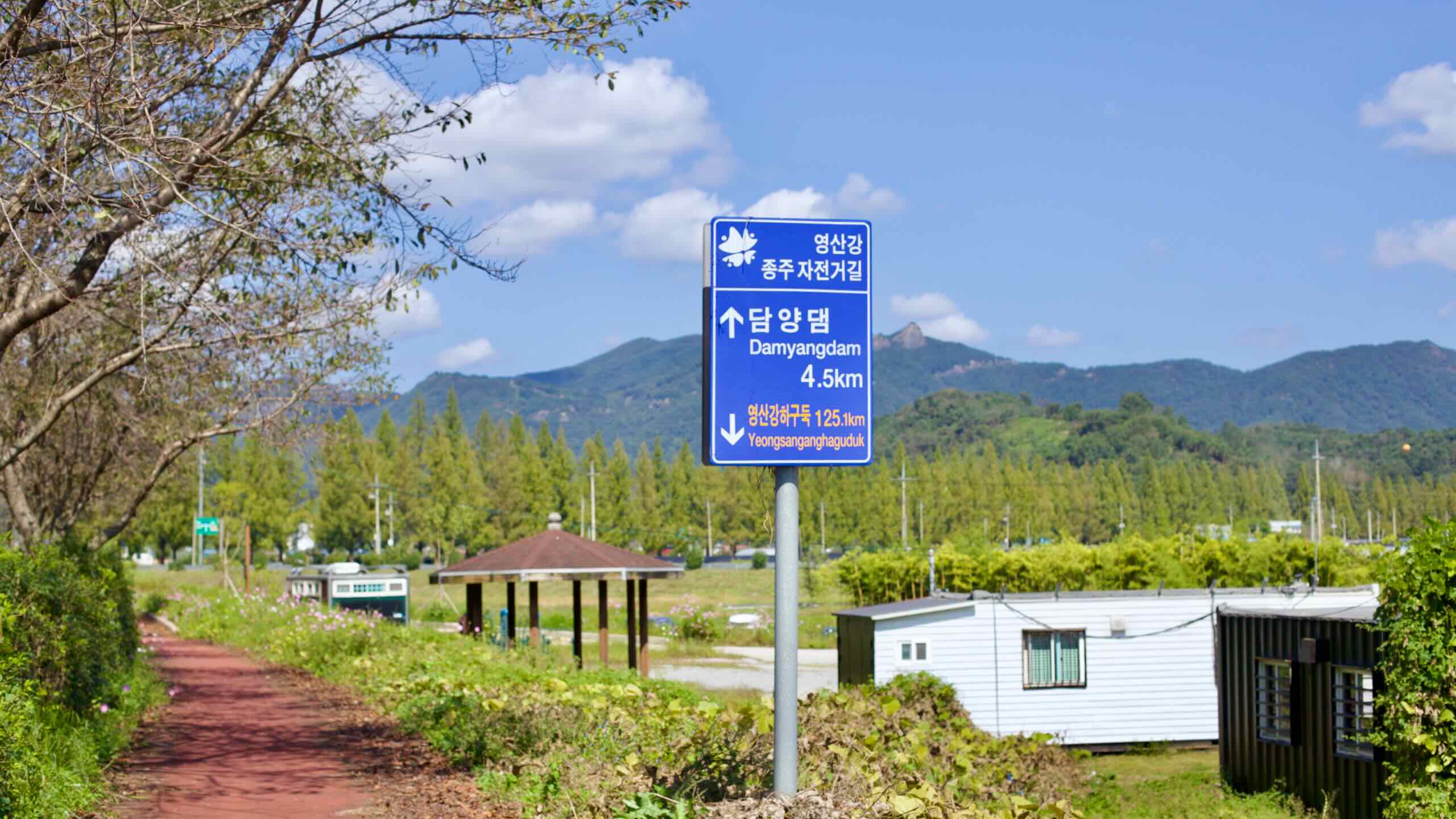
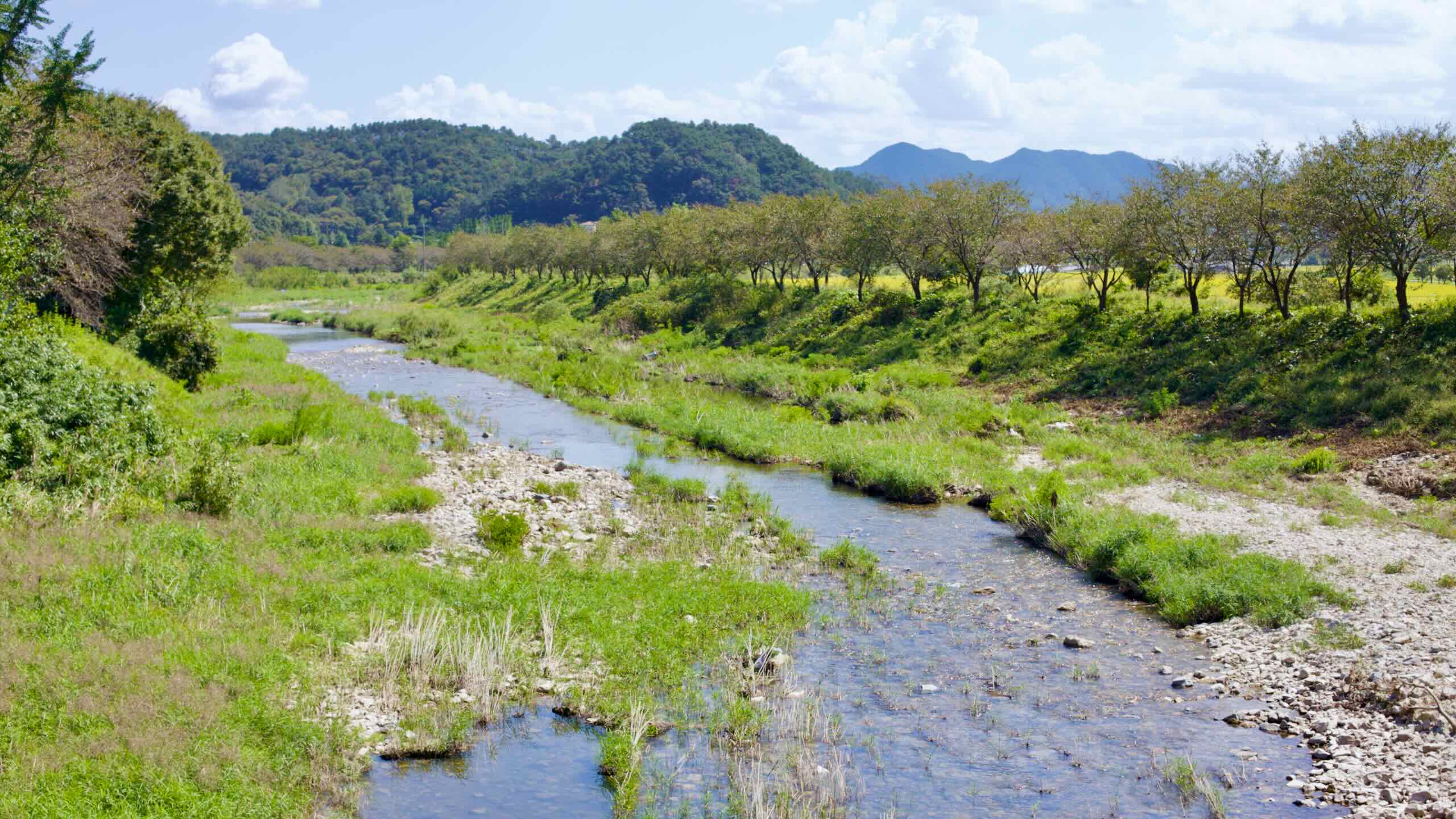
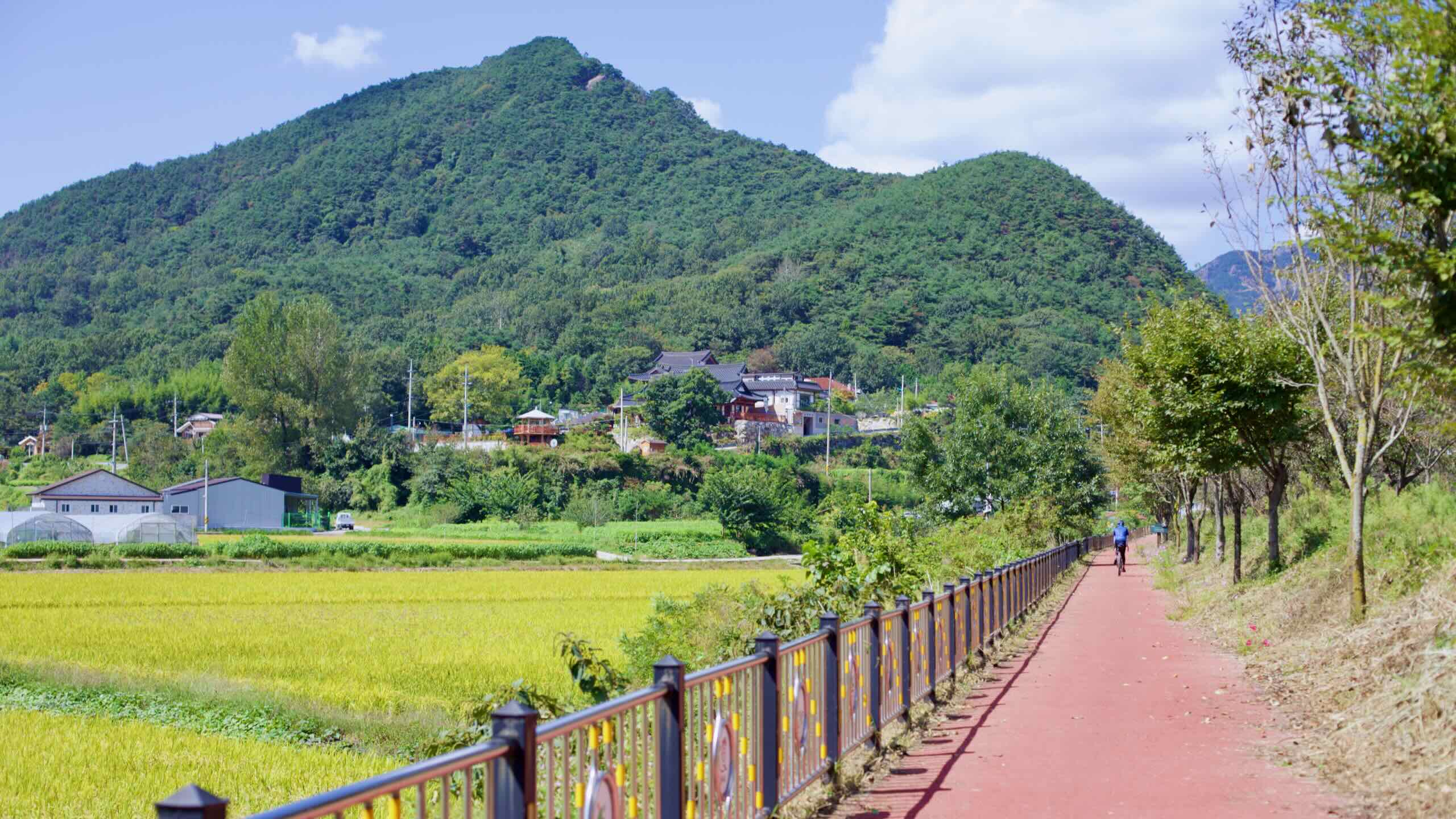
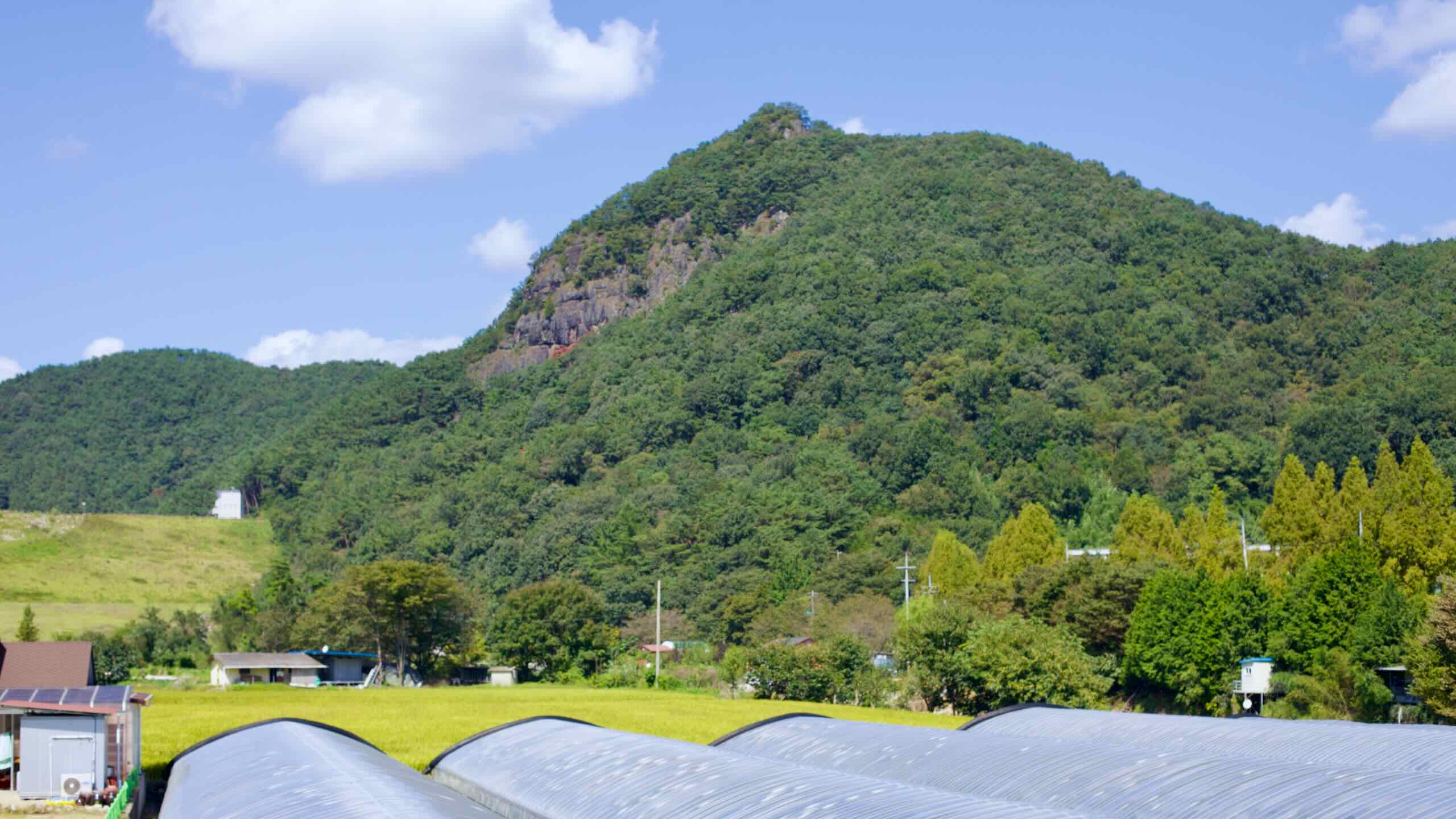
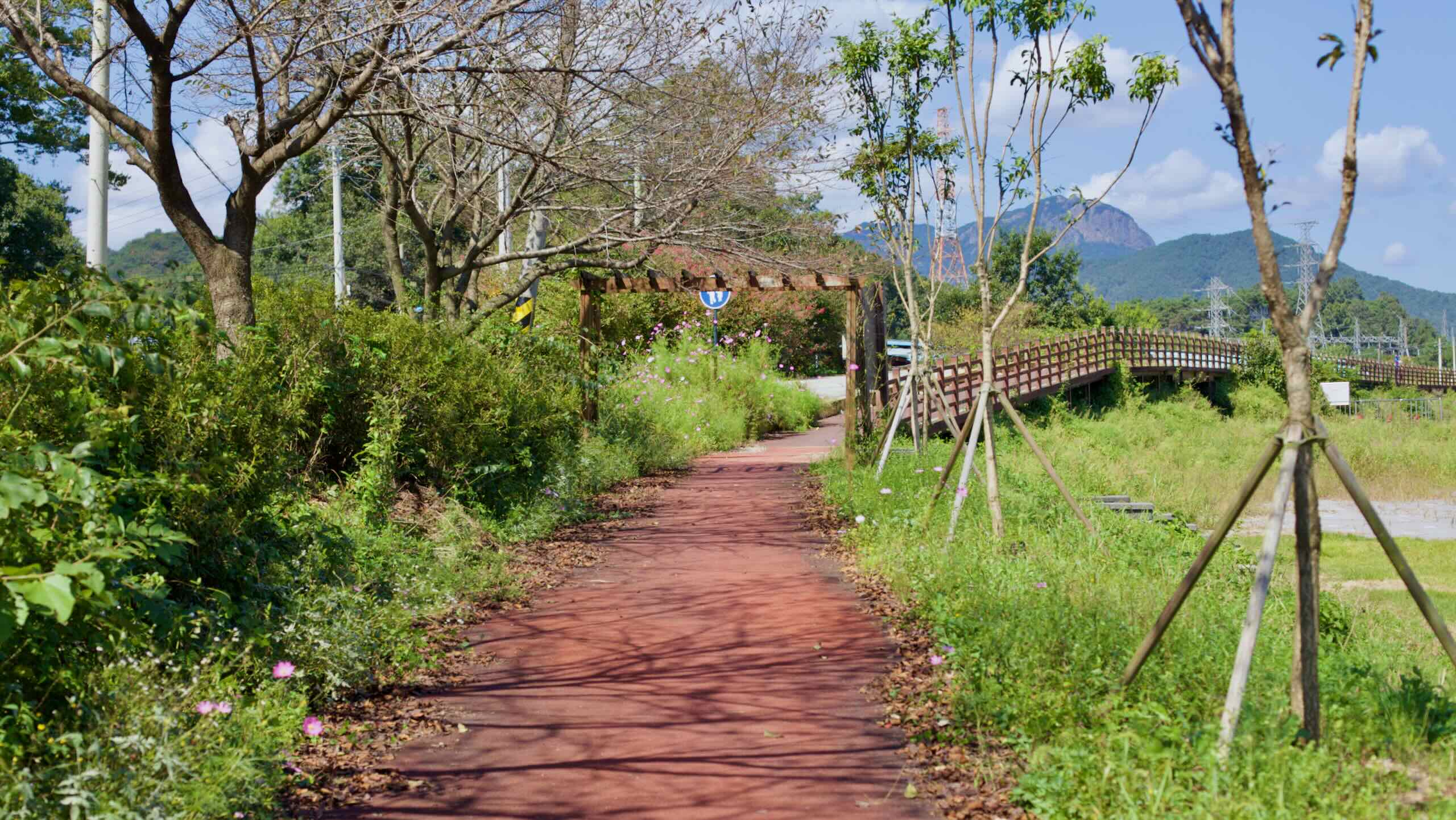
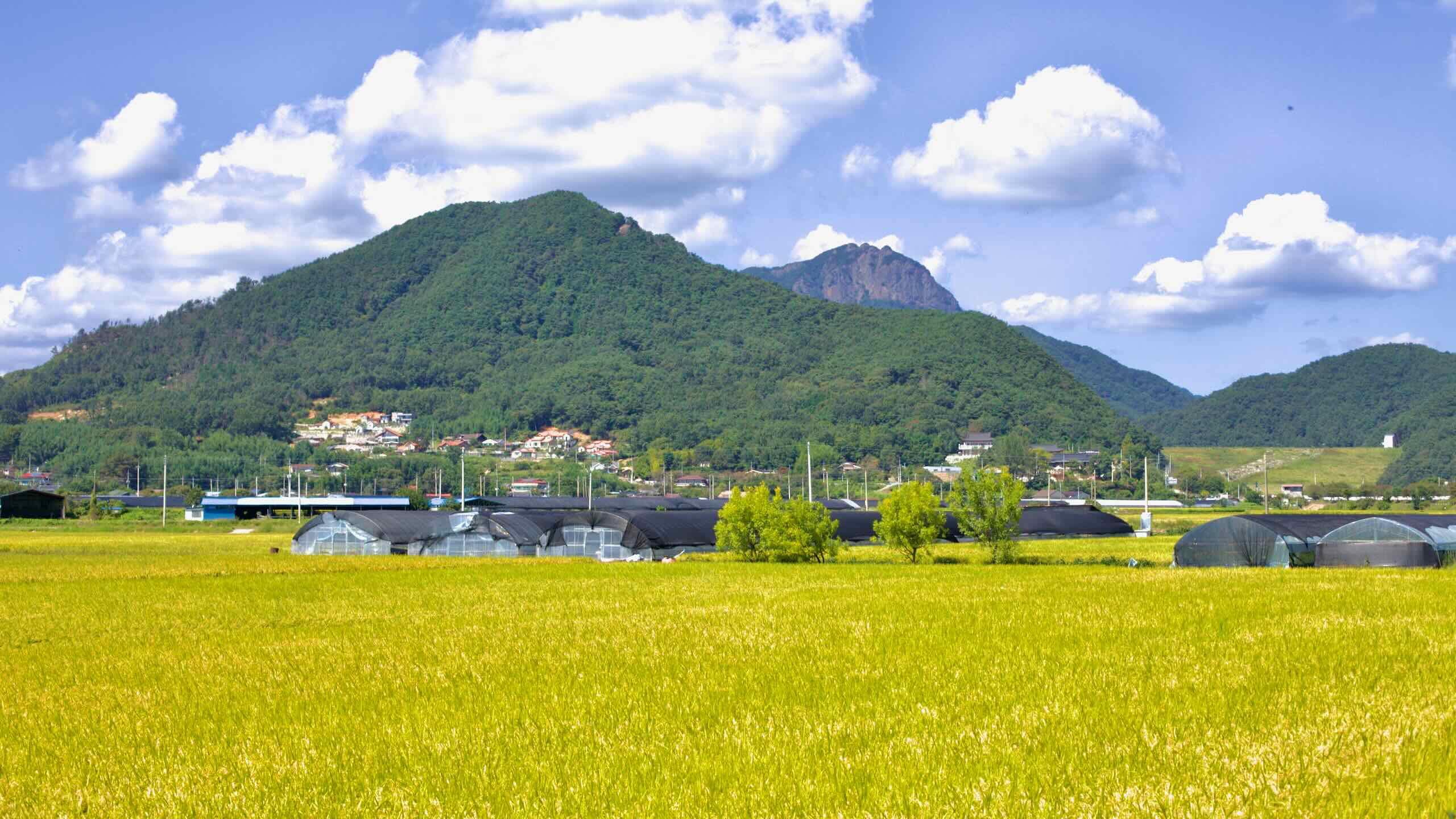
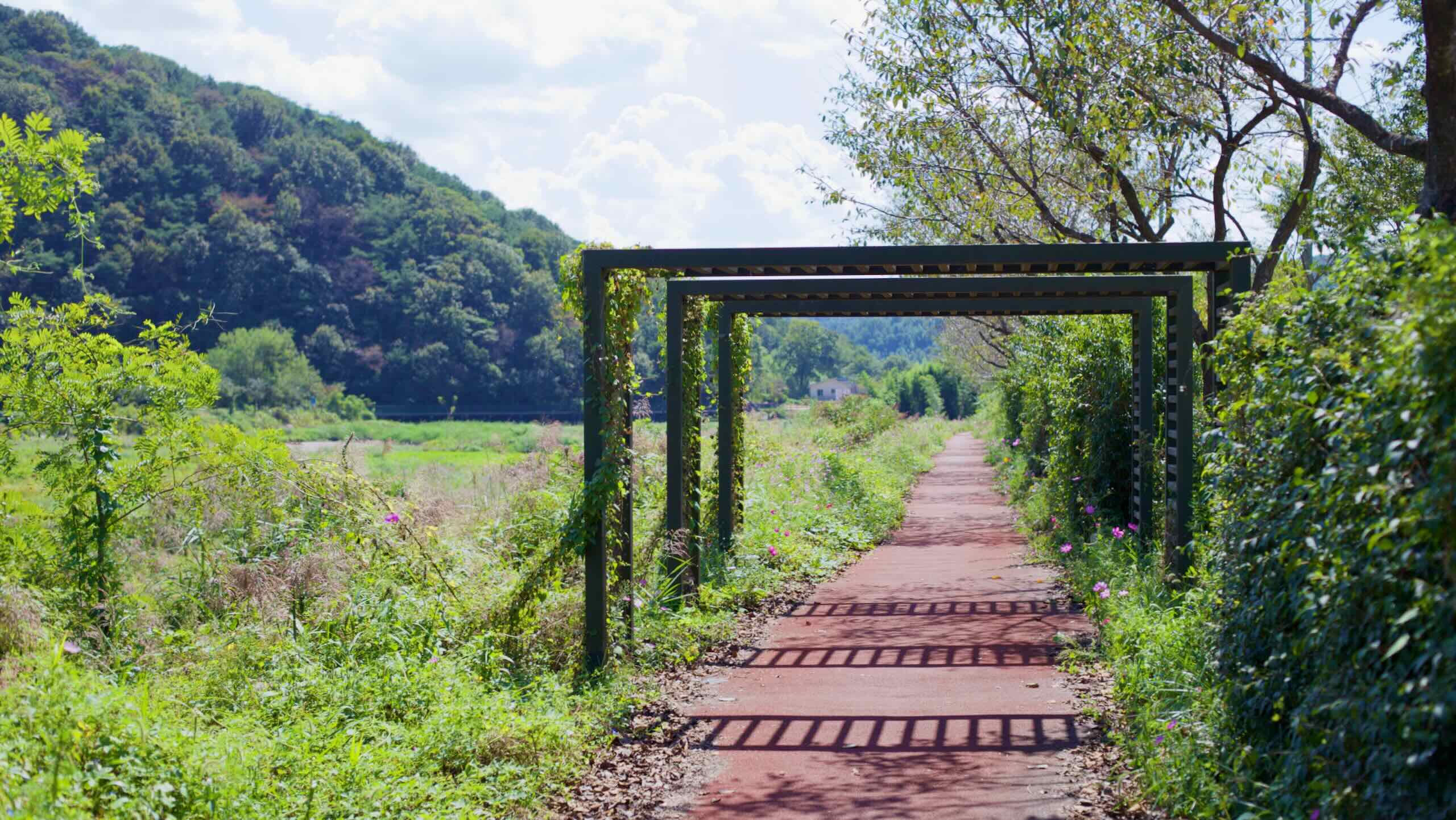
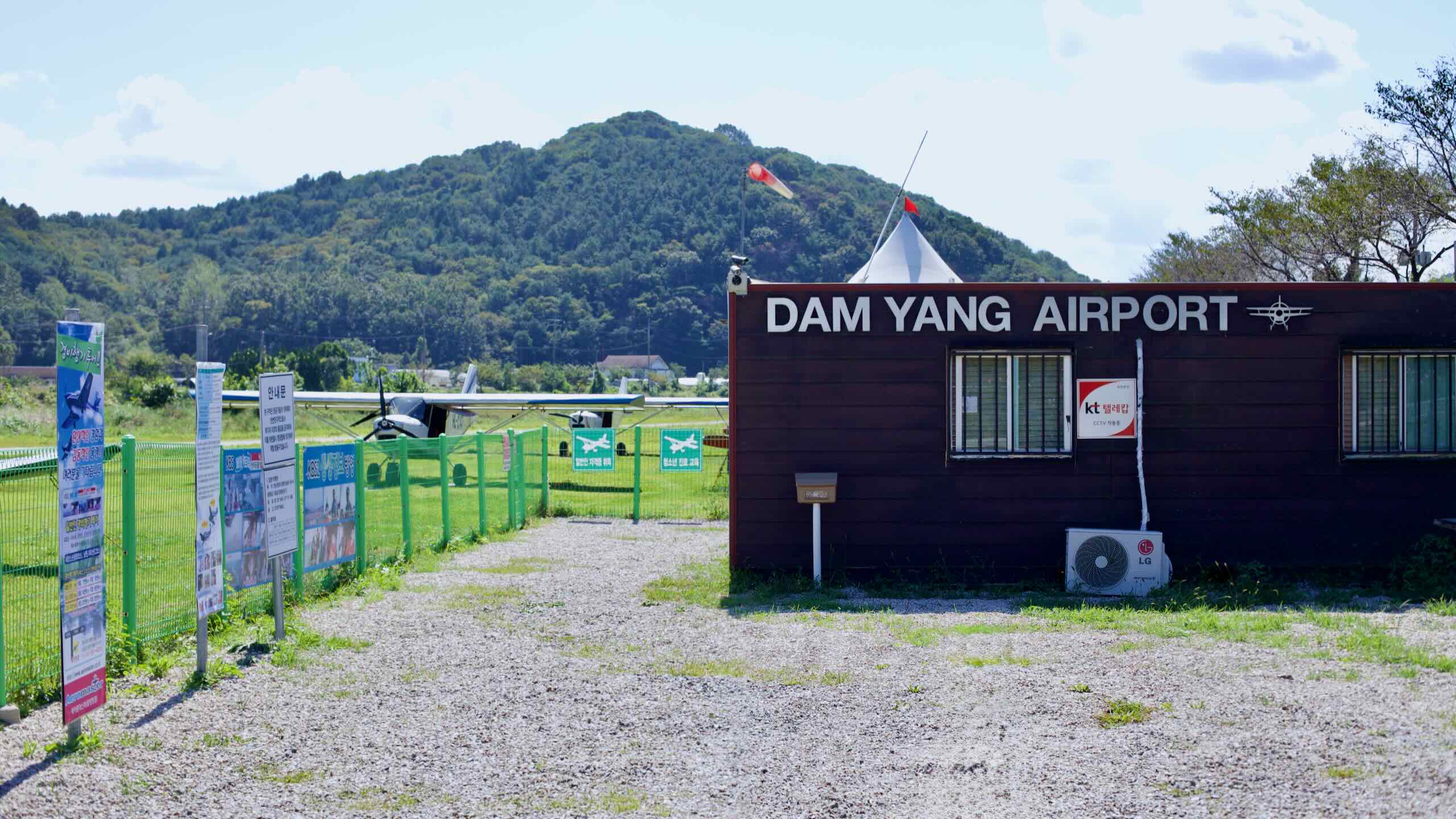
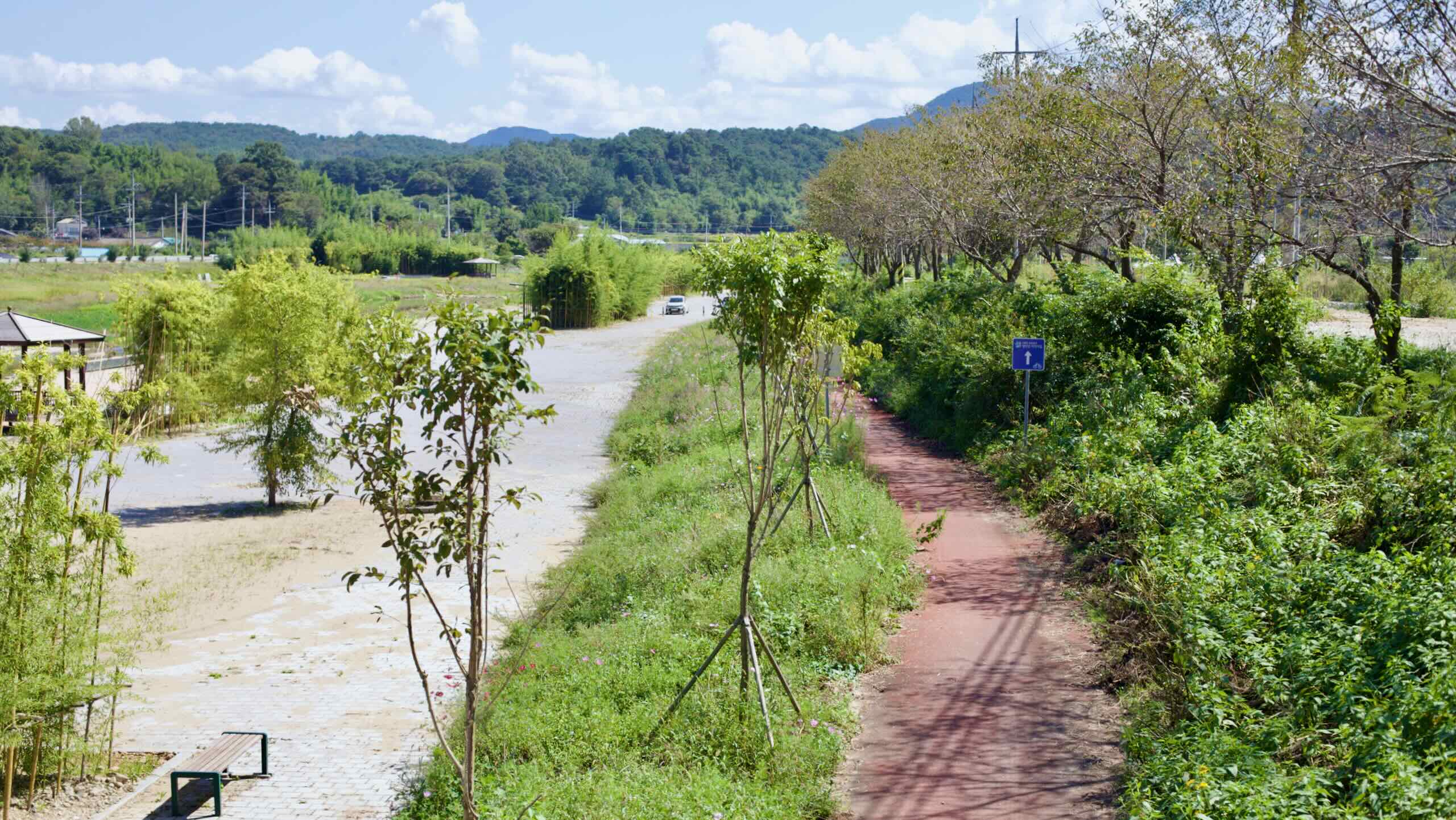
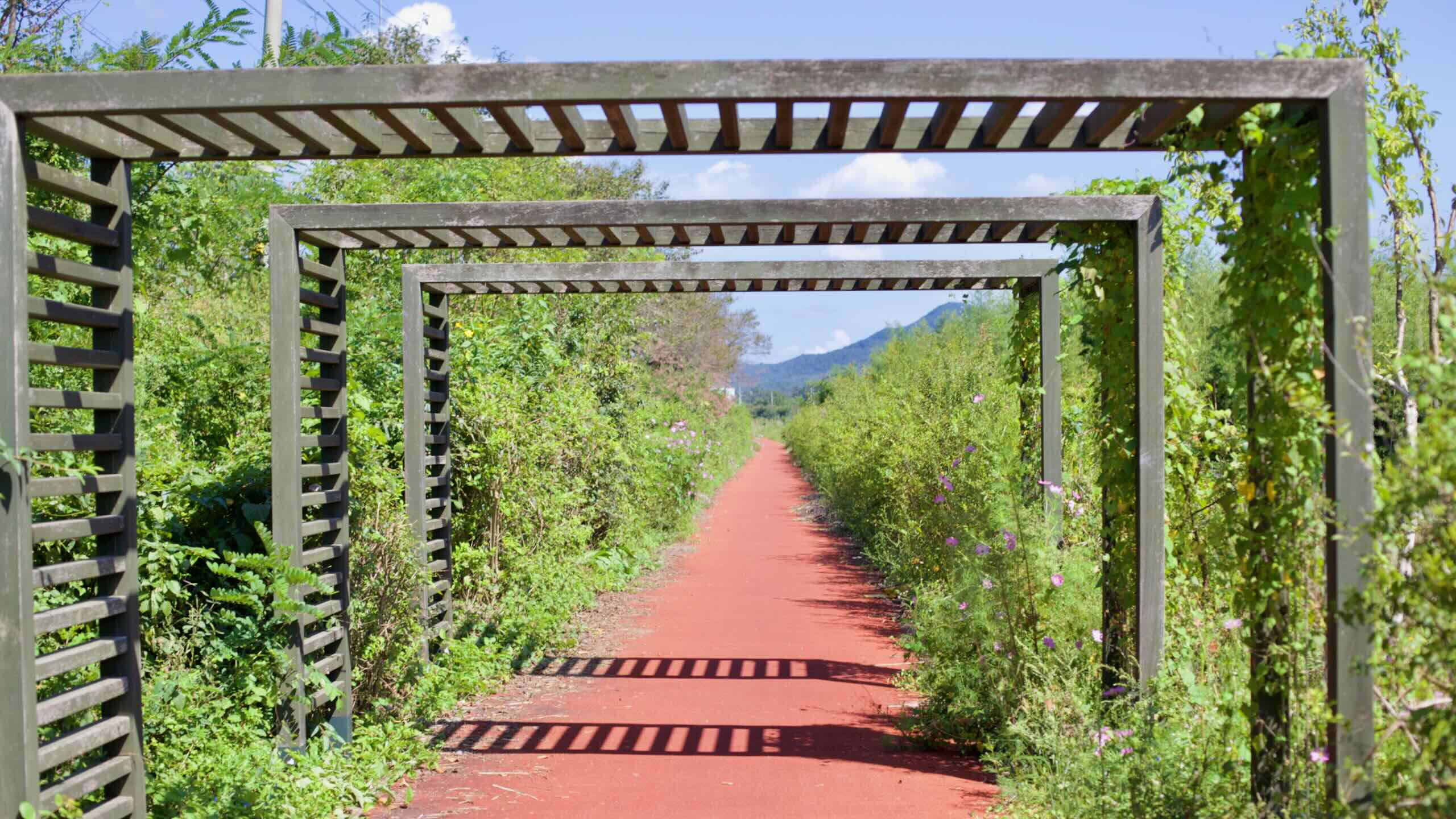
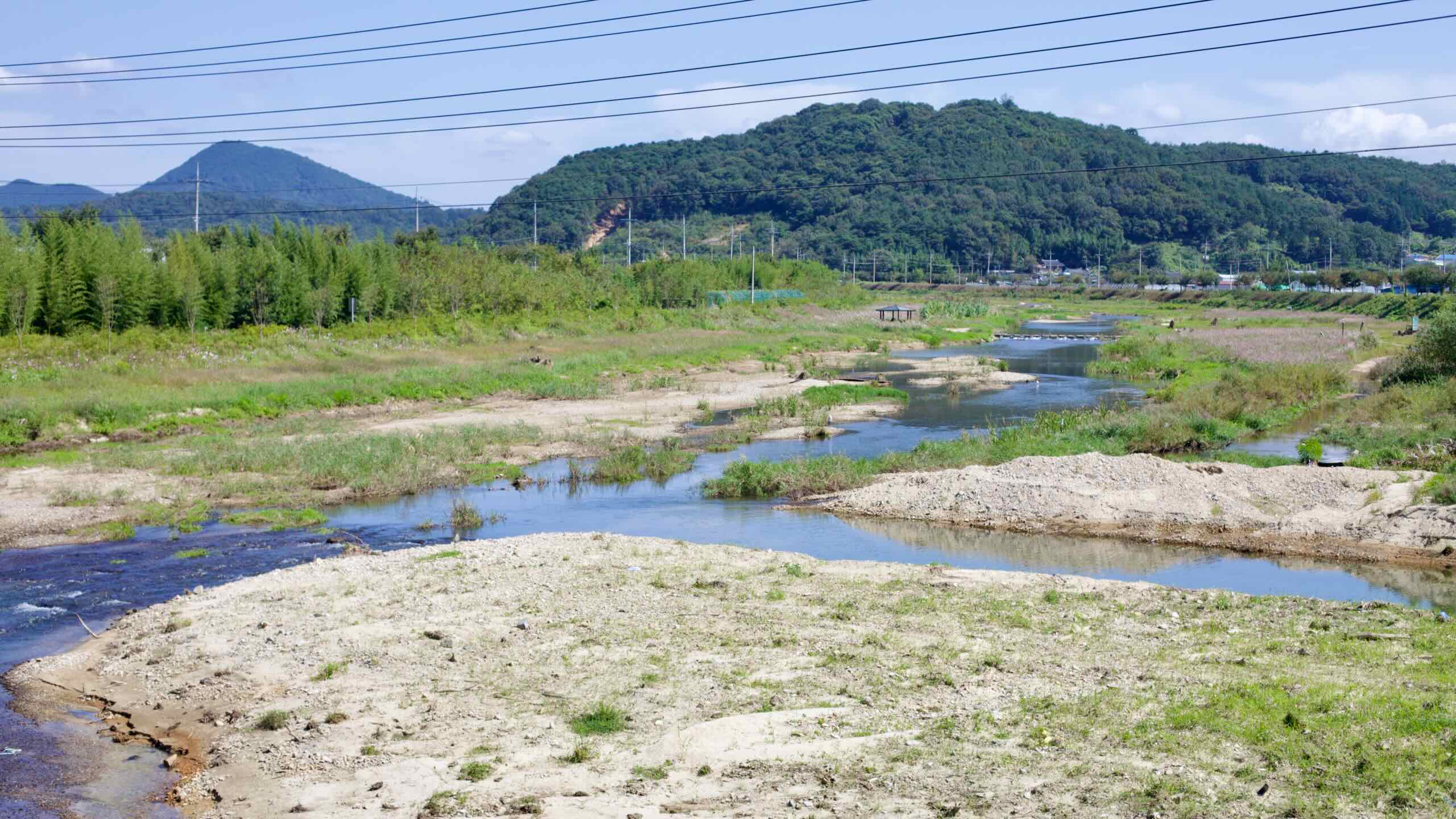
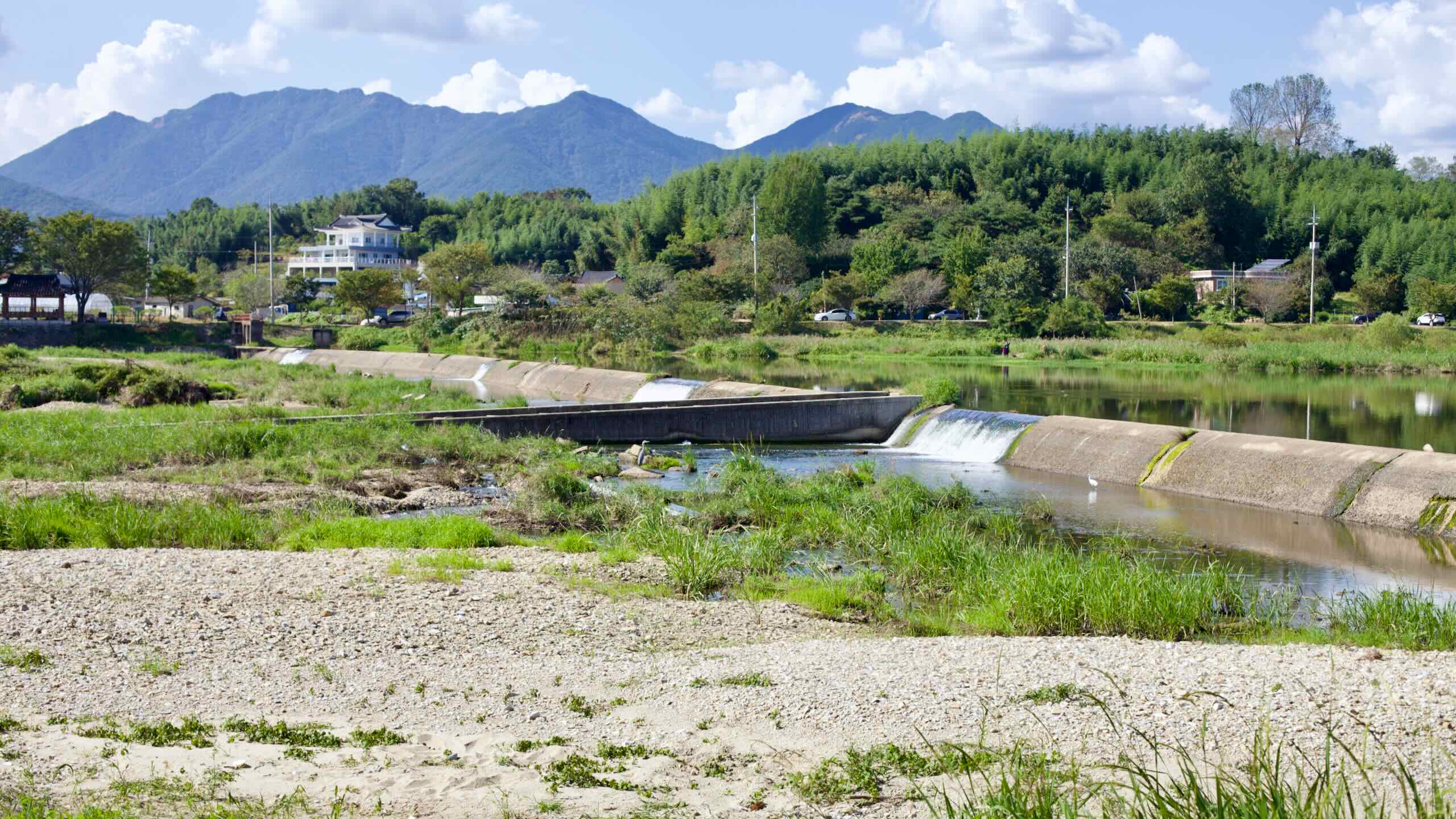
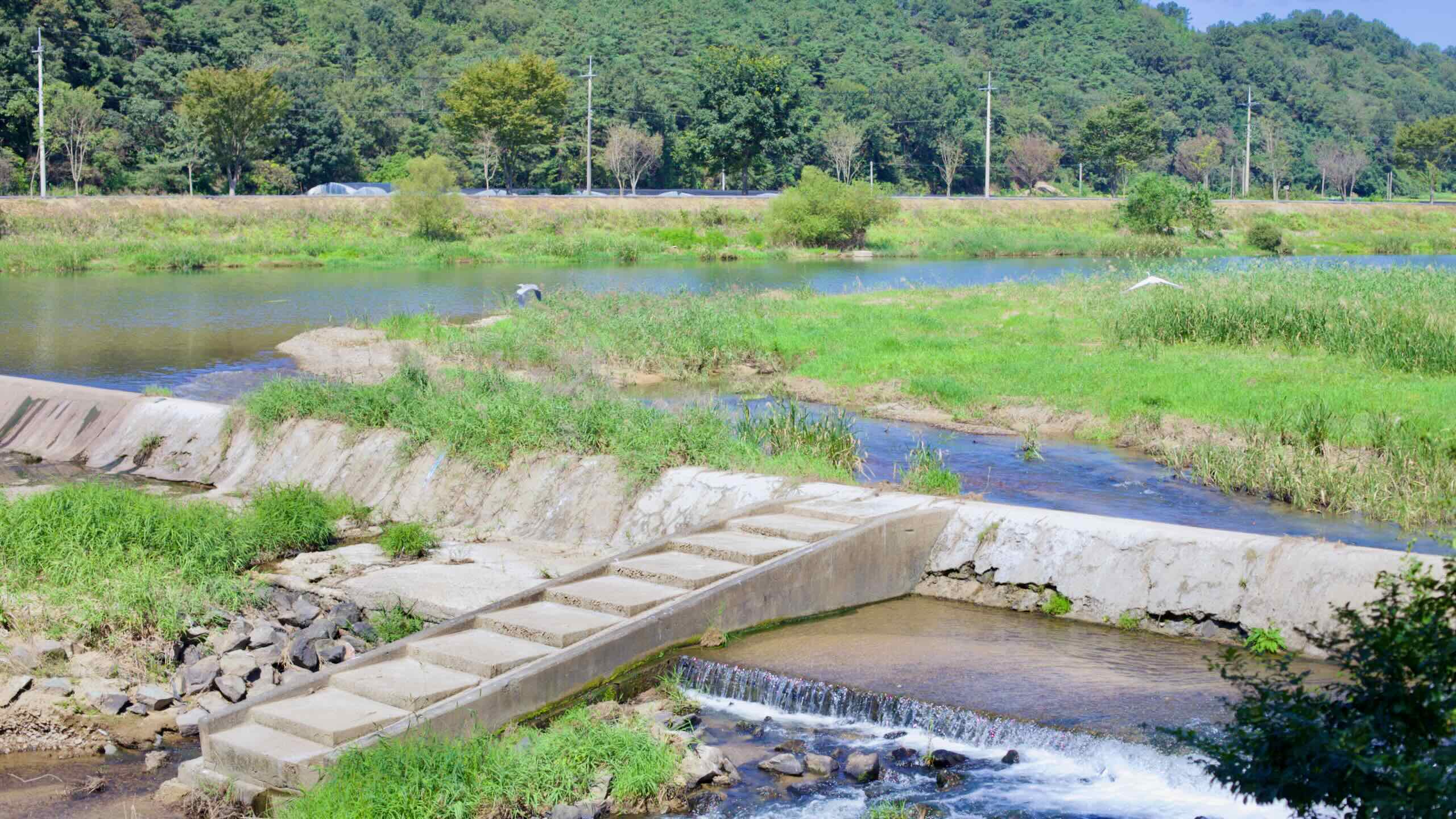
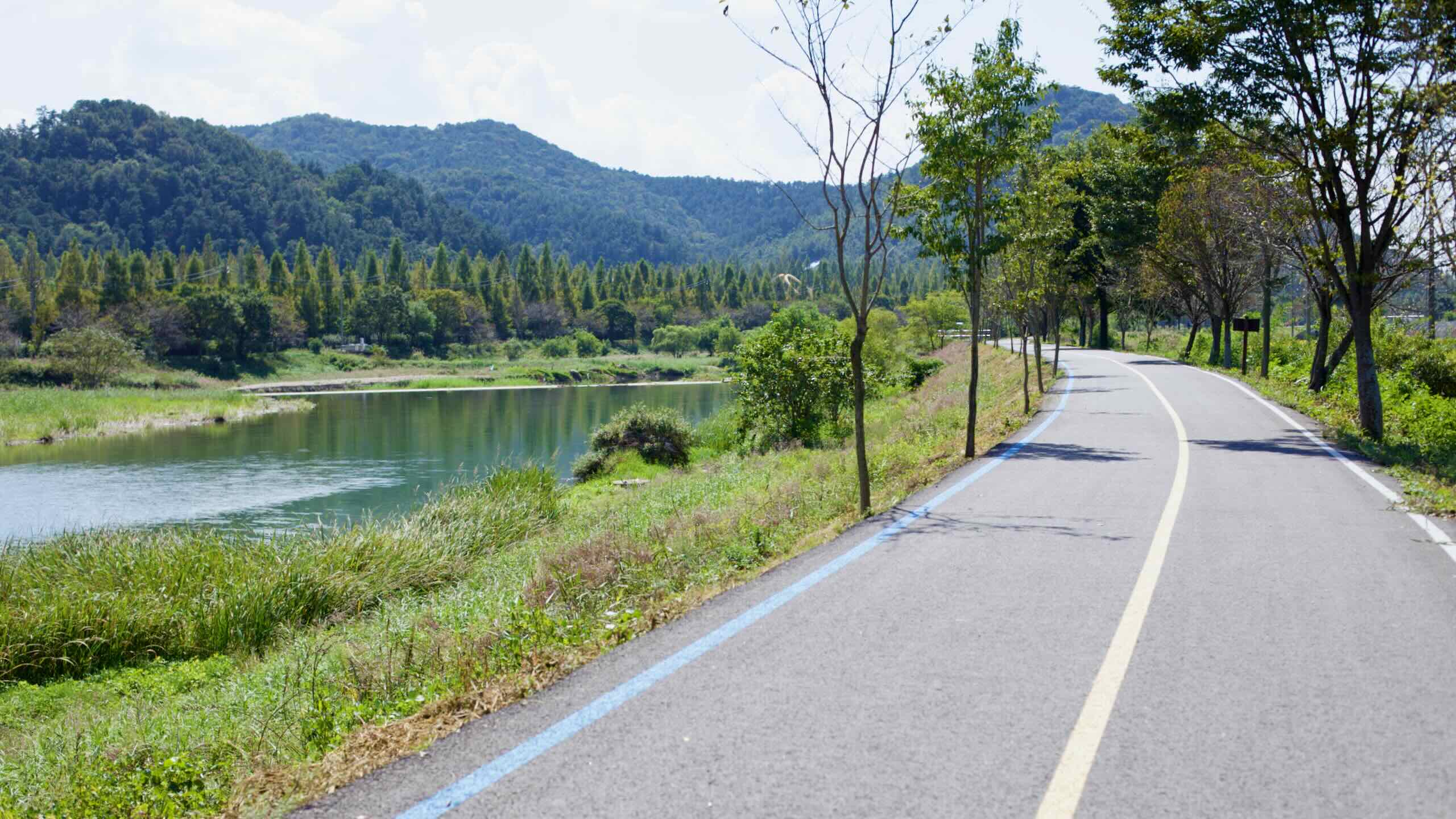
Start your Yeongsangang Bike Path journey in the upper reaches of the Yeongsan River. Roll downstream from the dam toward a cluster of sights in downtown Damyang.
Welcome to the Yeongsangang Bike Path and Damyang County. If you took my advice, you arrived via Damyang Bus Terminal (담양공용버스터미널; map). The terminal sits in the heart of downtown, close to the route. To reach the official start on the river, ride to the banks of the Yeongsan and pedal upstream.
If you also want to see the stamp’s namesake—Damyang Dam and Damyang Lake, continue an extra 900 meters and tackle a 52-meter climb (directions; 8 minutes).
(Remember: you’re riding upstream, so you’ll need to circle back after collecting your first stamp, doubling the distance.)
Damyang Dam (1973) and Damyang Lake (1976) were constructed as part of a large-scale agricultural development project. The dam now supports irrigation, flood control, and drinking water.
The dam created Damyang Lake, a reservoir ringed by forested hills and scenic trails. It’s known for calm waters, walking paths, and nearby cultural sites like Chuwol Mountain and Boriam Hermitage.
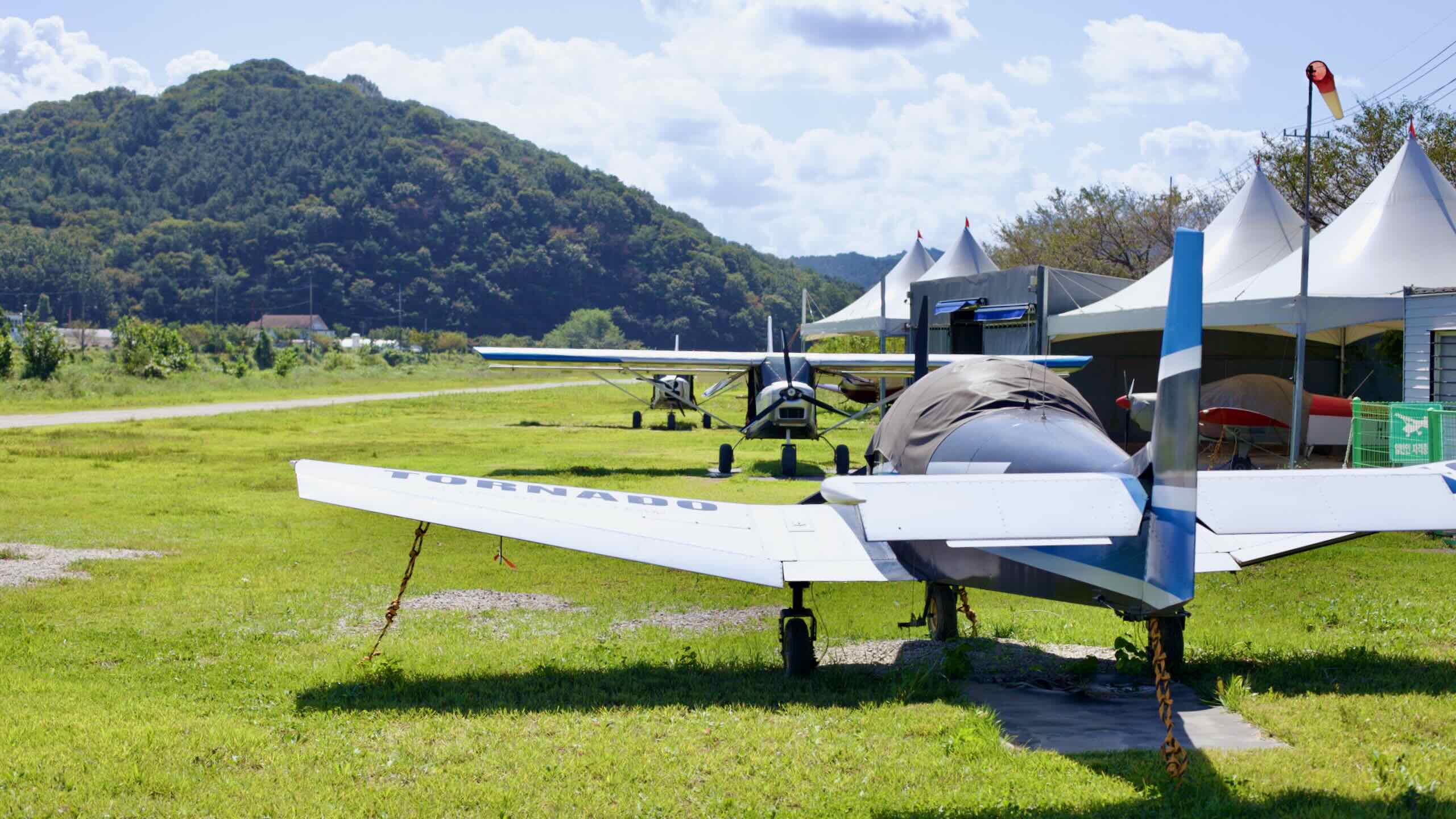
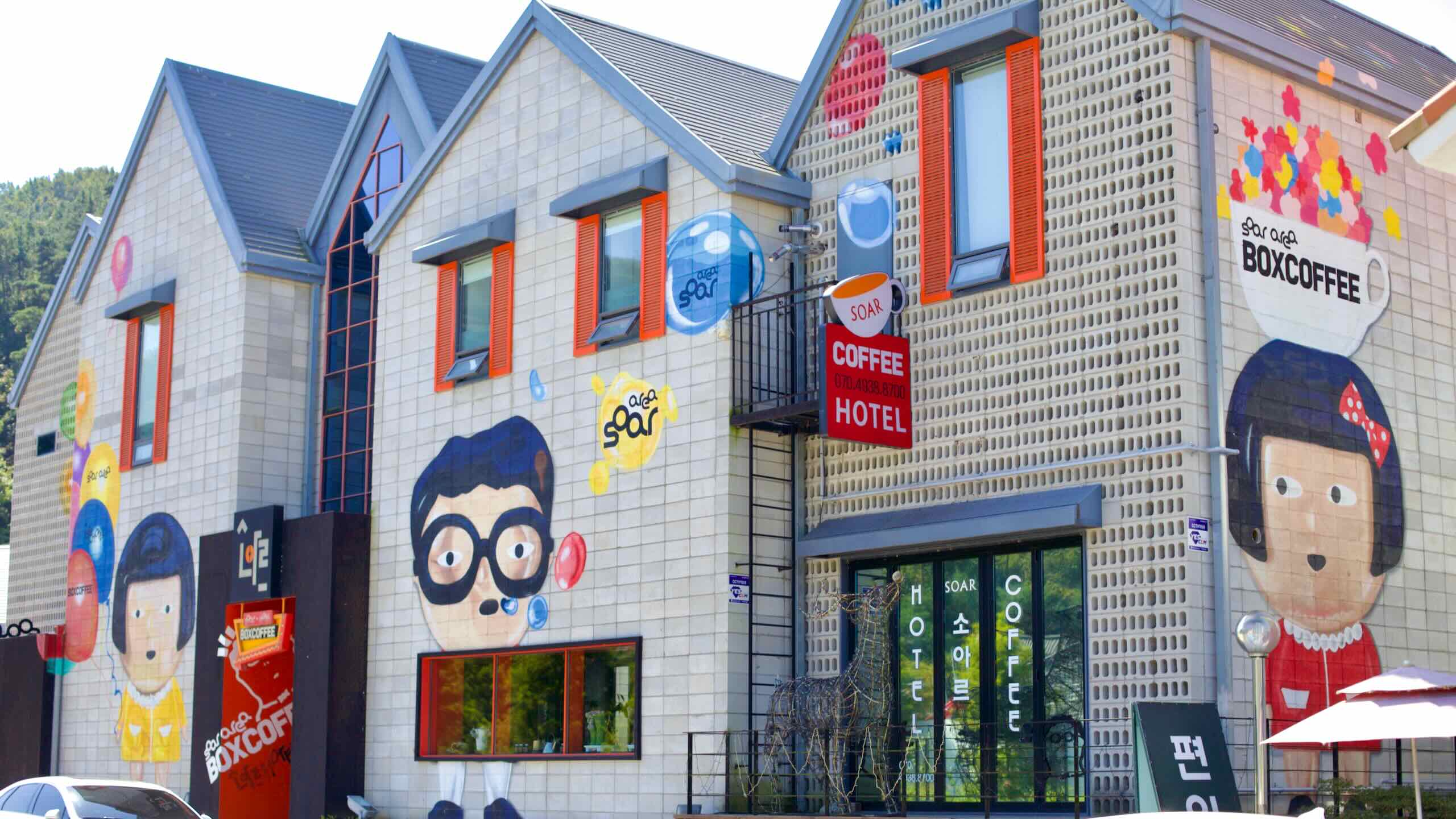
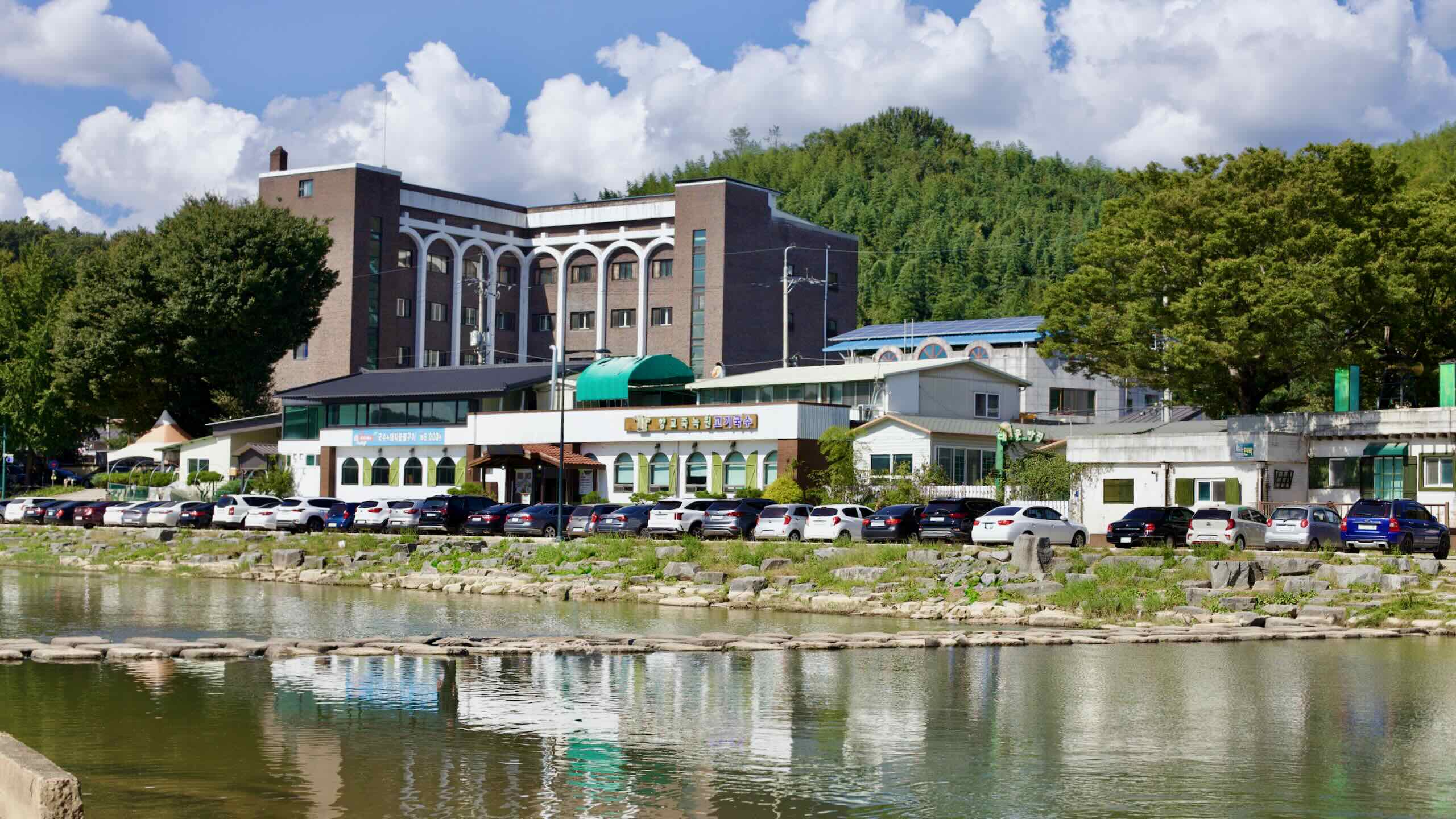
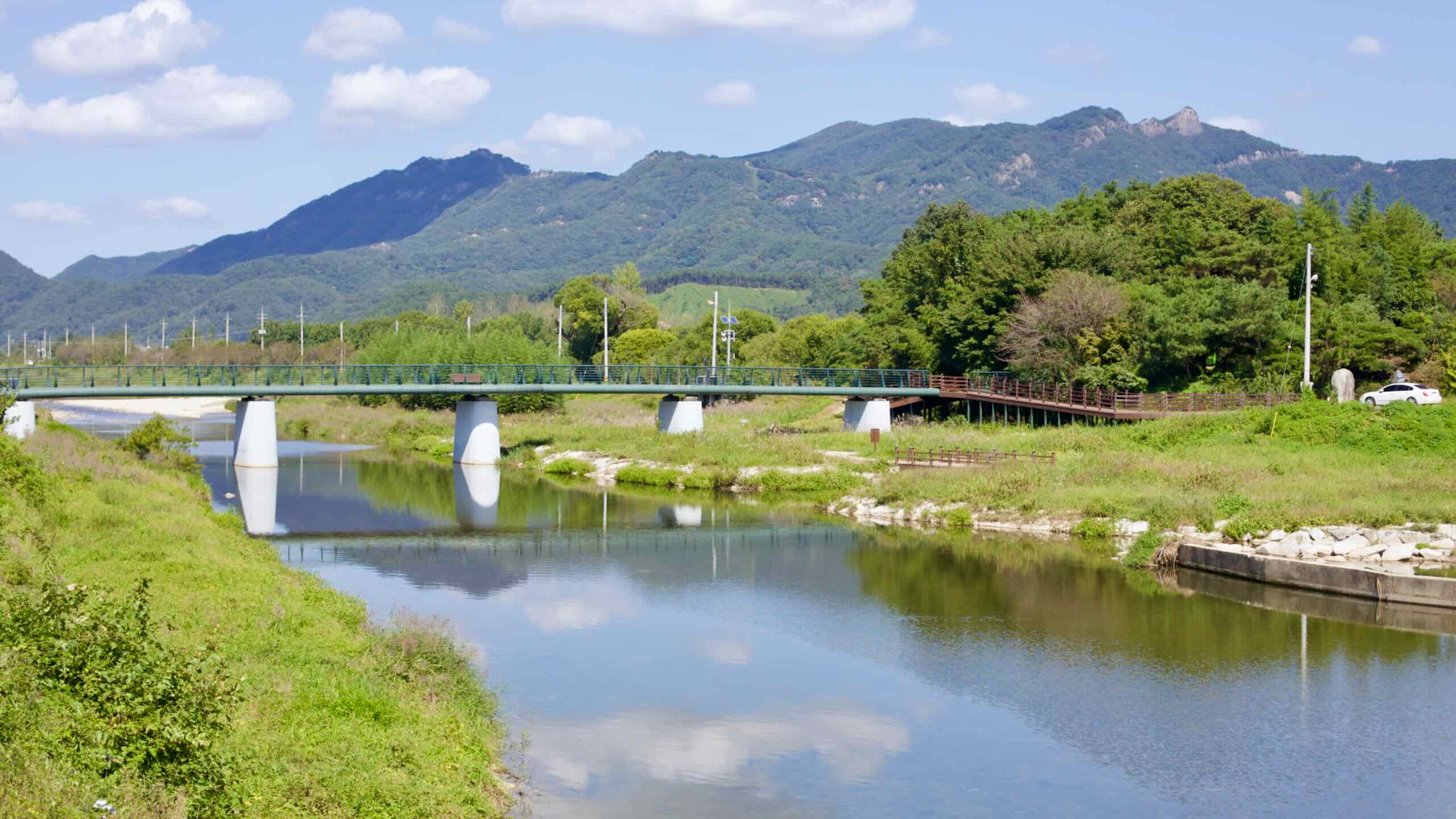
After visiting the bike path’s true start line, turn around and head back the way you came. Pass camping areas and hotel accommodations lining the opposite riverbank (map). Then cruise beneath the peaks of Chuwol and Gangcheon Mountains.
Gangcheon Mountain contains Gangcheon Mountain County Park (강천산군립공원; map). Established in 1981, it’s recognized as Korea’s first county park. Trails wind through a narrow gorge with clear streams and landmarks like Gujanggun Falls, Byeongpung Falls, Gangcheonsa Temple (강천사; map), and a 75-meter-long red suspension “Cloud Bridge.”
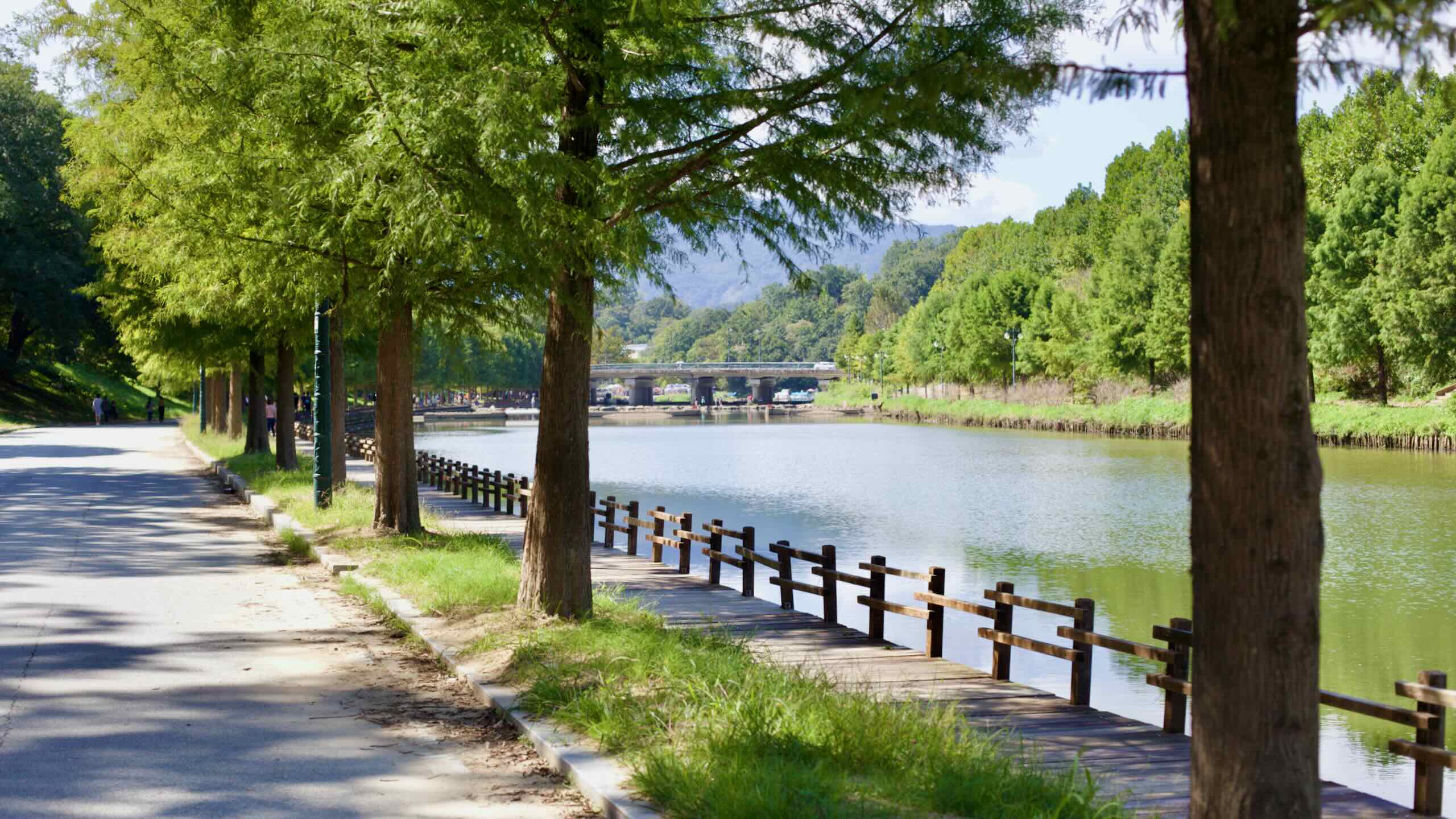
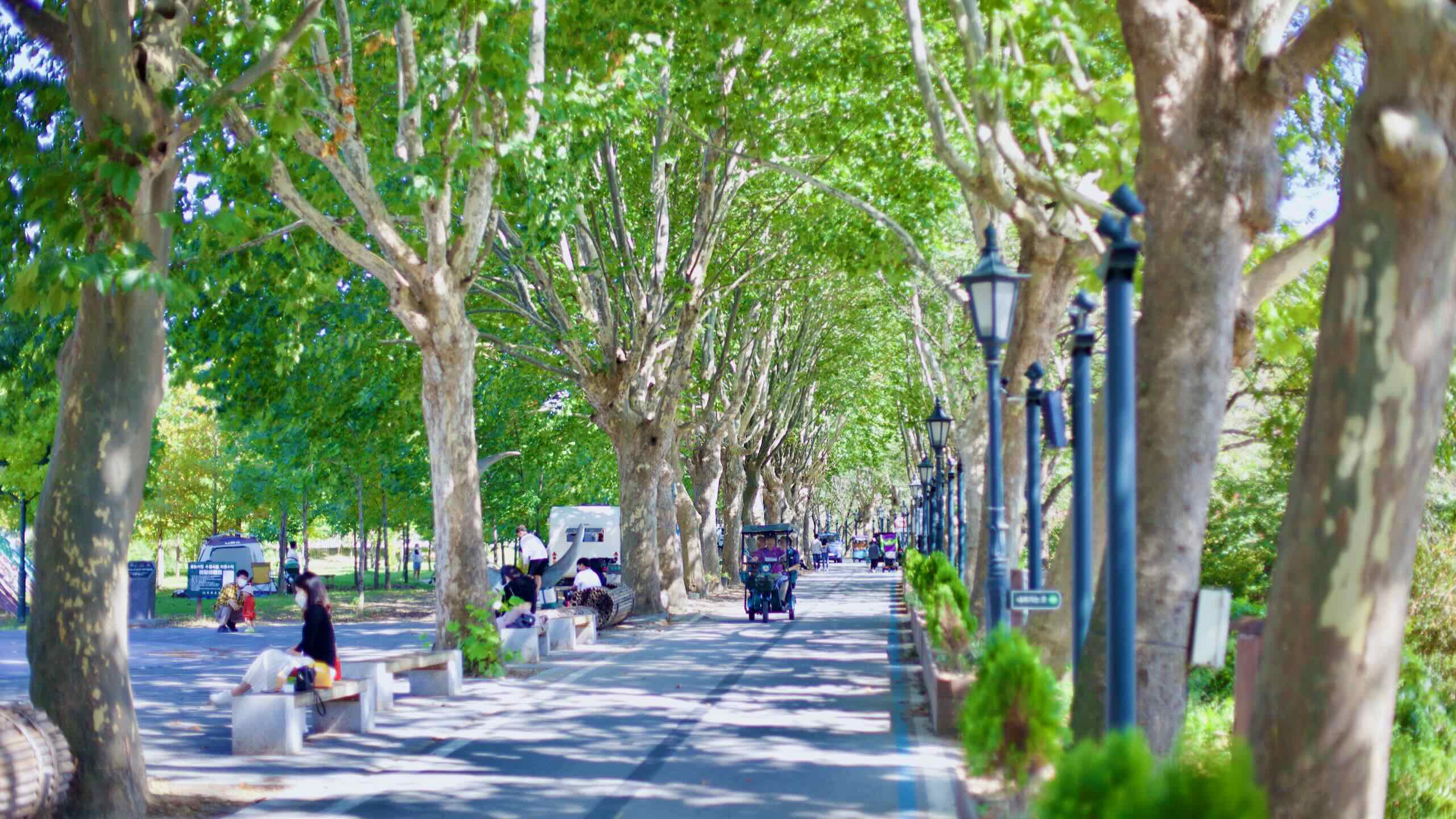
Metasequoia Road? Where are the towering trees? Veer slightly off the bike path and cross Geumweol Bridge to land on the northeastern end of Metasequoia Road (road view), your second highlight on this section.
Metasequoia Road is a walking area in Damyang County, South Jeolla Province. Planted in the 1970s during a national roadside beautification project, the dirt walking road now stretches over 8 kilometers, its metasequoias forming a seasonal canopy.
Beyond its looks, the road gained cultural significance from the hit K-drama Winter Sonata (2002). Today it’s both a scenic spot and a symbol of Damyang’s effort to preserve and enhance its natural landscape.
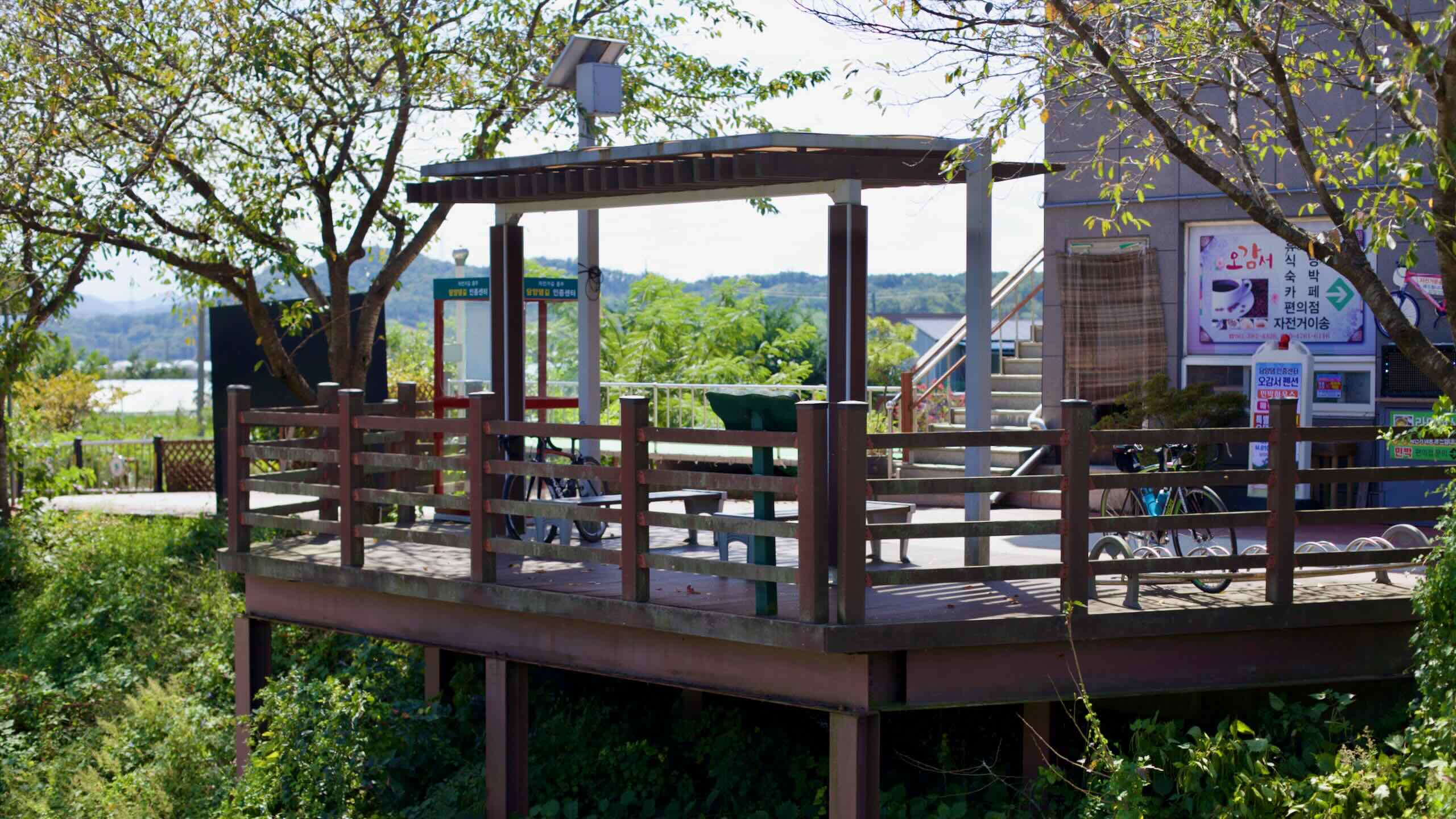
Pick up the bike path again from the Metasequoia Road Certification Center and head downstream toward downtown Damyang. After passing a few riverside greenhouses, reach Hakdong Bridge (map) in about two kilometers.
If you’re up for a quick detour, cross the bridge to find:
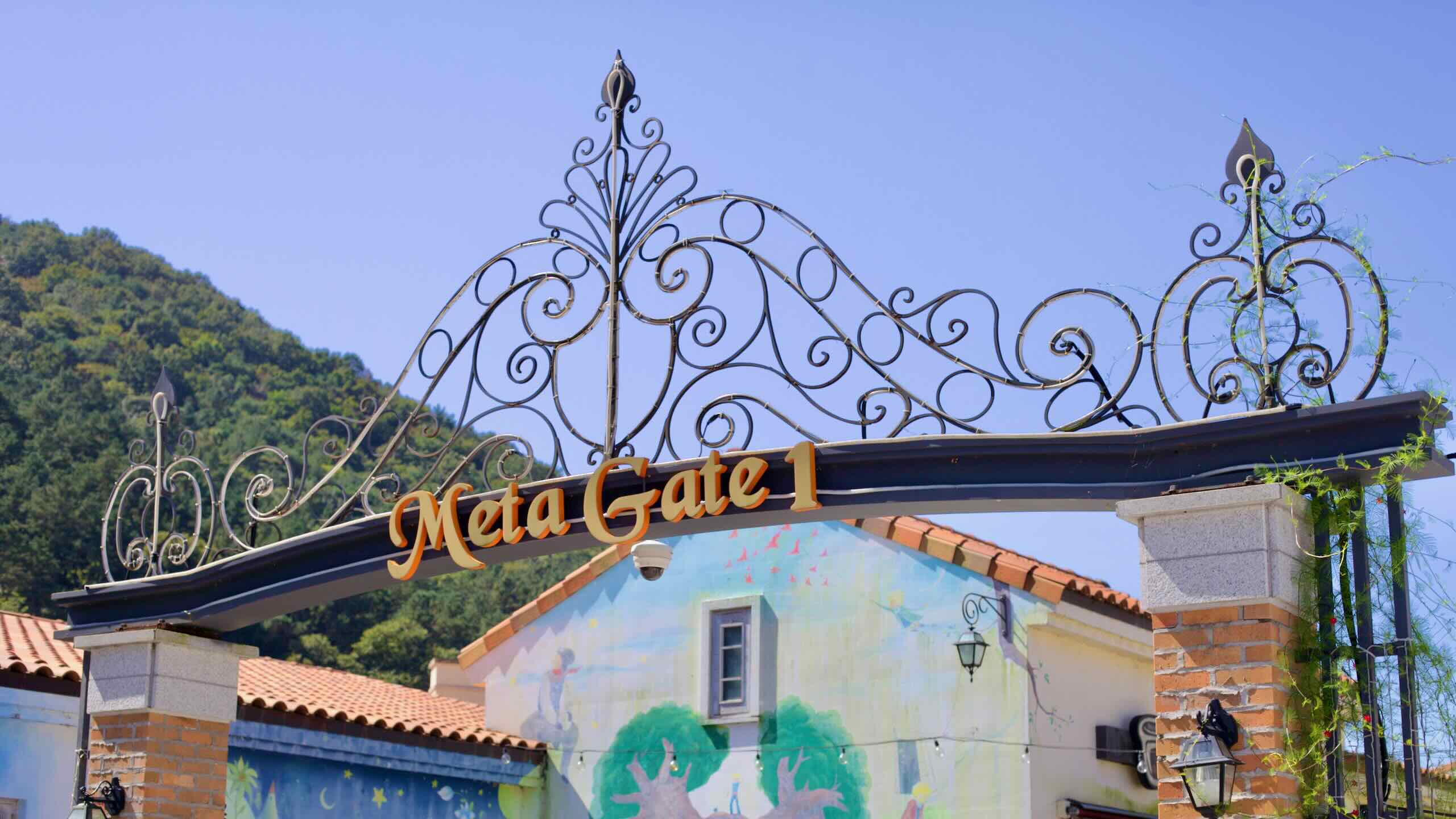
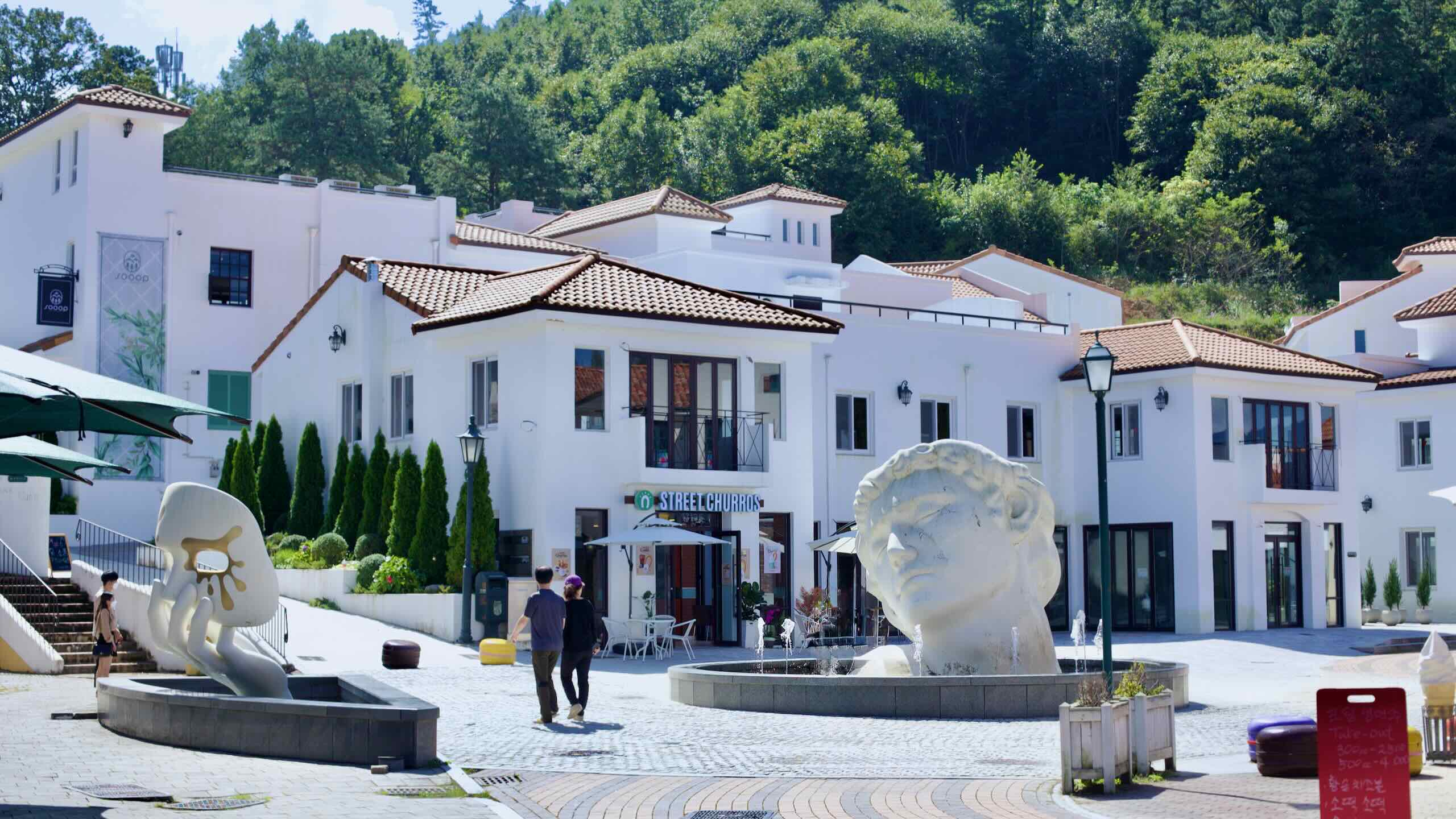
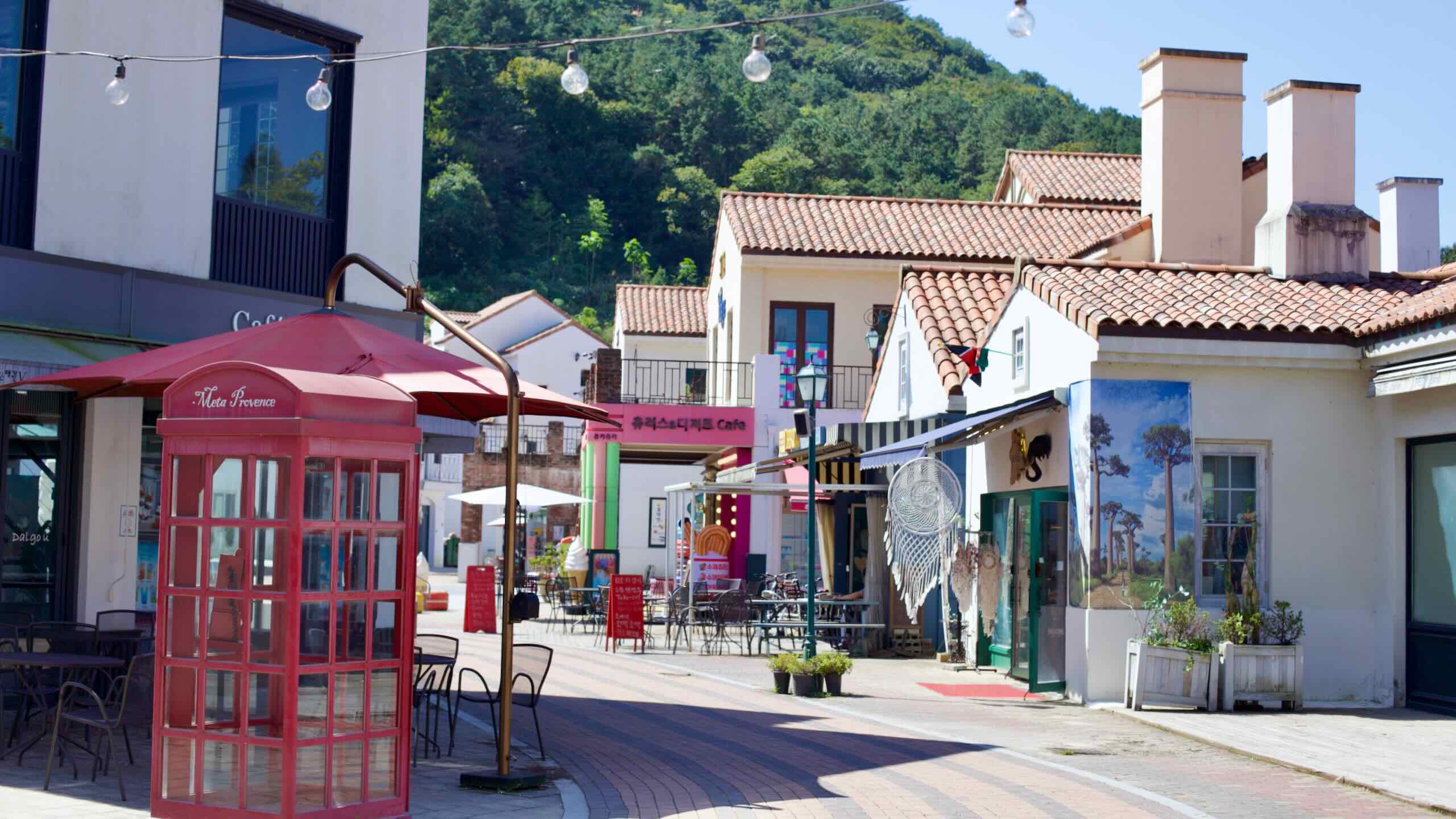
A European-inspired tourist complex, Meta Provence (메타프로방스; map).
Meta Provence takes cues from France’s Provence region. The village features pastel-colored buildings, cafés (map), eateries (map), fashion boutiques, and accommodations (map) in a European architectural style.
Head back over Hakdong Bridge and continue along the north bank of the upper Yeongsan River.
As you enter downtown Damyang, let’s take a closer look at Damyang County (담양군; map). Located at the northern tip of South Jeolla Province, Damyang is best known for its bamboo culture, river landscapes, and Samjinae Village—once recognized as one of Korea’s “Slow Cities,” offering a glimpse of the country’s pastoral past.
Local specialties include bamboo crafts and tteokgalbi (grilled minced rib patties), a dish strongly associated with Damyang.
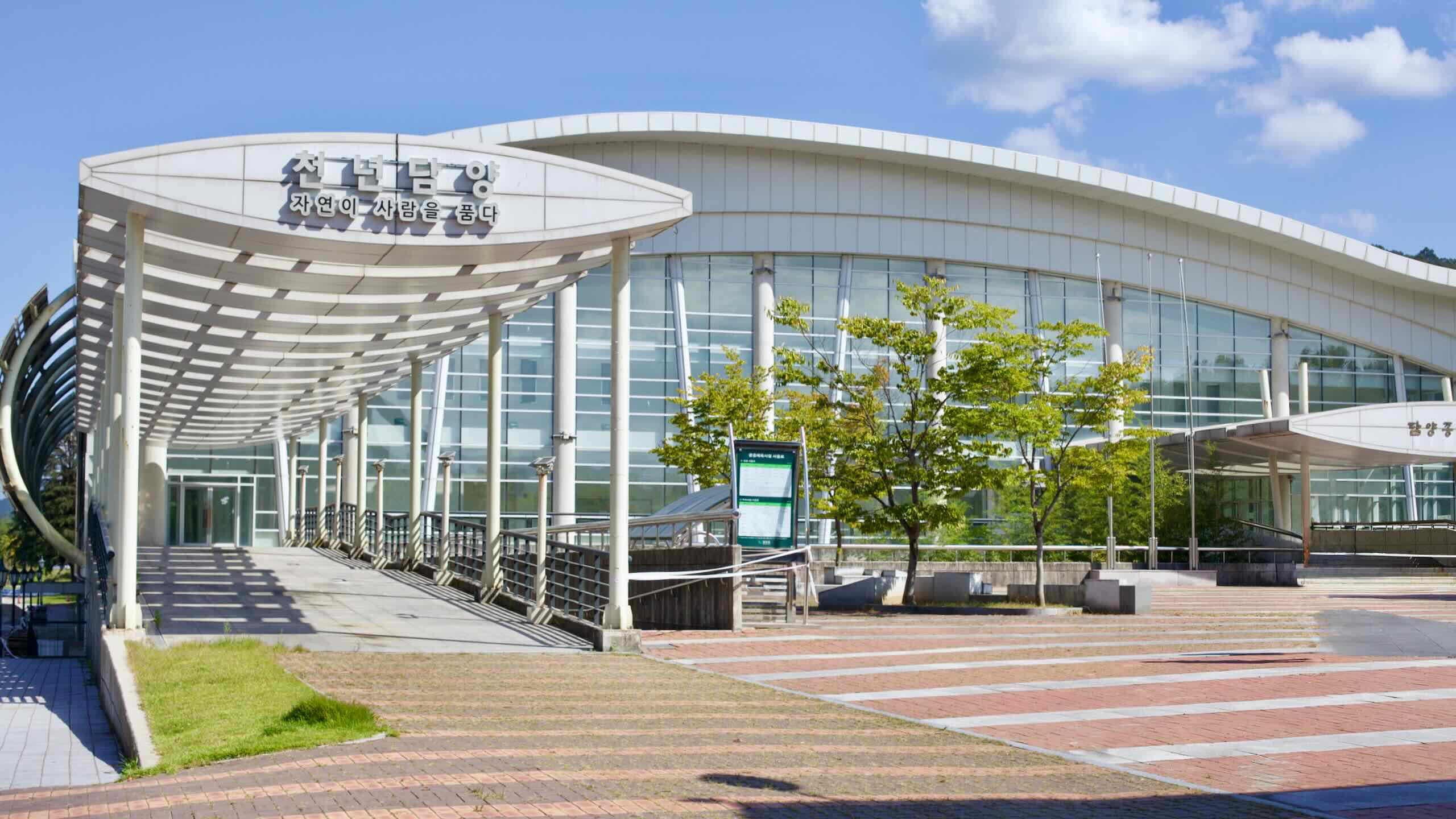
Damyang General Gymnasium
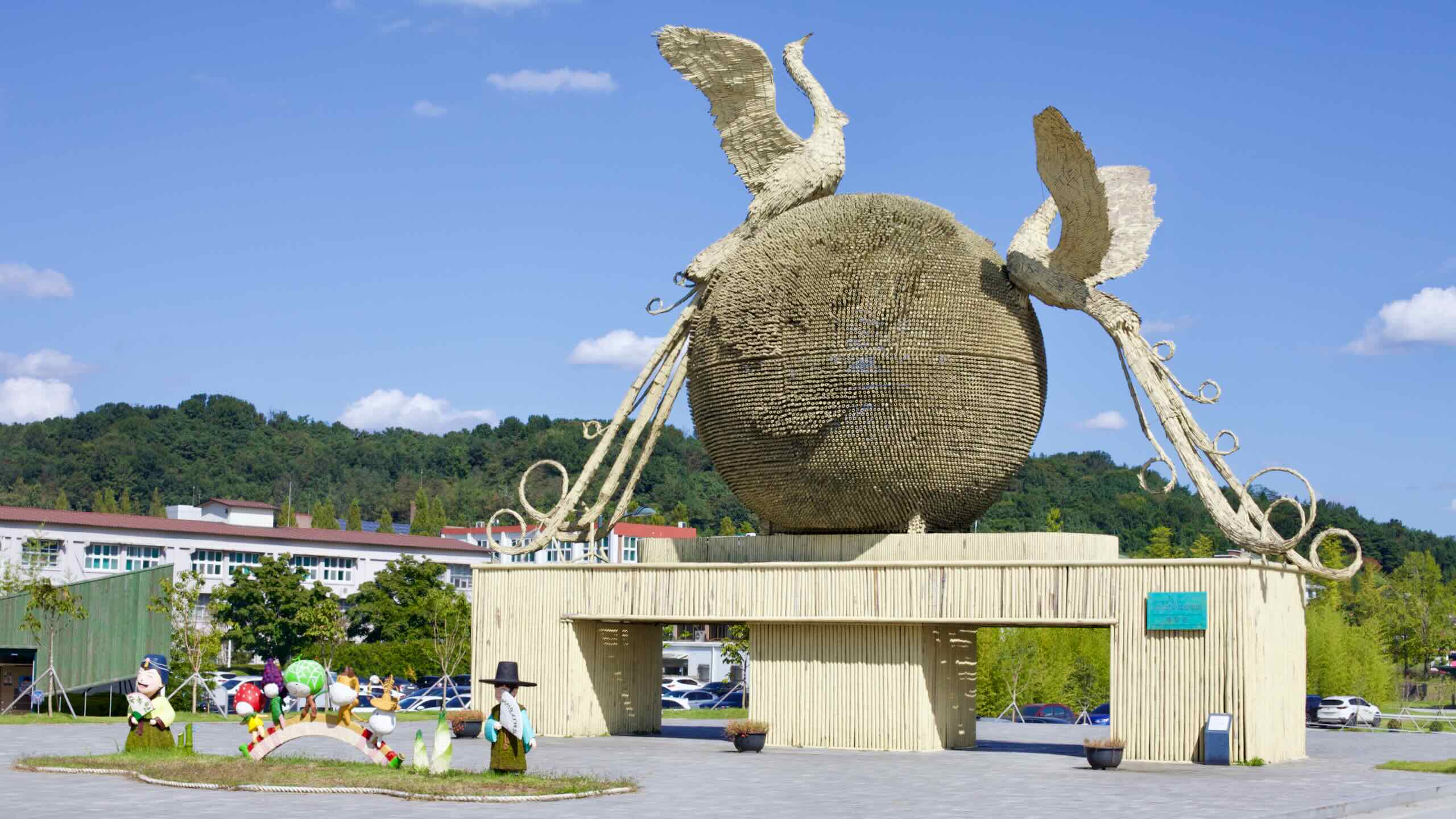
As you enter the busier stretch, you’ll see a large riverside recreation park and outdoor concert venue across the river (담빛야외음악공원; map). On your side, a modern building with sculptures at the entrance marks Damyang General Gymnasium (담양종합체육관; map), which houses pools, rec courts, and more.
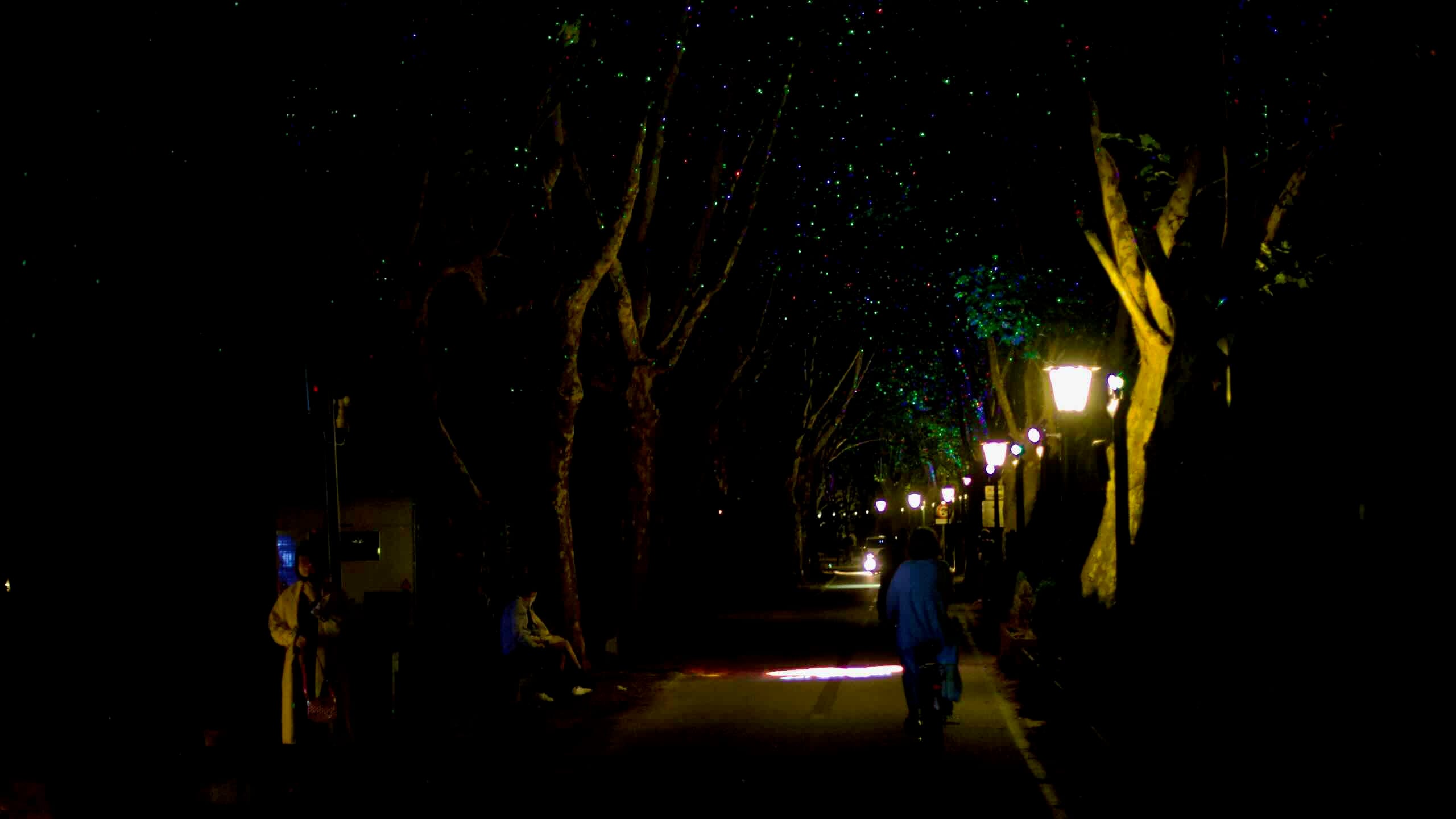
Ride past the gym through a beautiful tree-lined section that glows with light installations at night. Just beyond a small-fountain courtyard, you’ll reach the large Hyanggyo Bridge (향교교; map) on Juknokwon Road (죽녹원로; map). Now you have two options:
If you’re up for the detour, it’s close. Where the bike path meets Juknokwon Road, use the nearest crosswalk (map). It leads directly to the Juknokwon Bamboo Forest. Let’s explore!
Juknokwon Bamboo Forest (map) sits on the north side of the Yeongsan River in downtown Damyang. This bamboo garden is known for its immersive blend of nature and history.
Spanning about 31 hectares, it offers the rustle of bamboo leaves and cool shade—an experience known as jukrim-yok (죽림욕), or bamboo forest bathing. Established in 2003, Juknokwon quickly became a major attraction in South Korea, welcoming countless visitors each year.