
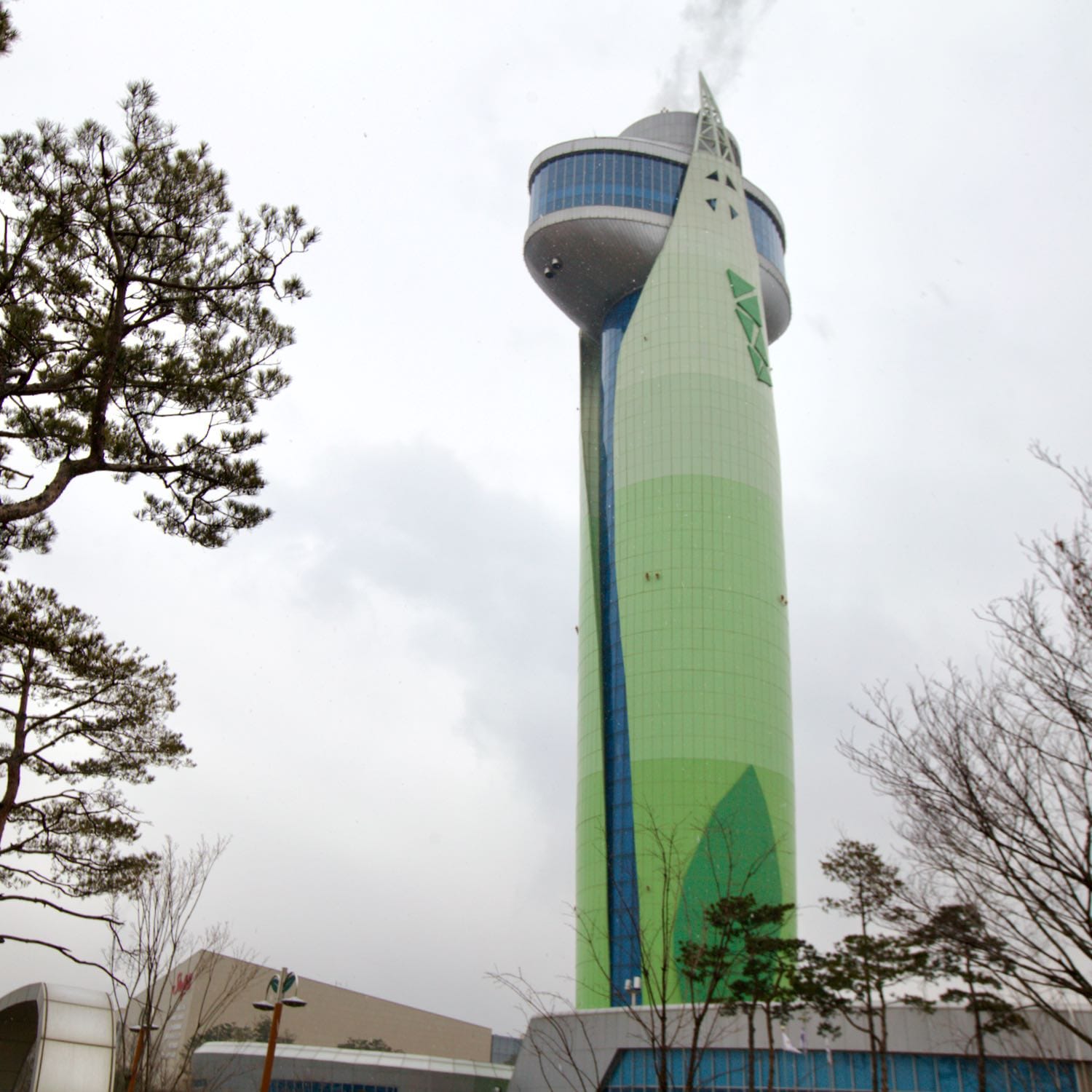
Hanam City
Hanam City (하남시; map) arose later than most of Seoul’s “bed towns” or commuter cities.
First established in 1989, the city ties its ties tight to the capital. It shares its subway (Line 5; 5호선; map) and commuter train (Gyeongui–Jungang Line; 경의·중앙선).
- Hanam City (하남시; Hanam-si)
- 93 km² (36 sq mi)
- 298,005 people (42nd of 162)
- 3,204 folks per km² (8,278 per sq mi)
Bike Paths
The Hangang Bicycle Path runs along the northern border of Hanam. It crosses into the city from the eastern Gangdong District (강동구; map; Gangdong-gu) in Seoul.
The bike path crawls along the bottom section of the Han River (한강; map; Hangang) until Paldang Bridge (팔당대교; map). The path then crosses north and into Namyangju City (남양주시; map; Namyangju-si).
History
Hanam’s history spans from the birth of Korea’s three ancient kingdoms until today.
The Old Capital
Like Seoul’s, Songpa, Gangnam, and Gangdong Districts, Hanam holds remnants of Wiryeseong (위례성), the capital of the Kingdom of Baekje (백제; 18 BCE ~ 660 ACE).
For over six centuries, Baekje ruled a southwestern chunk of the Korean peninsula. They became the first of the Three Kingdoms to dominate the Han River.
The Namesake
Hanam borrows its name from Hanam Wiryeseong (하남위례성). Let’s unpack the name.
- “Han” (한) refers to the River.
- “Nam” (남) translates to south.
- “Wirye” (위례) might refer to either the Han River or an old name for the Baekjae.
- “Seong” (성) means fortress or castle.
Battlegrounds
Wiryeseong (하남위례성)? Seong (성)? Like a castle? Yes.
The old Baekjae capital built several fortifications near present-day Hanam and eastern Seoul.
Why?
“Whoever controls the Han River, controls Korea.”
The river provided access to the interior of the peninsula and to the largest trading partner in the region: China. For centuries, all three kingdoms conquered and took turns ruling the waterway.
First, the Goguryeo (고구려; 37 BCE ~ 668 ACE) drove south and took the Baekje’s capital in 475. Then, in 660, the Kingdom of Silla (신라; 57 BCE ~ 935 ACE) allied with Baekje to resist.
Baekje and Silla pushed Goguryeo back north. Baekje reclaimed some of its old territory.
However, three years later, Silla and China’s Tang Dynasty combined forces. They conquered both Baekje and Goguryeo’s territory.
The last kingdom standing, Silla united the Korean peninsula for the first time. It ruled for three hundred more years.
Lost Capital
The Kingdom of Silla moved the capital of the newly unified Korea to present day Gyeongju City (경주시; map) in southwest Korea.
While settlements persisted in the Han River basin, people and time abandoned Baekje’s old capital, Wiryeseong.
Economy

From the 1960s to the 2000s, Seoul’s economic fortunes accelerated. Industries grew. Towers rose. A middle class amassed.
However, Seoul swelled to capacity. And by the 1990s, land and apartments became unaffordable. Residents leaked into Gyeonggi Province’s satellite cities, like Goyang (고양시; map) and Suwon (수원시; map) ballooned.
In 2010, Hanam City held around 100,000 citizens. Seeing fleeing Seoulites, the city developed several districts with new apartments and commercial areas. By 2020, the city tripled its residents to almost 300,000.
Geography
- To the West: Seoul Metropolitan City (서울특별시; map; Seoul-si).
- To the North: Namyangju City (남양주시; map; Namyangju-si).
- To the East: Namyangju City (남양주시; map; Namyangju-si) & Gwangju City (광주시; map; Gwangju-si)
- To the South: Seongnam City (성남시; map; Seongnam-si) & Gwangju City (광주시; map; Gwangju-si)
- Don’t confuse Gwangju City with Gwangju Metropolitan City. The one in Gyeonggi is smaller and less famous. The Metropolitan City (광주광역시; map) sits in Korea’s southwest.
Hanam sits in the northern-middle of South Korea. Along the northern and western edge of Hanam wraps the Han River. To the west lies the metropolitan behemoth of Seoul. To the south?
Mountain Mania
The “city” part of Hanam takes up only 23% of its total territory. Most of its citizens, buildings, and infrastructure nestle in the northern tip, along the Han River.
What about the other 77%? Mighty peaks dominate.
- Namhan Mountain (남한산; map, Namhan-san) climbs 522 meters (1,509 feet) directly south of downtown Hanam. It is home to Namhan Mountain Fortress (남한산성; map; Namhansanseong), one of Korea’s oldest, best preserved military installations.
- Geumam (금암산; map, Geumam-san; 321 m) and Gaek (객산; map; Gaeksan; 292 m) Mountains sit between Namhan Mountain and downtown Hanam. They rise 321 meters (1,053 feet) and 292 meters (958 feet) respectively.
- Geomdan Mountain (검단산; map; Geomdansan) is the tallest peak in Hanam. It elevates to 658 meters (2,159 feet).
Most of these mountains sit in Seoul’s greenbelt, untouched. In them you’ll find temples, fortresses, and cultural treasures.
Weirye Riverside Road

With its south blanketed with nature, Hanam didn’t need to create more parks. Right? Wrong.
The city added recreational spaces to their downtown by developing Weirye Riverside Road (위례 강변길; map). Like the Hangang Park system in Seoul, the recreational space stretches the length of the Han River in Hanam.
Not only does Weirye Riverside Road hold a section of the Hangang Bicycle Path, it includes a tree orphanage, riverside parks, and waves of springtime cherry blossoms and picnic-goers.