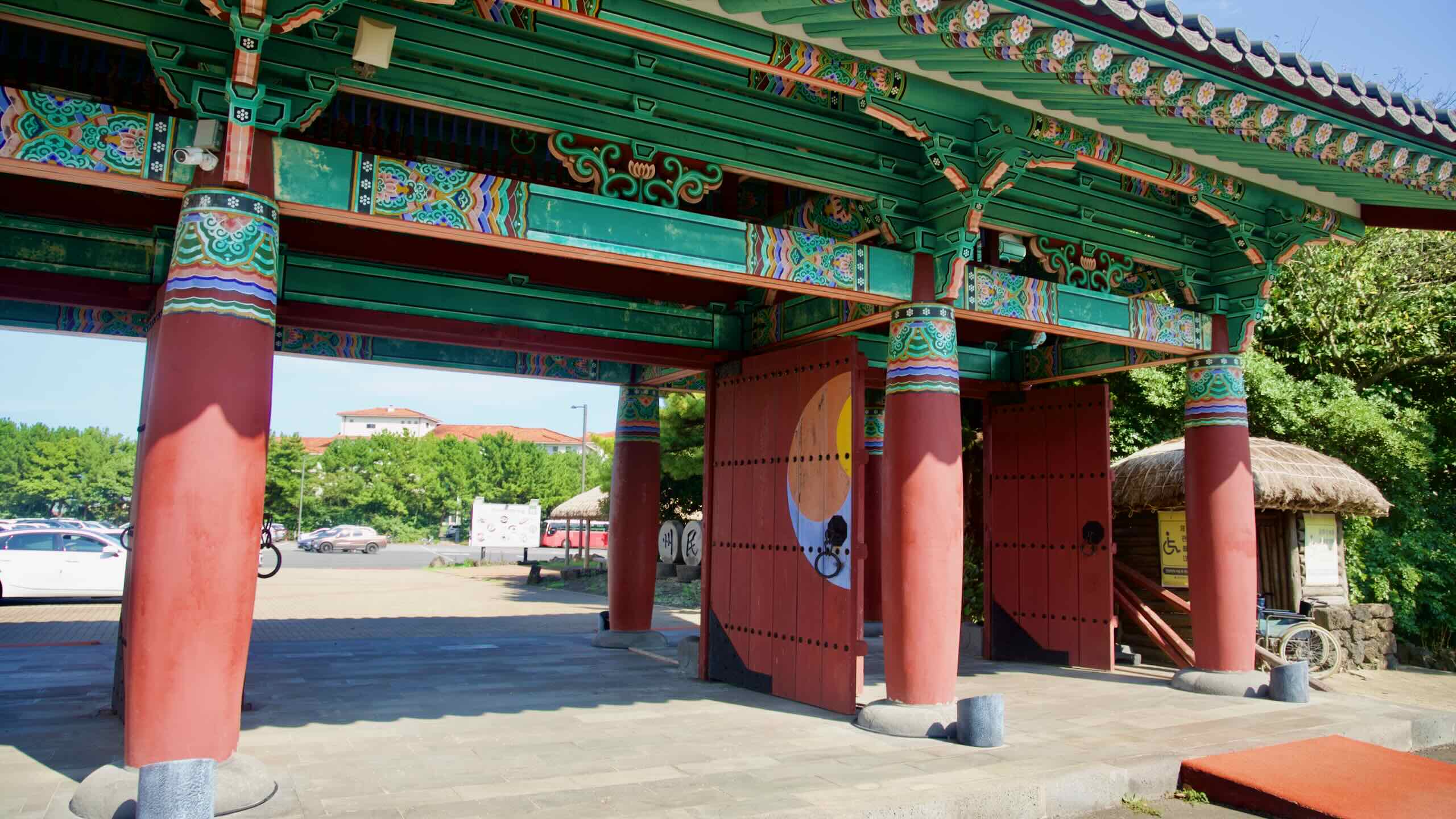
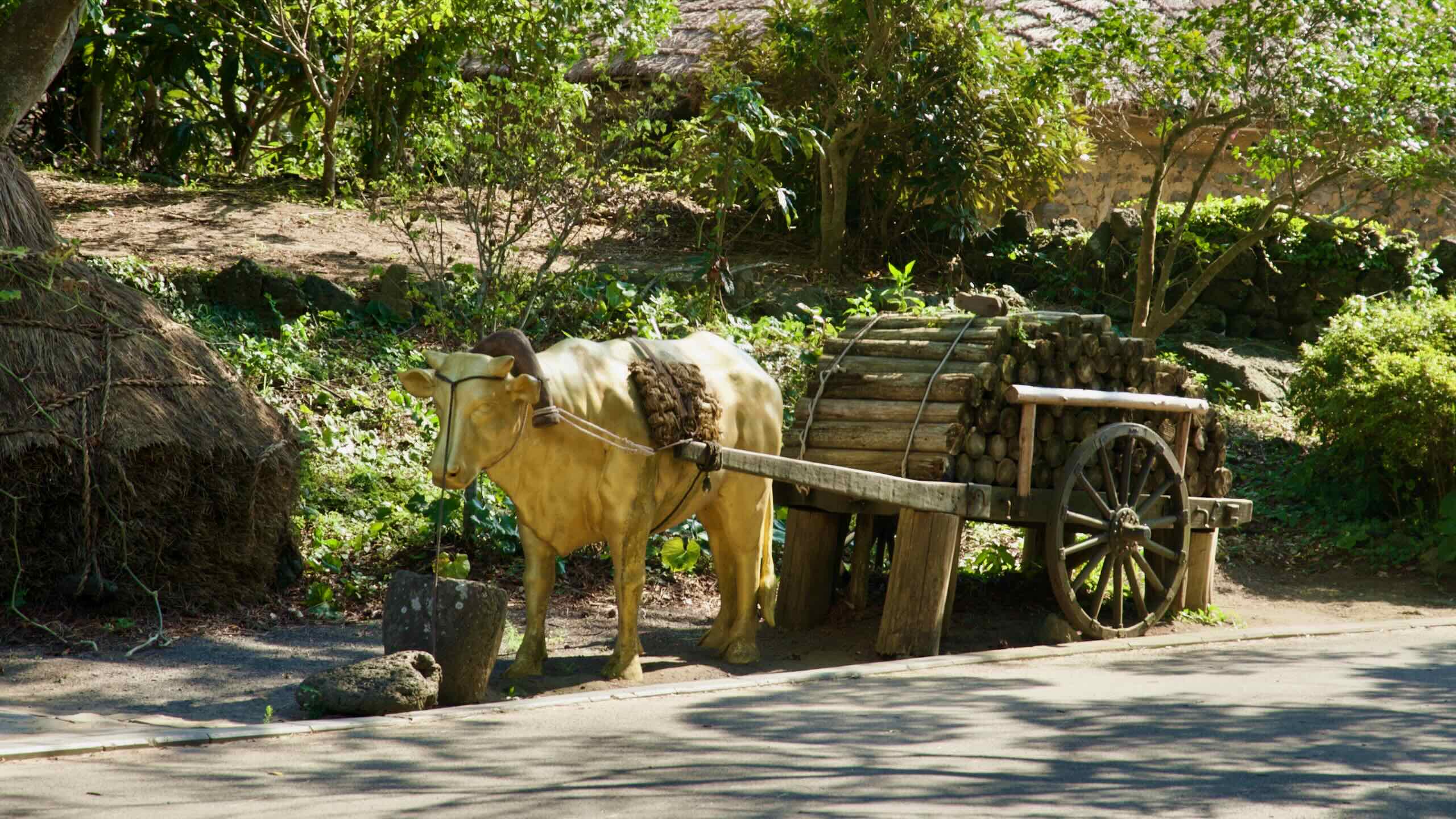
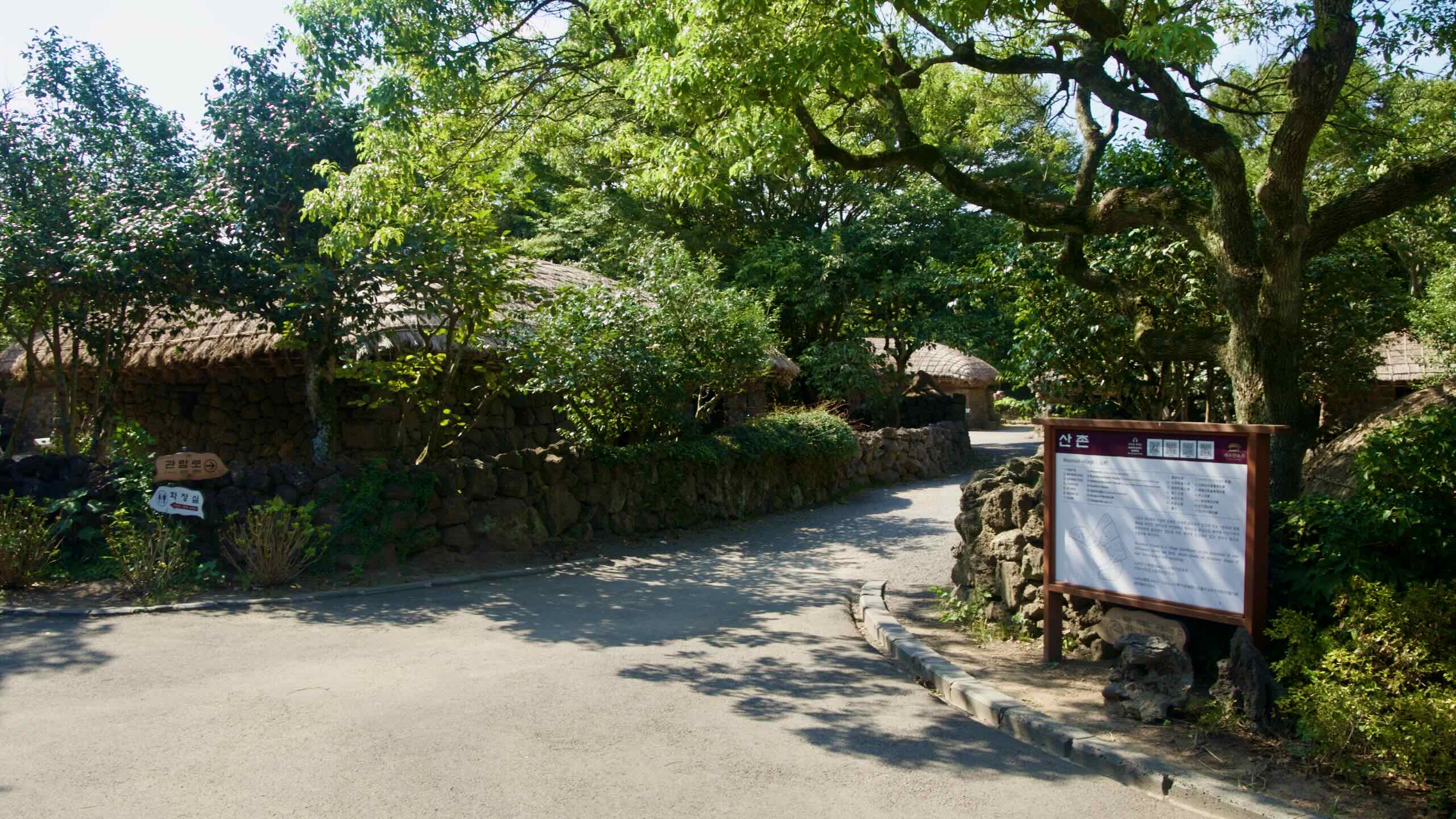
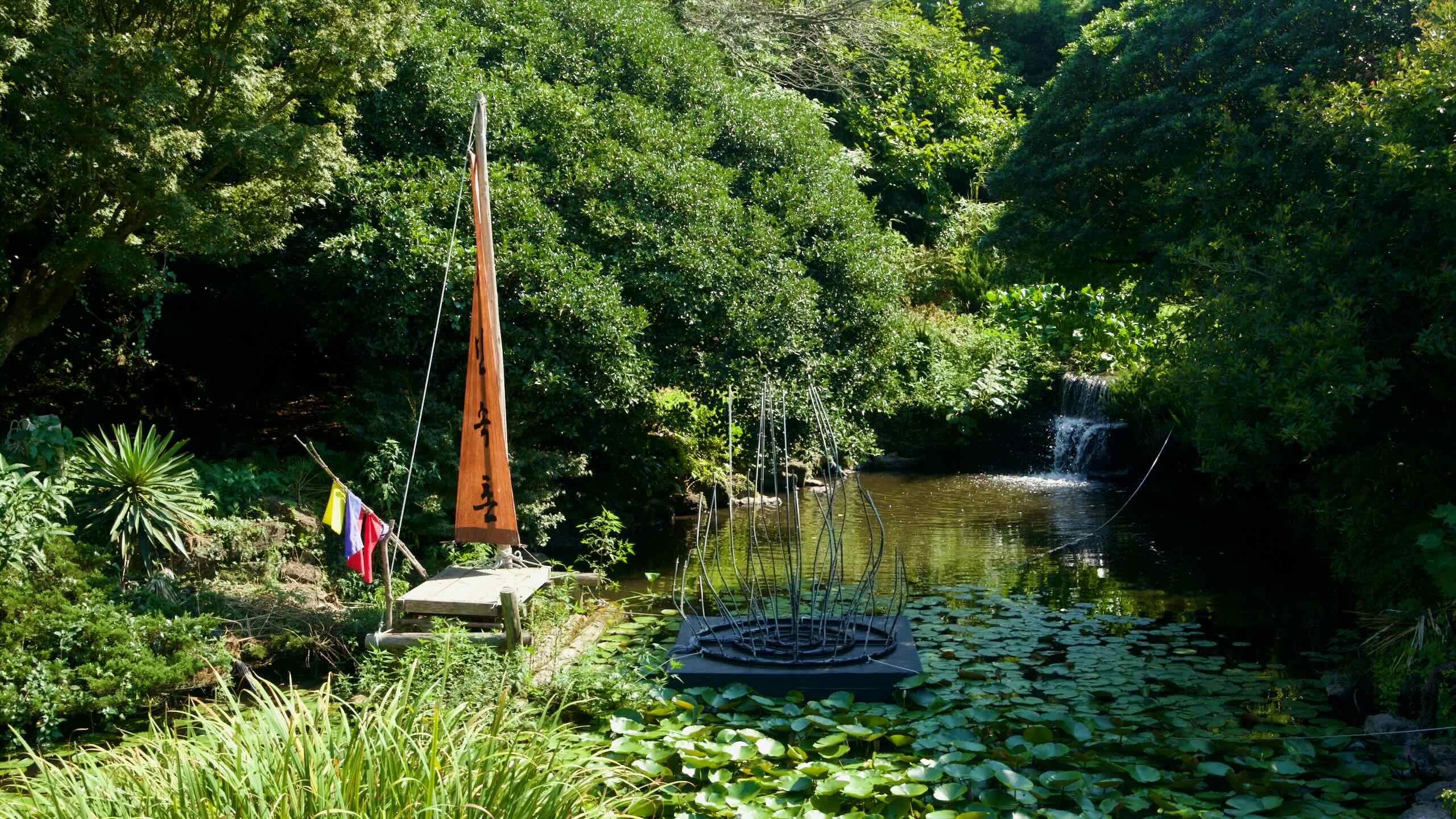
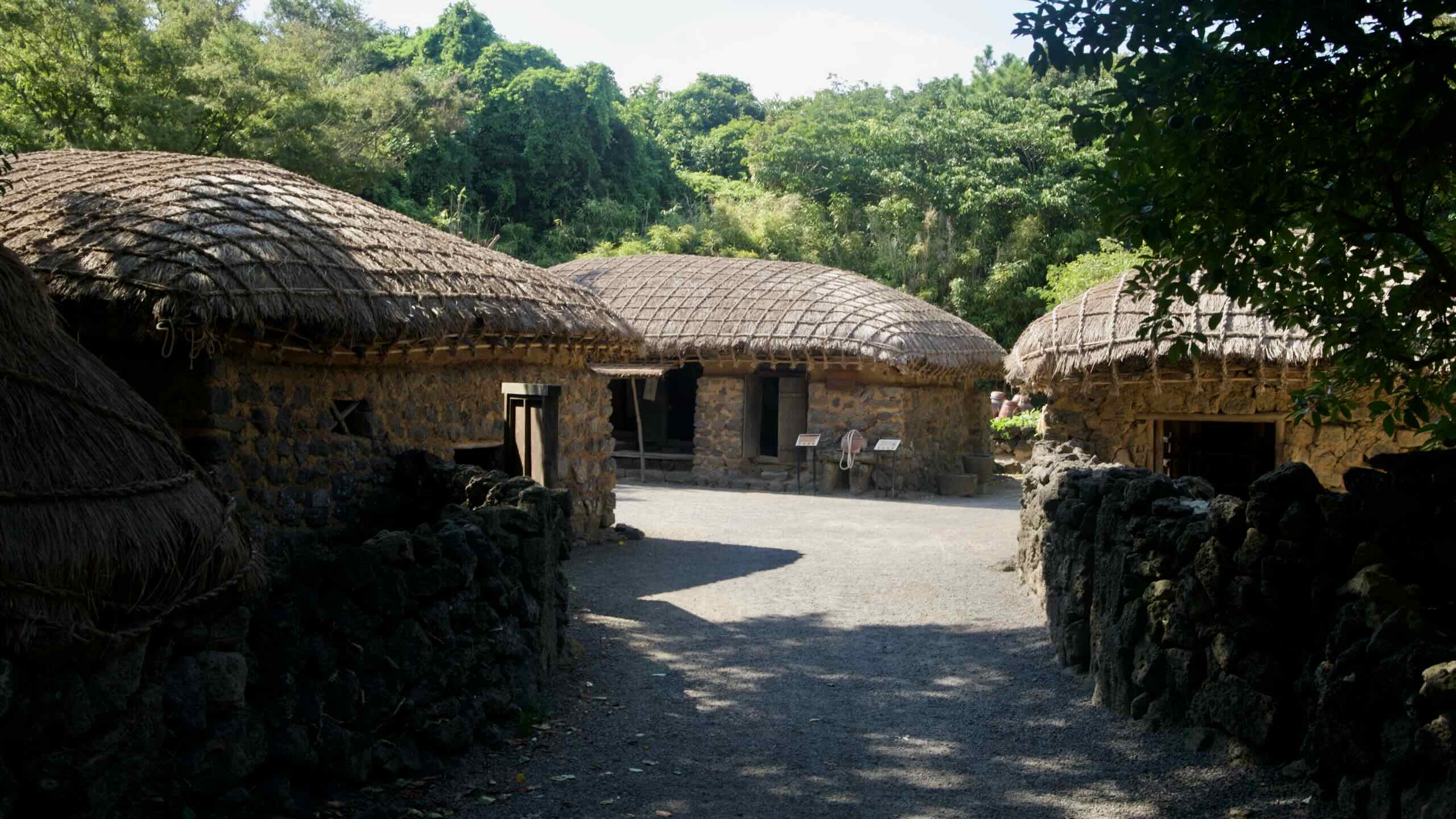
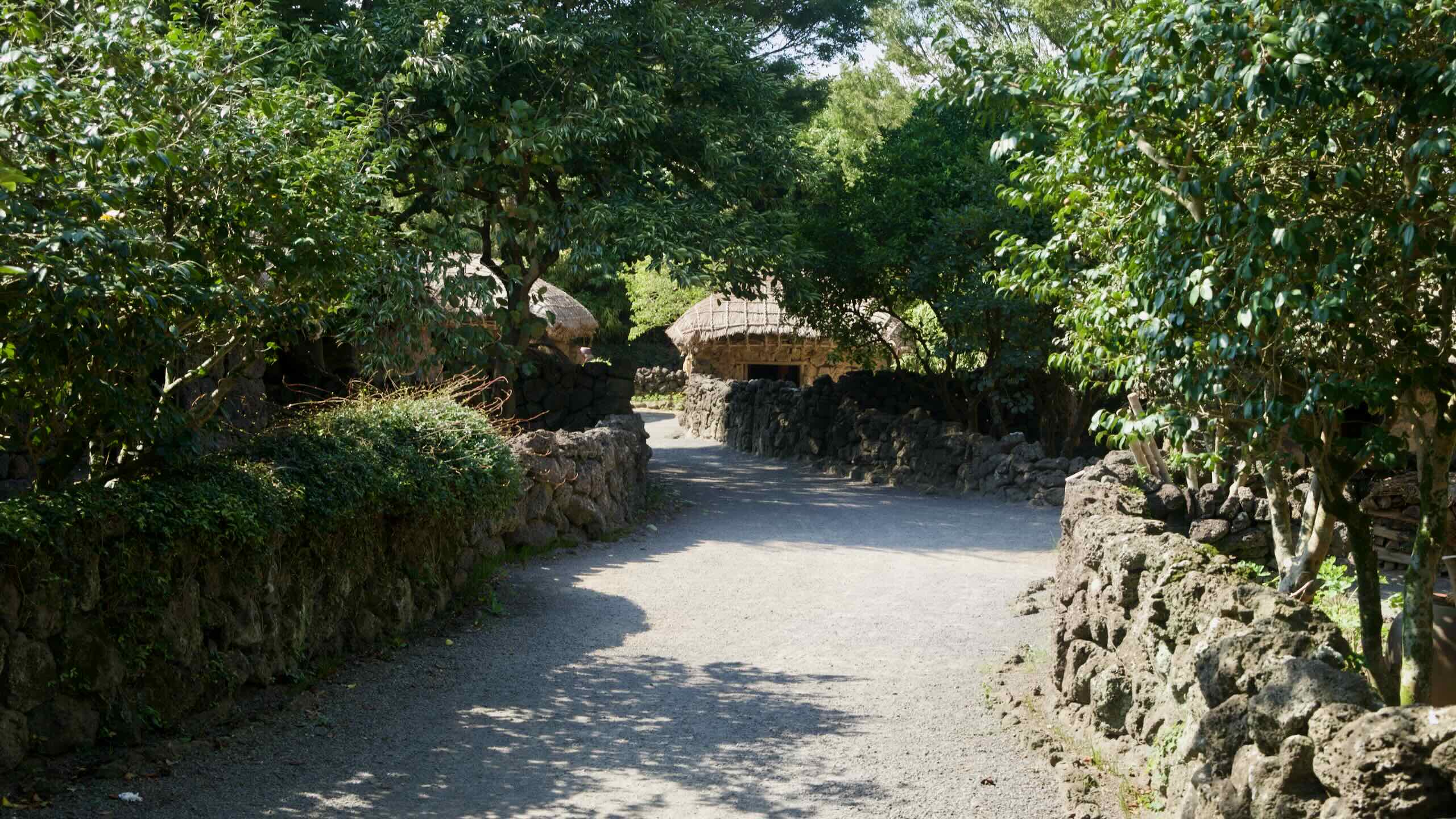
Jeju Folk Village (제주민속촌; map) is an open-air museum built near the shores of Pyoseon Beach. Based on deep archival research, the museum recreates late-19th-century Jeju with more than 100 traditional houses and buildings set among stone walls, fields, and coastal trees.
The village is organized to show how people lived across Jeju’s zones: a mountain village, a mid-slope (jungnansan) village, and a fishing village, plus areas on shamanic practice and government/penal history.
Many structures are built from original stones and timbers re-assembled on site, with rooms that include period tools and furnishings. Craftspeople practice their traditional techniques in several houses.
Jeju Folk Village also features daily folk performances and hands-on stations, which rotate old Jeju practices, like letting visitors participate in the yunnori and tuho (pitch pot) games, rope and spindle work, and more. (Schedules posted on site.)
A small shuttle bus also runs inside the grounds, useful if you’re with kids or older visitors.
Parts of MBC’s Jewel in the Palace (대장금; 2003) were shot here over 17 days (Dec 11–27, 2003). Inside the grounds you’ll find a small display with scripts, autographs, props and photo spots tied to those episodes.
Seasonally, the site runs small programs like a hydrangea event in early summer, and holiday folk programs around Seollal/Chuseok with folk games and food-making.
A daily folk show also runs on site (music/drum routines). In some years there’s a limited night opening with themed performances (“Joseon Halloween” in 2022 and the “Guimong” horror experience).
Layout
The Mountain & Mid-slope zones feature a mix of agriculture and stock-raising houses typical above the coastal plain. Some examples inlcude outer-pillar stone cottages with thatch (초가), animal pens, threshing yards, weaving and woodcraft rooms, and storage spaces. Interiors are dressed with period implements to illustrate daily routines.
The Fishing Village Zone shows life near the coast. You’ll see haenyeo-related (free-diving) workspaces and boat gear, drying racks, and household layouts aligned to wind and salt exposure. Exhibits focus on inshore harvesting and small-craft fishing.
The Belief & Administration area holds a cluster of shrines with traces of Jeju’s diverse folk beliefs. Nearby, the Jeju Yeongmun compound (office halls, yard, jail) and an exile house outline the island’s administrative and penal history.
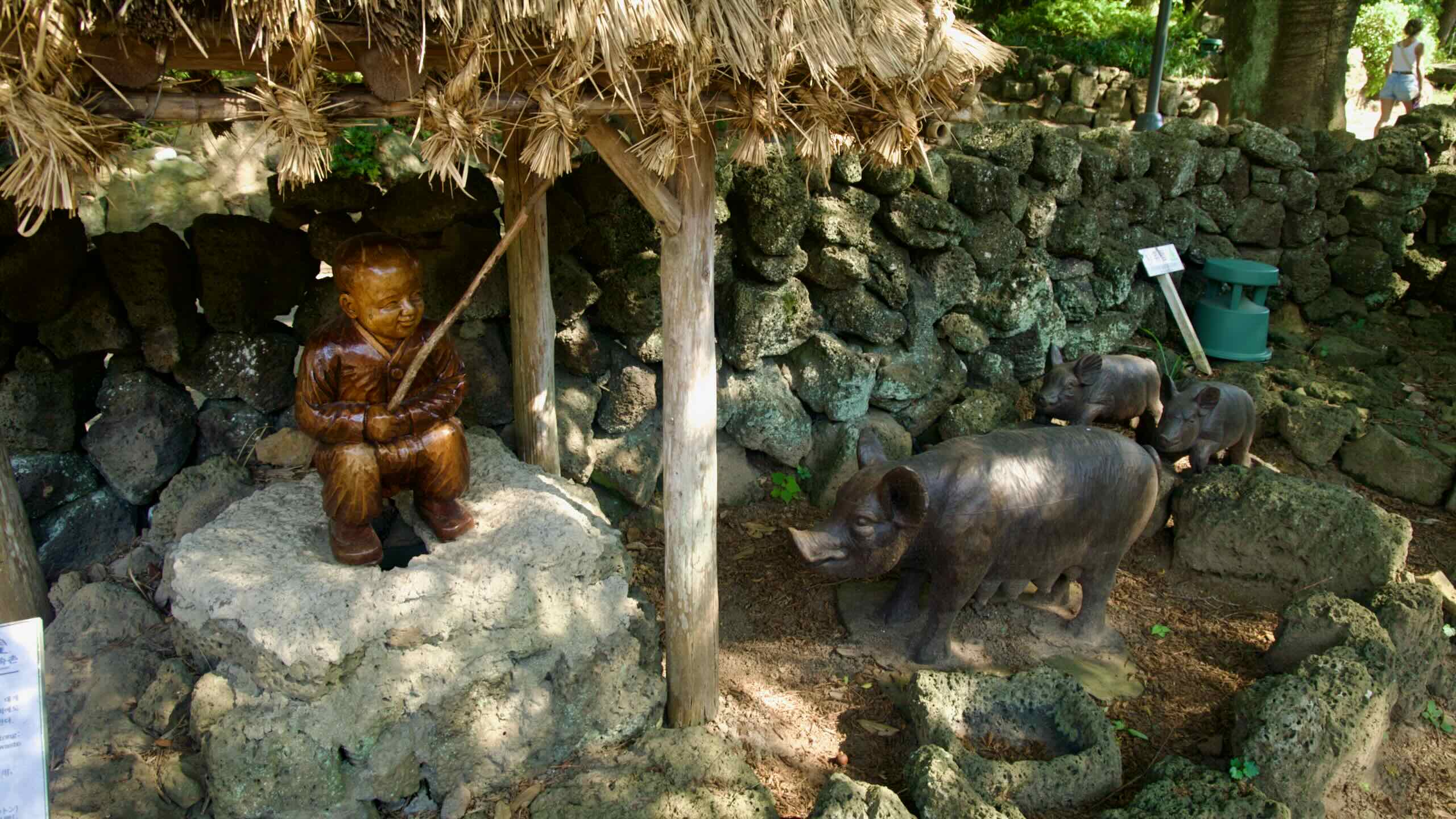
The Jeju Folk Village also highlights distinctive features like the tongsi (latrine with pigsty), which appears in several homesteads as part of a closed-loop rural system.