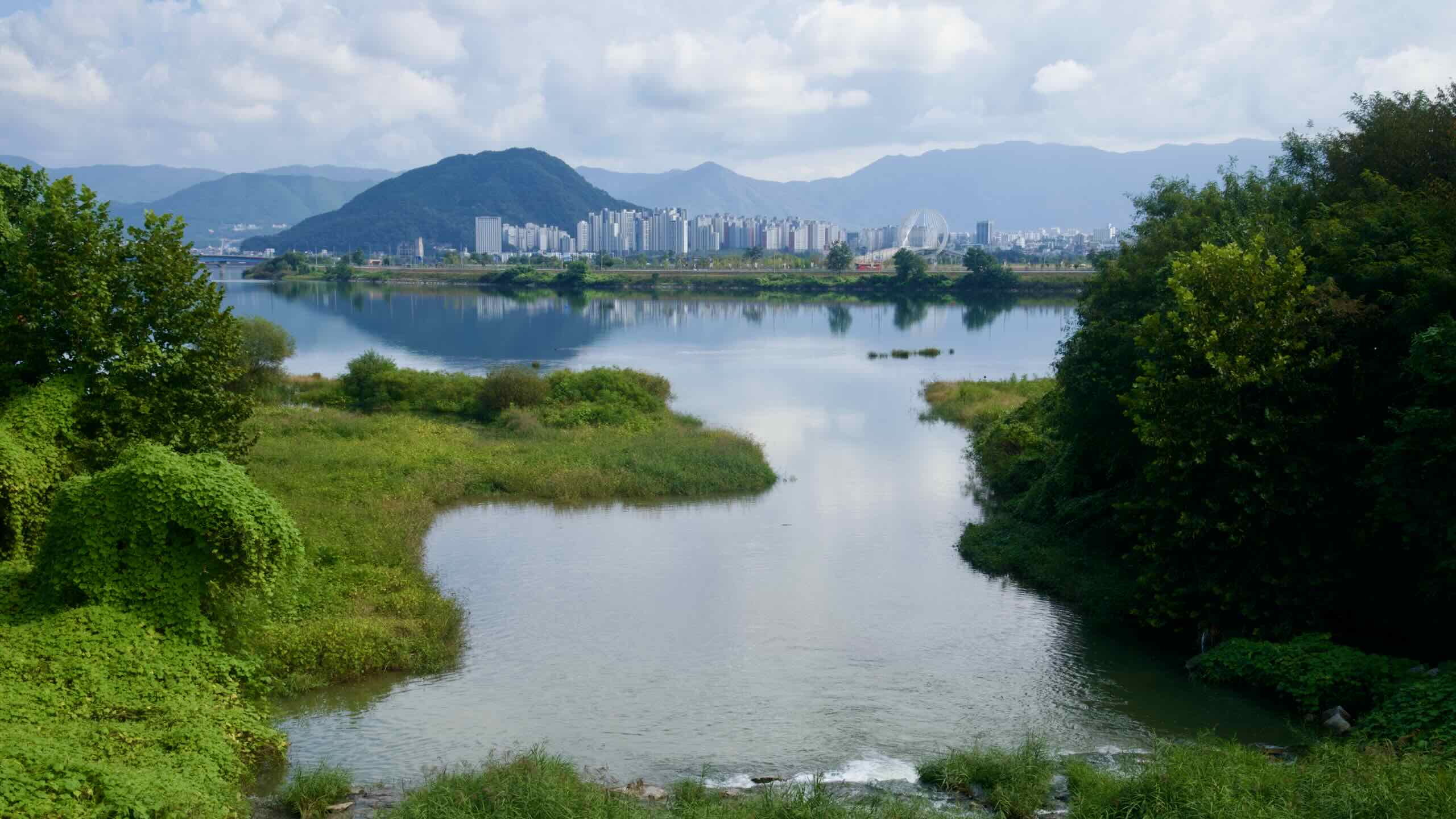
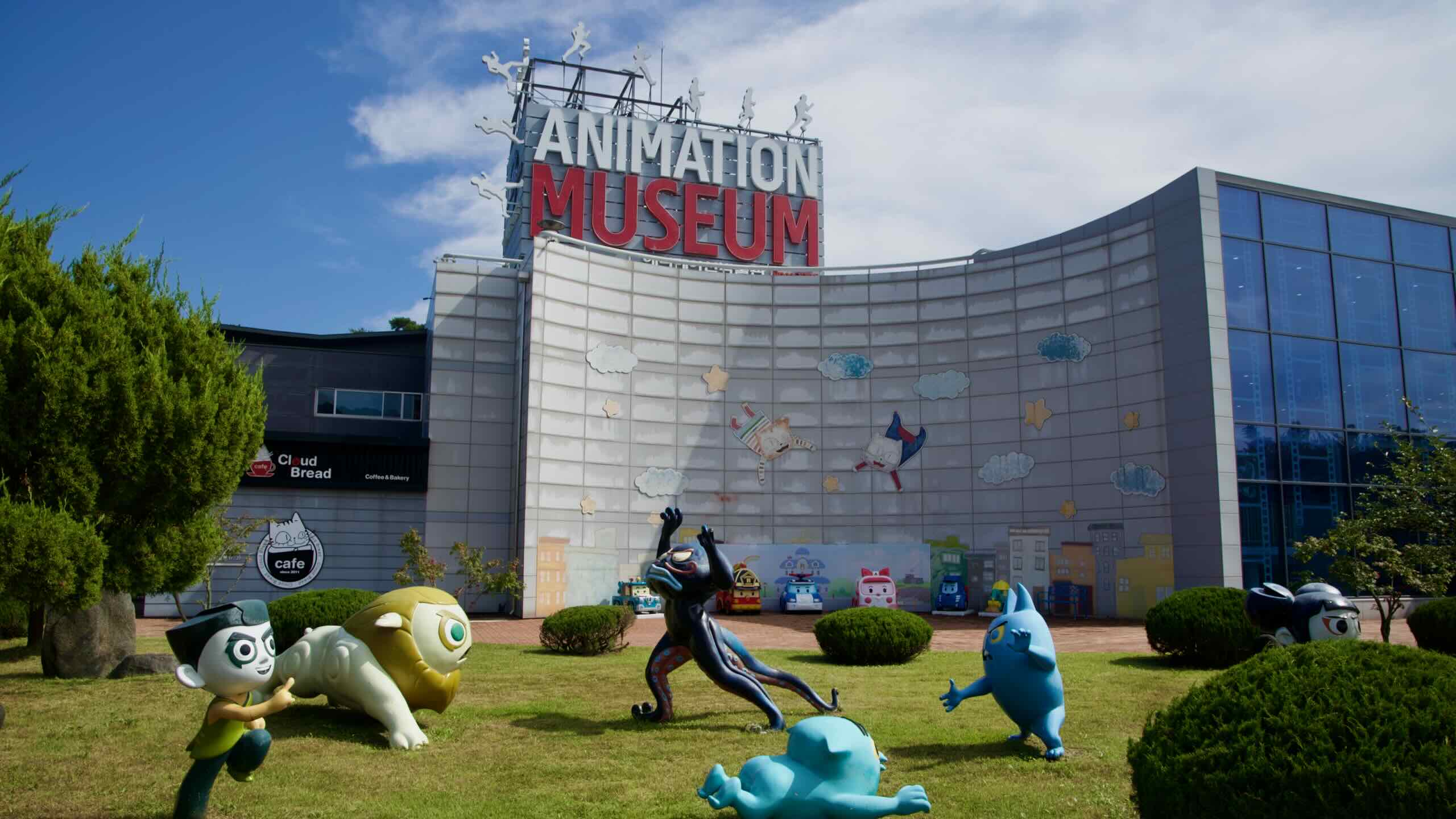
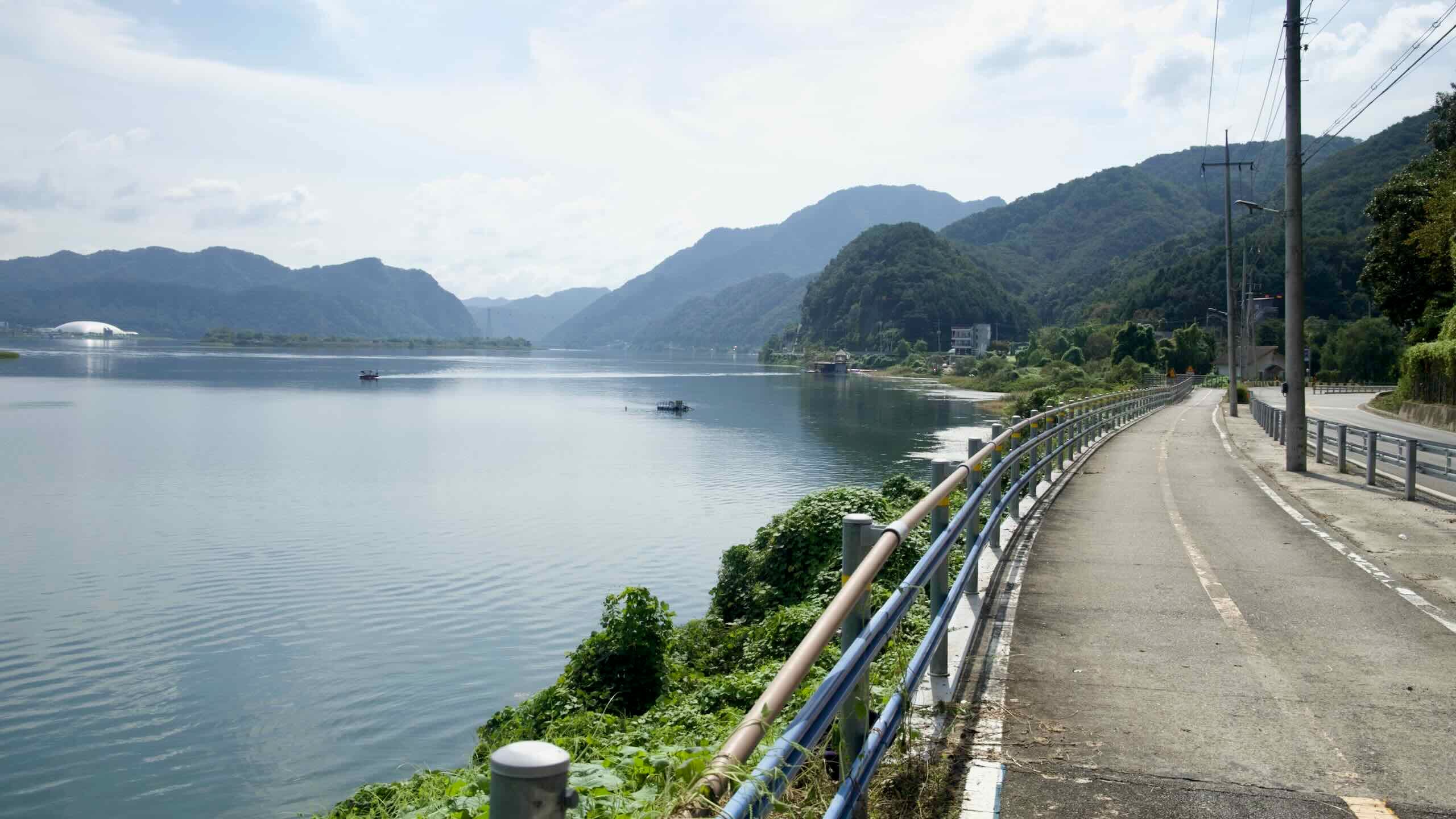
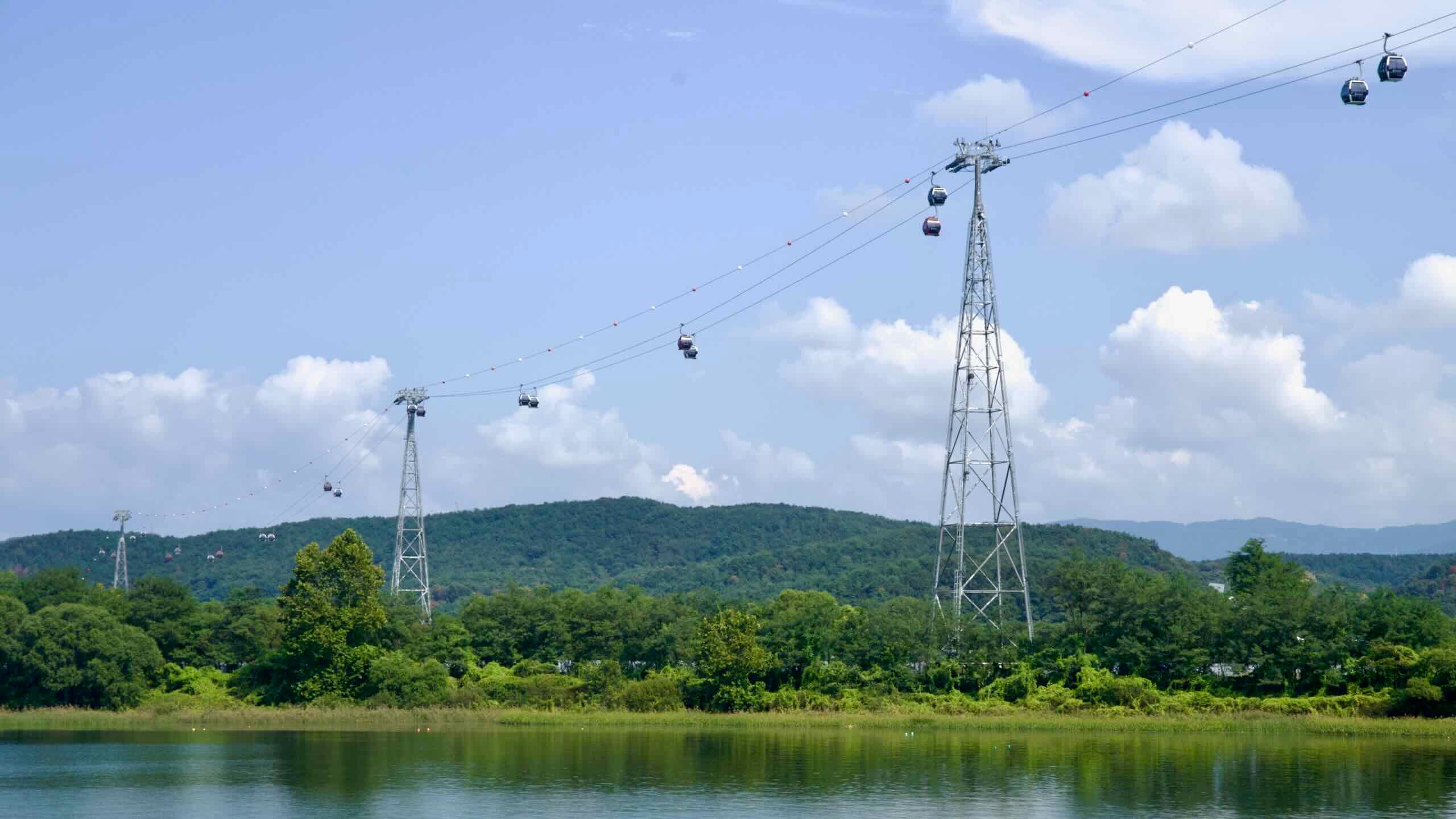
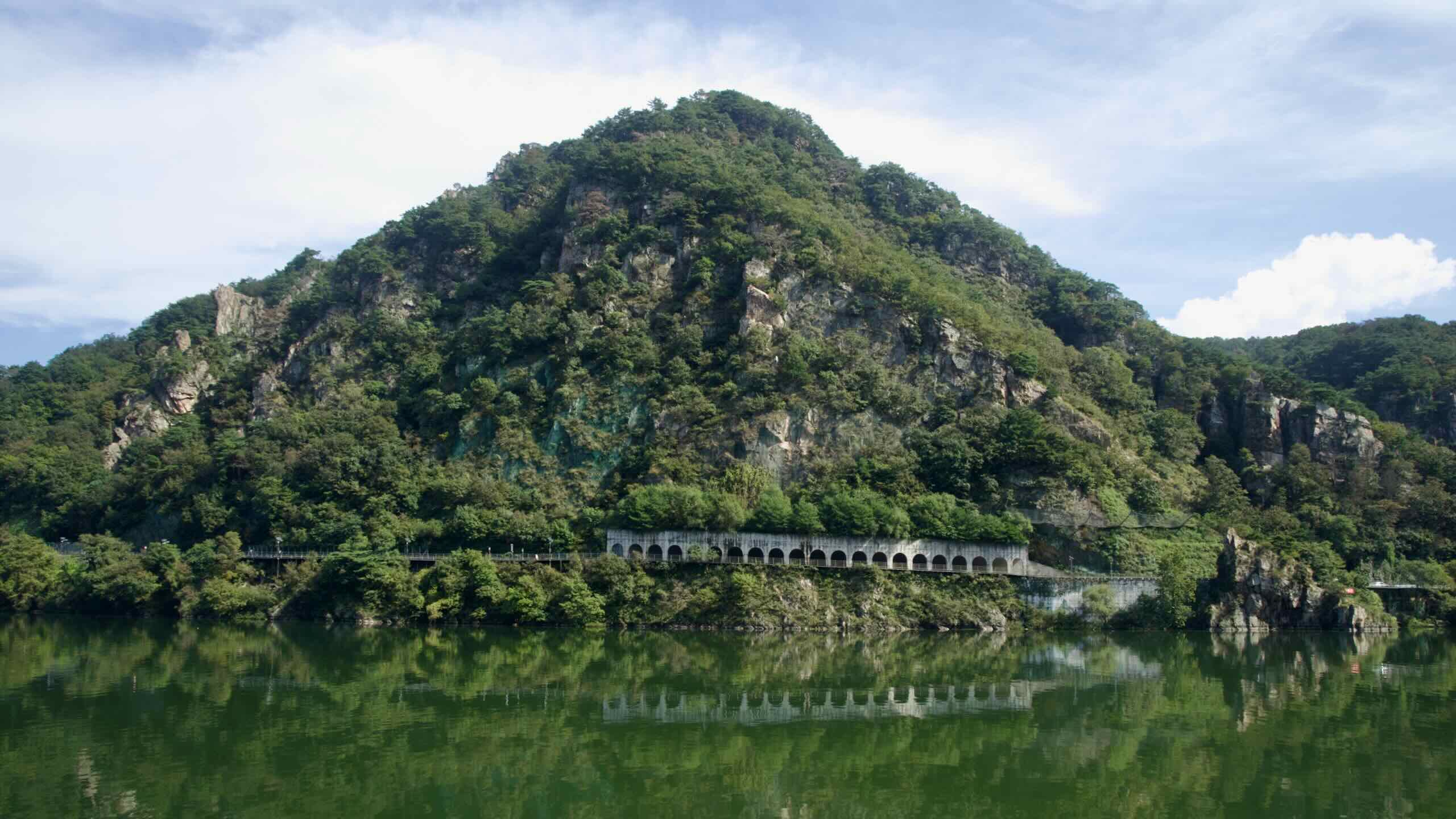
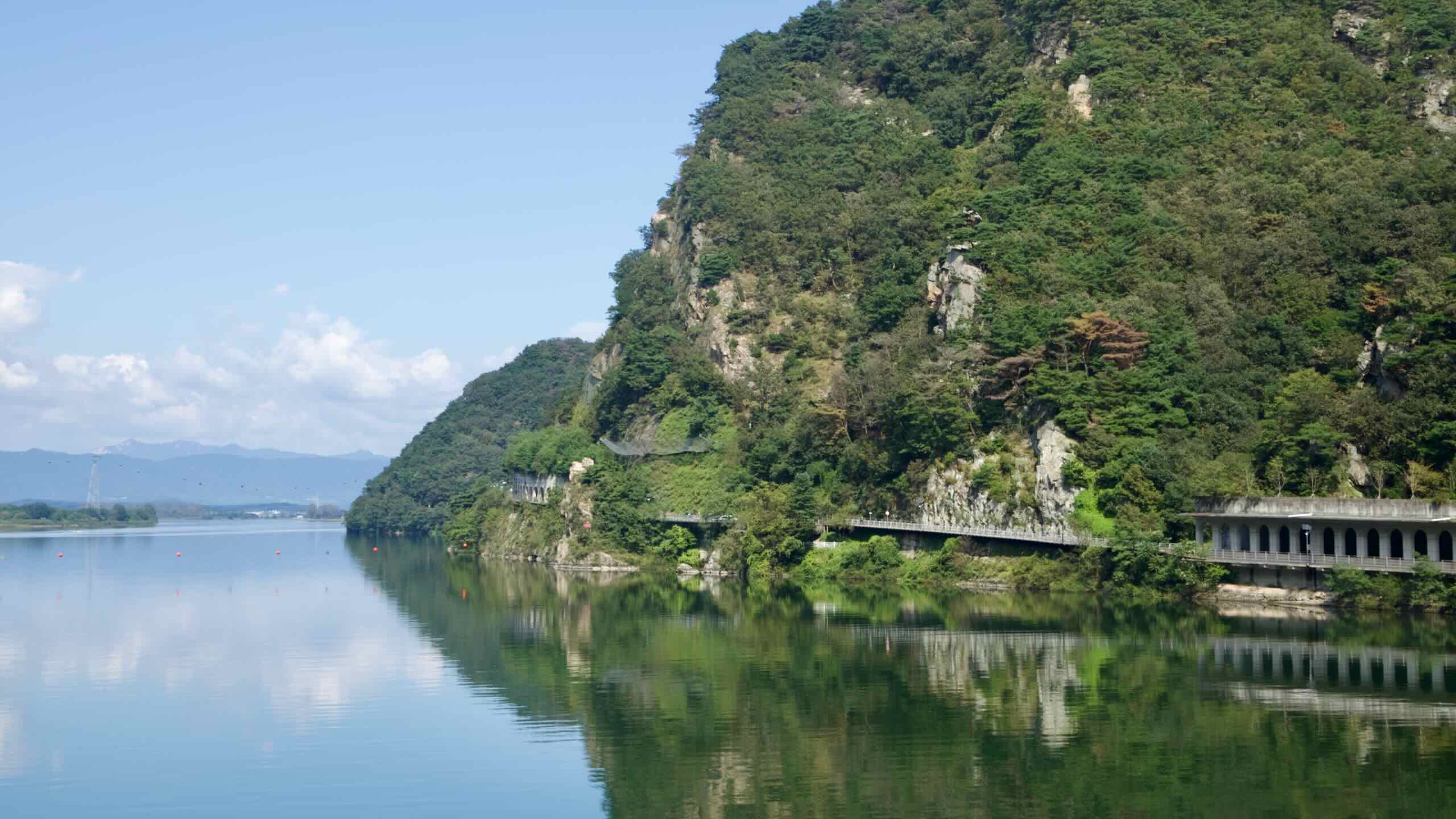
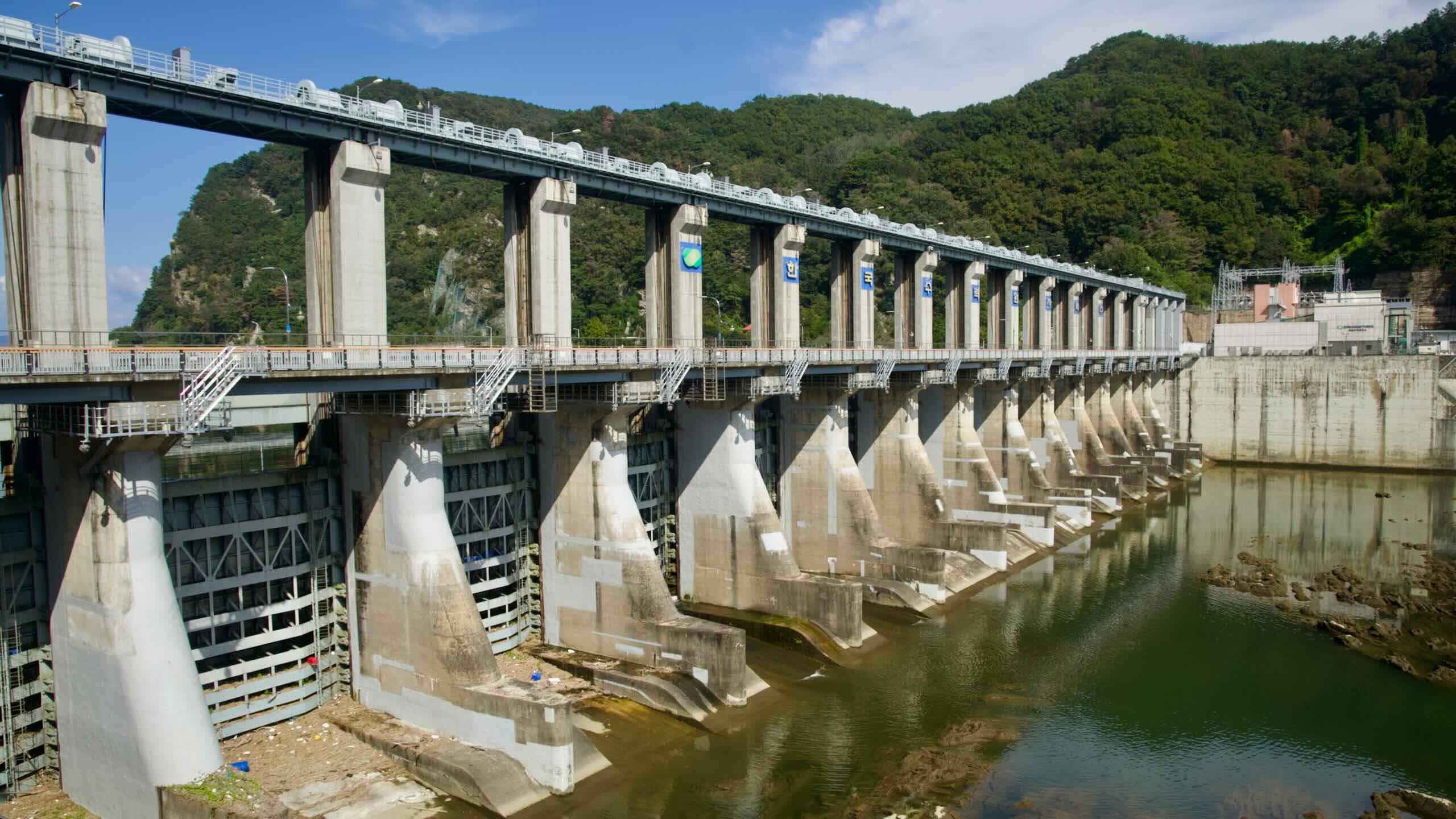
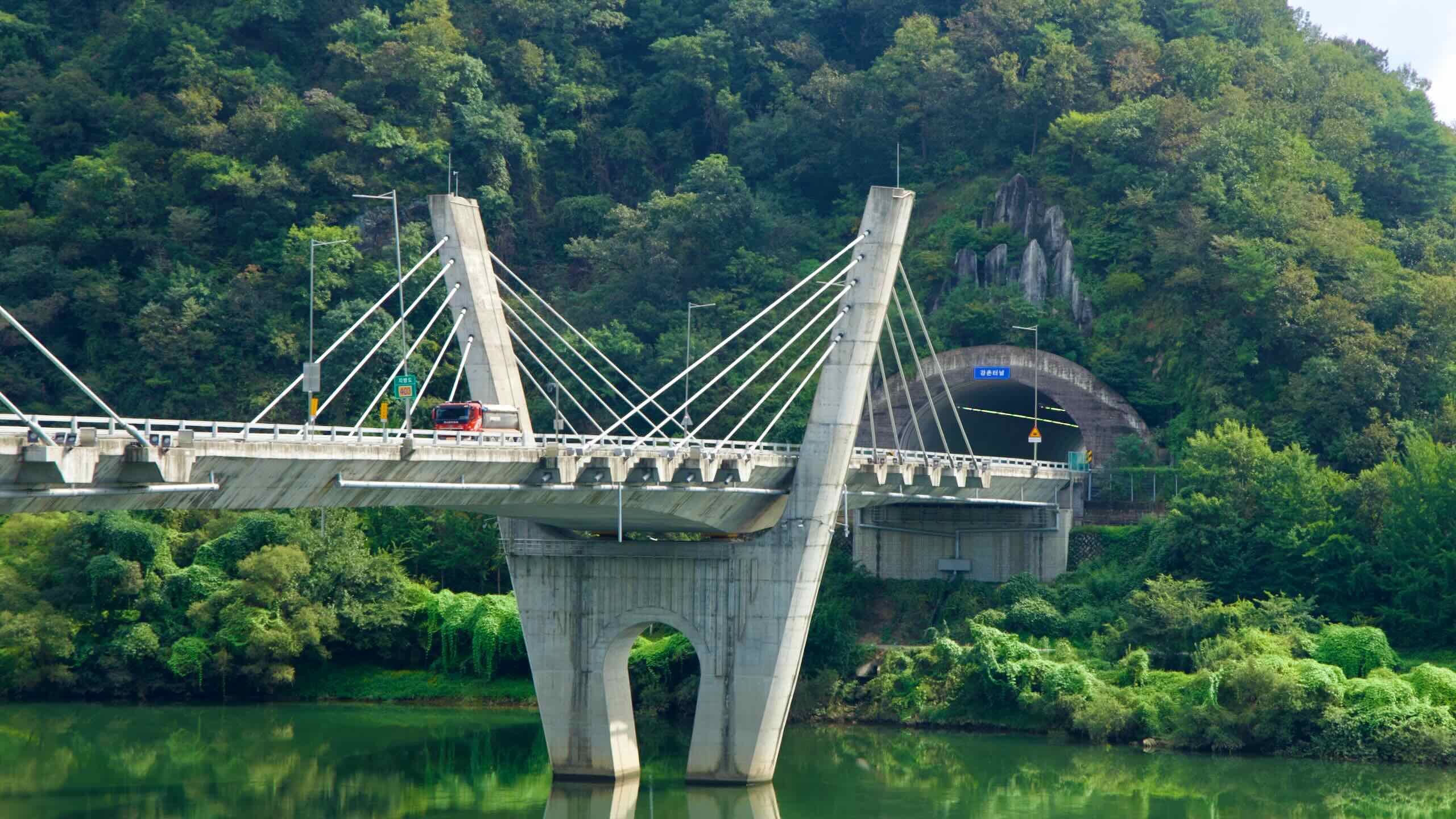
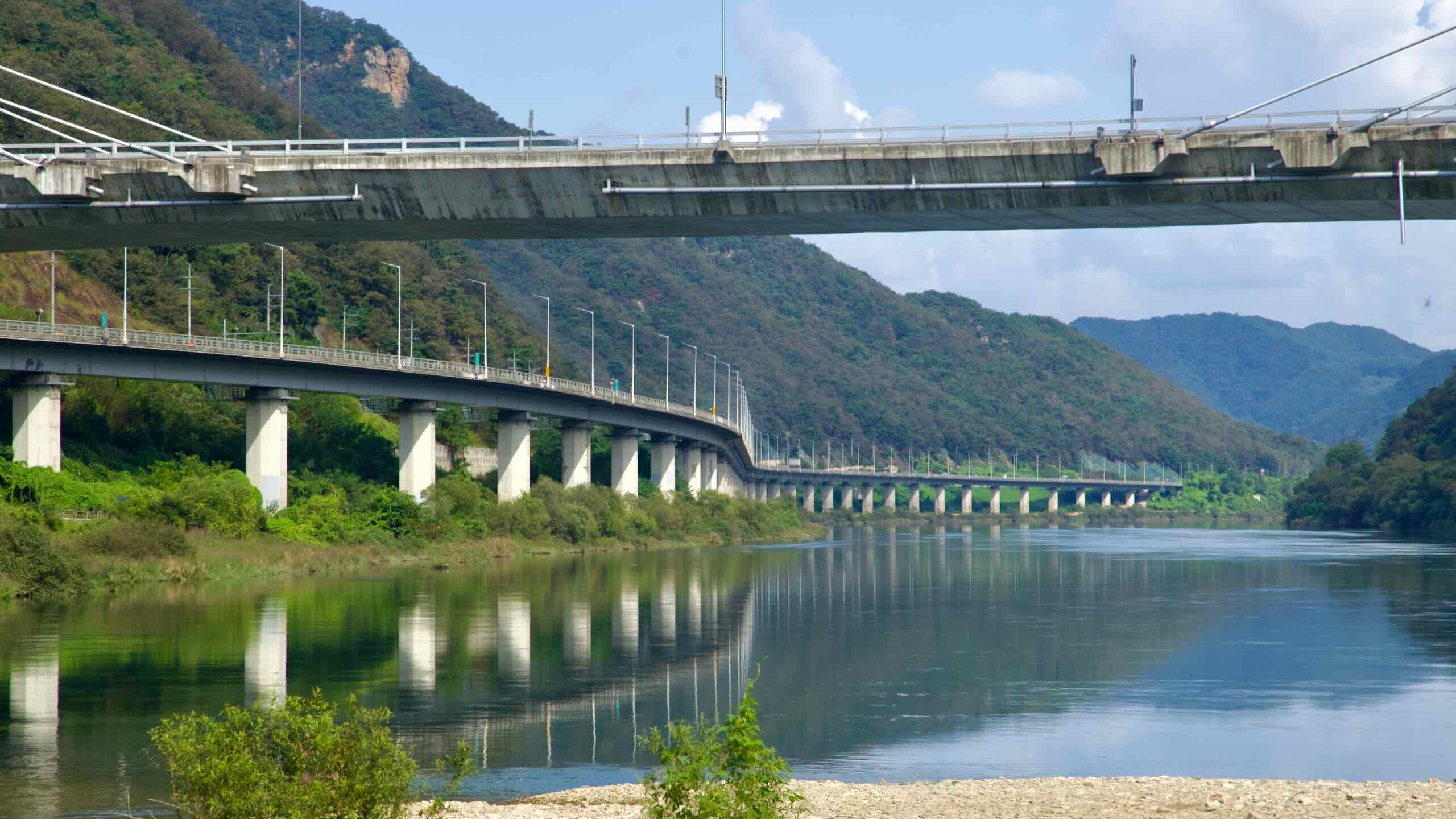
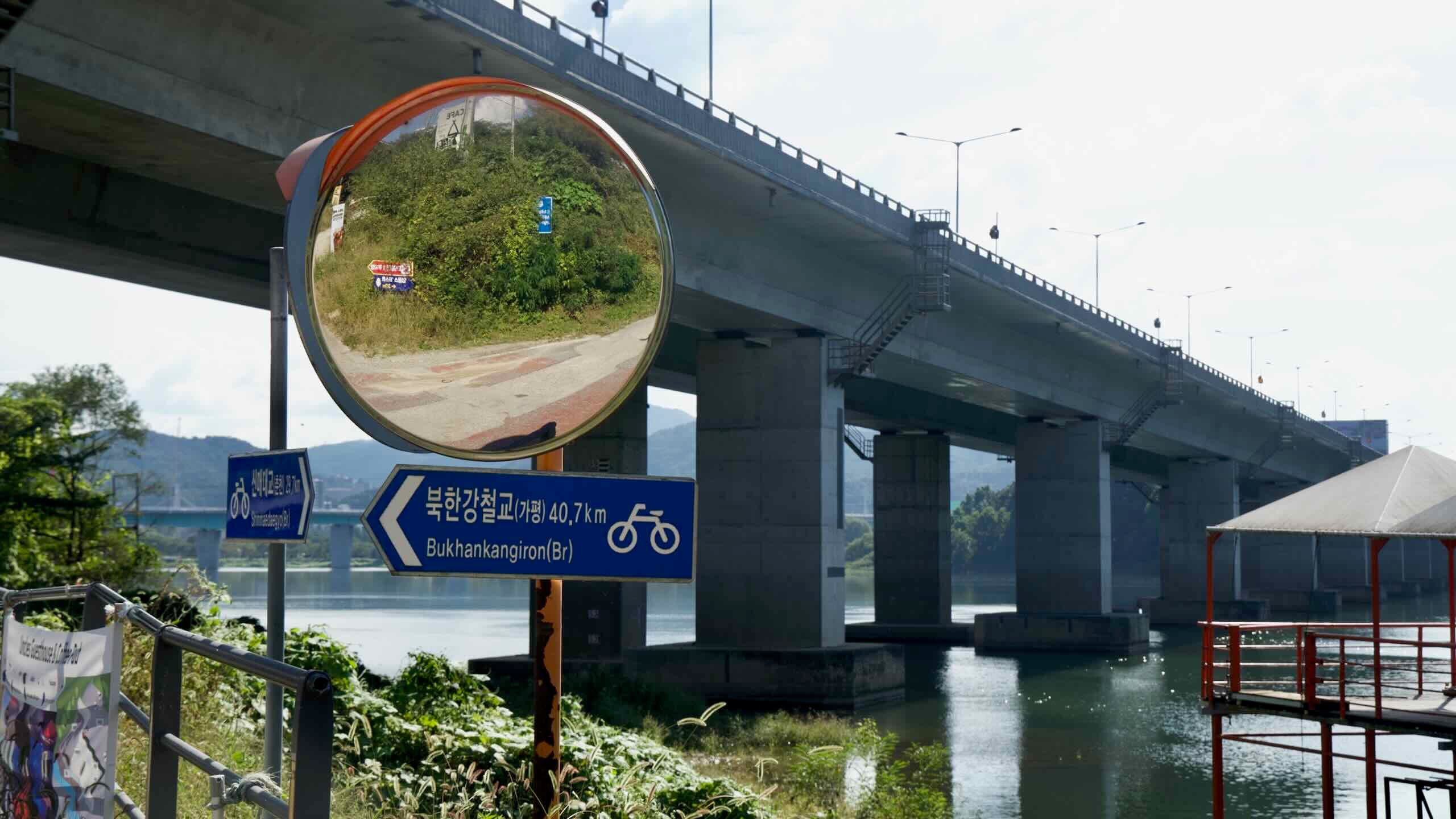
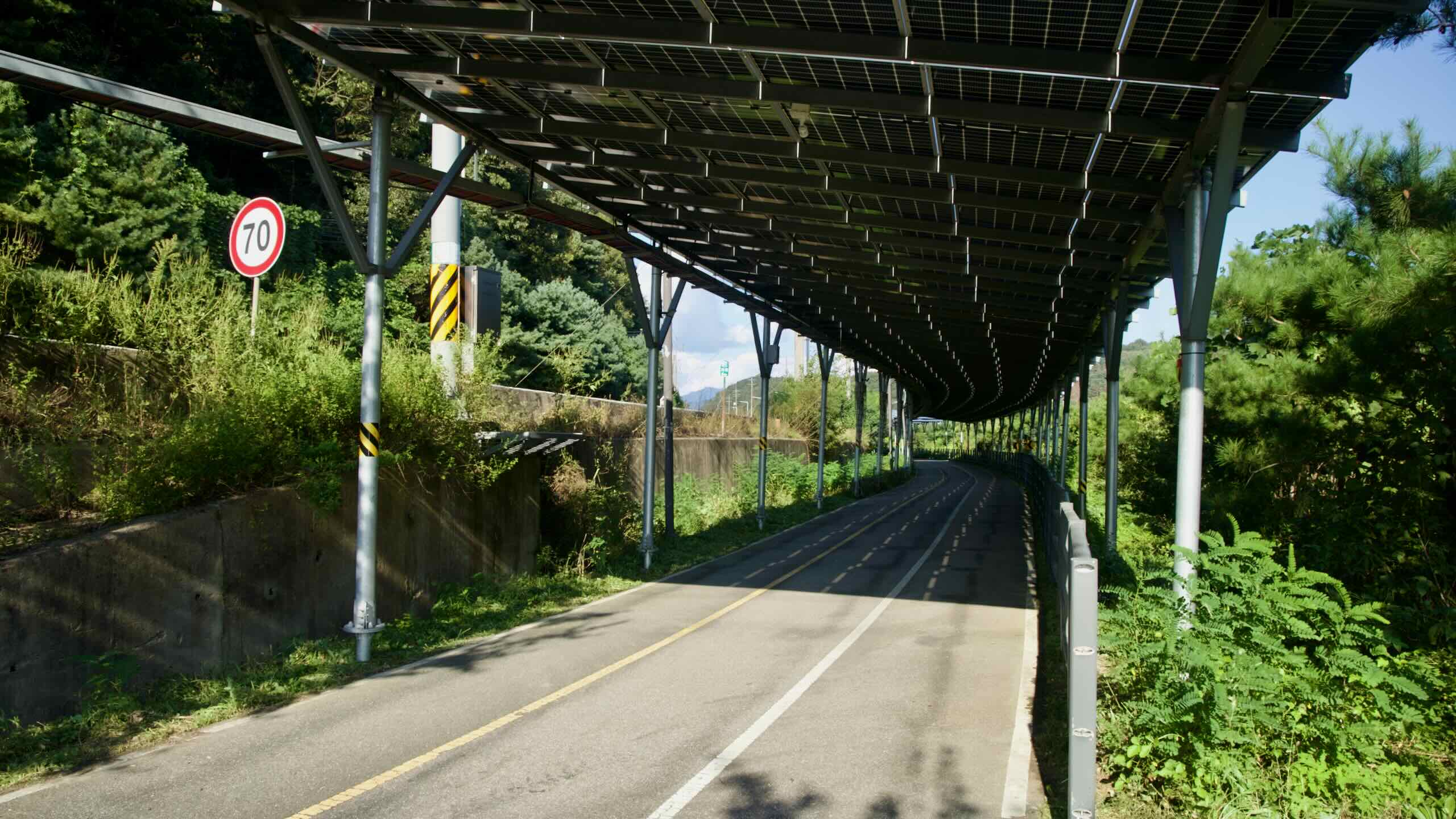
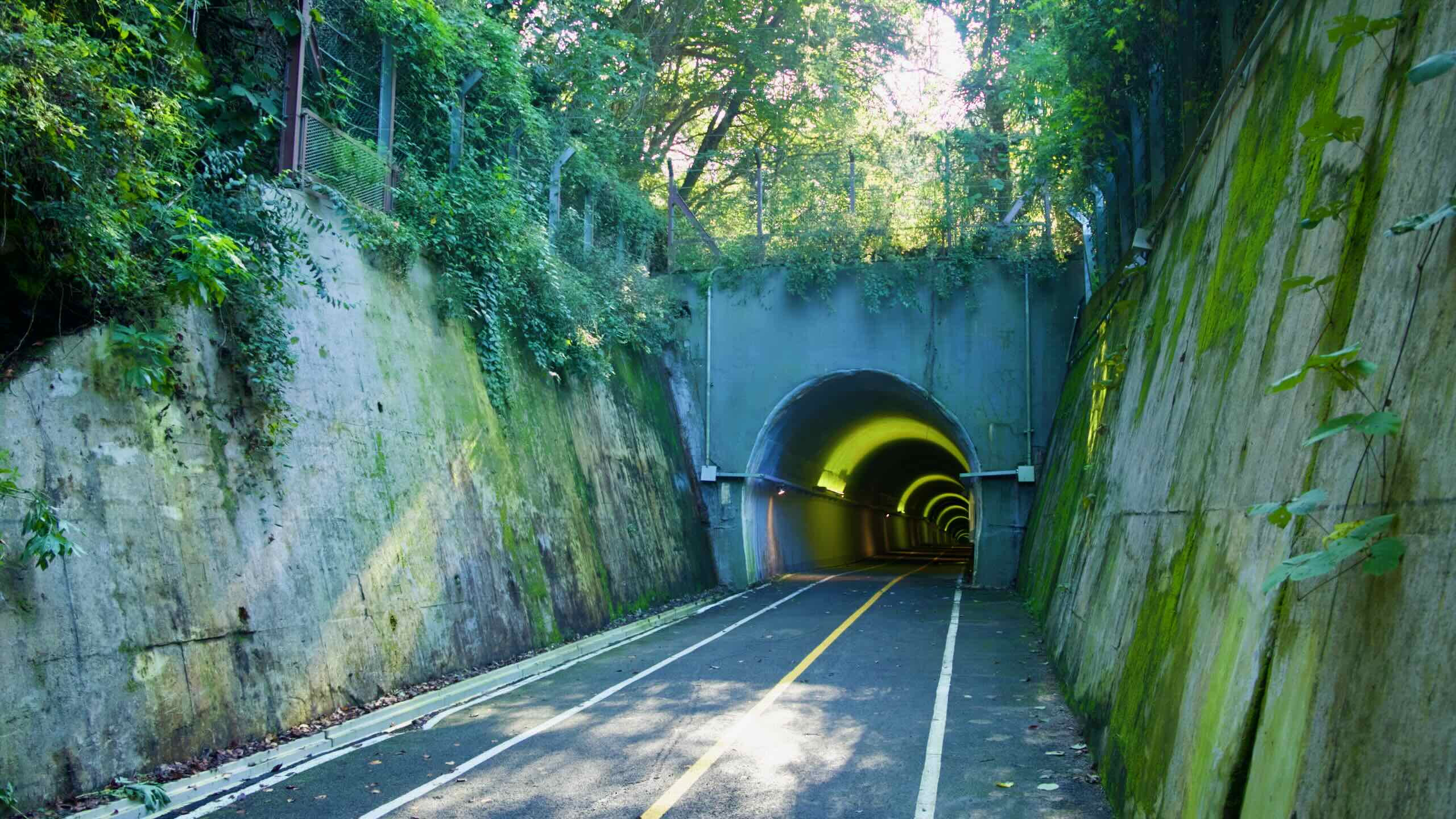
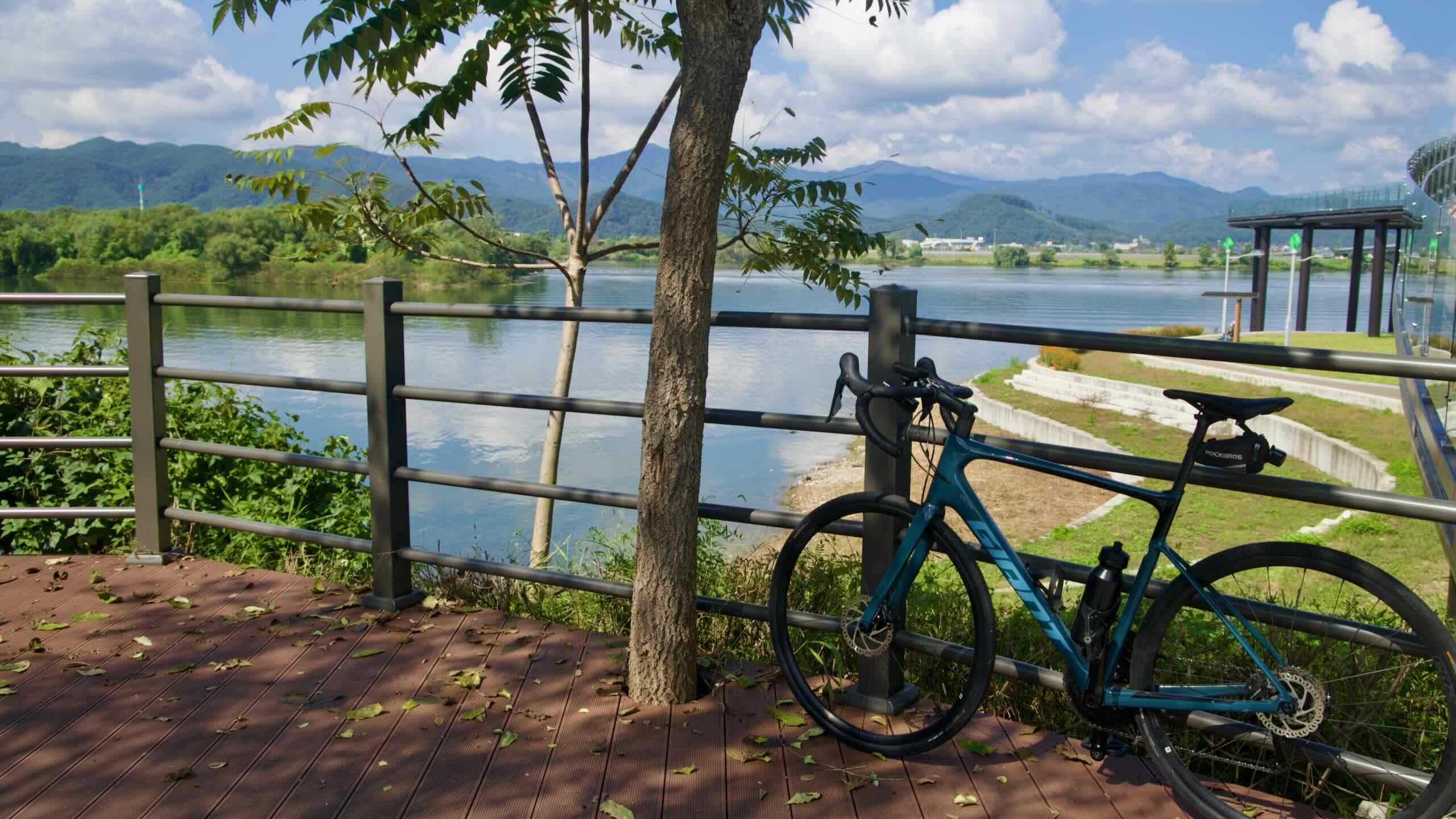
The cycling course starts in Chuncheon City (춘천시; map). It follows a decommissioned commuter train line around lakes and through valleys. It lands in Namyangju City (남양주시; map), one of Seoul’s eastern satellite cities.
Downtown Chuncheon to Sinmae Bridge Certification Center
Begin at Chuncheon Bus Terminal. Make the journey to the official start of the Bukhangang Bike Path. Along the way, explore highlights of Chuncheon City.
Welcome to the start of the Bukhangang Bike Path… well, not exactly. If you’ve decided to take the north-to-south route, you may have arrived by intercity bus at the Chuncheon Intercity Bus Terminal, on the south end of downtown Chuncheon.
Where is that in relation to the start of the Bukhangang Bike Path?
Officially, the bike path begins at the Sinmae Bridge Certification Center, about 11 kilometers north of the bus terminal. Sounds like a long trek, but it comes with a reward.
If you’ve got time to spare, detour into Chuncheon to check out some of this provincial capital’s highlights.
Before we begin our tour, let’s take a quick look at the city itself.
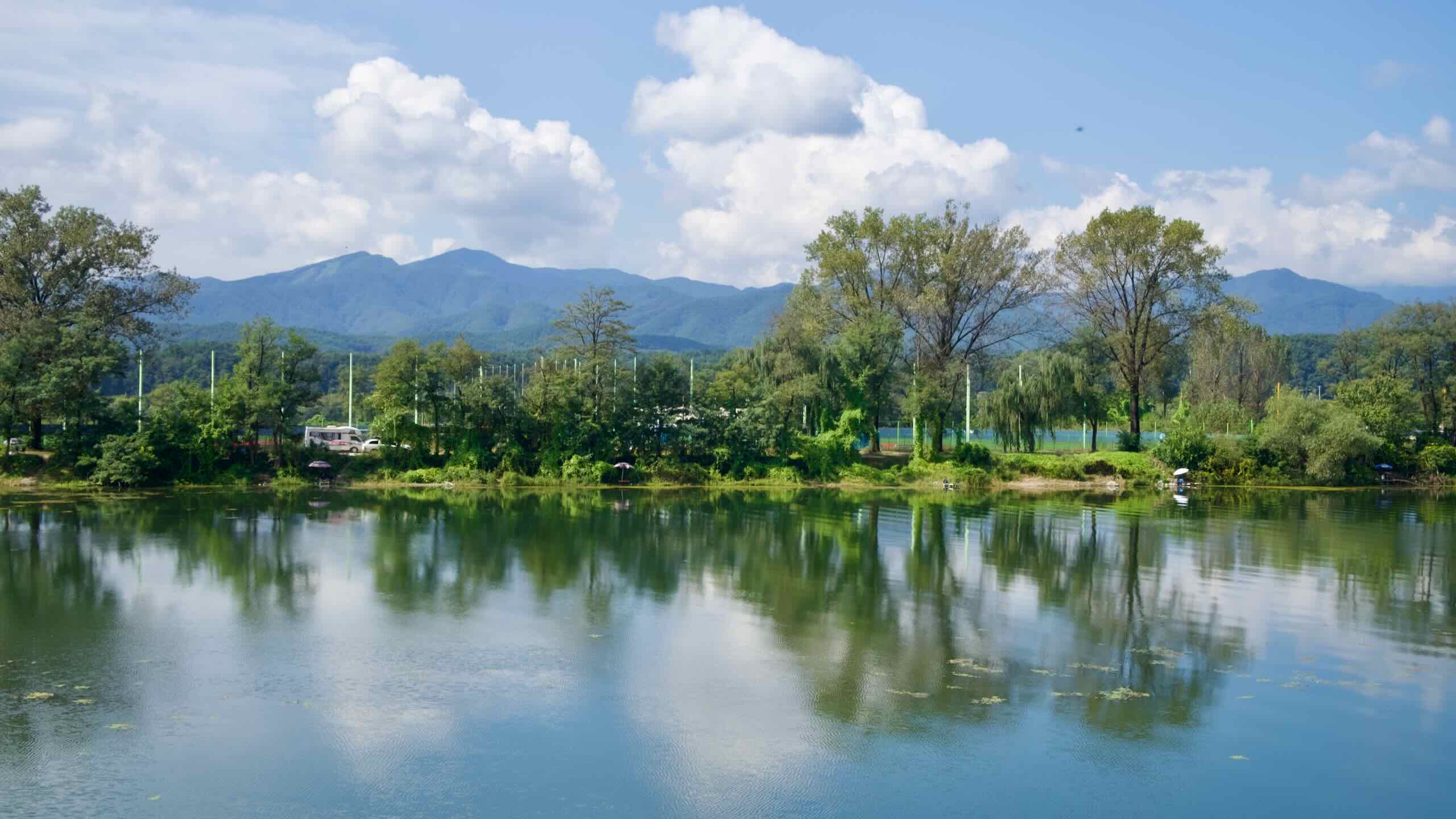
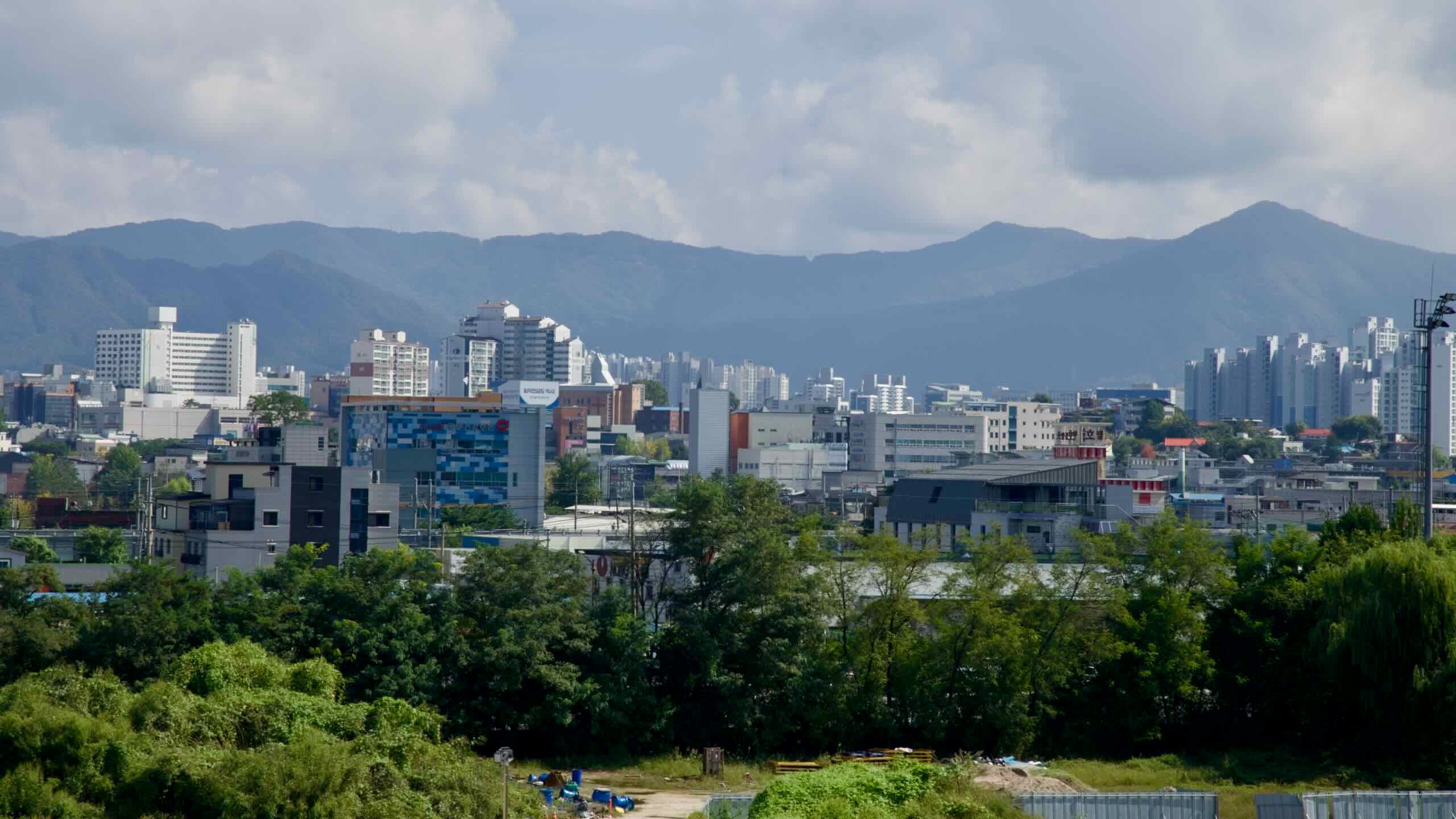
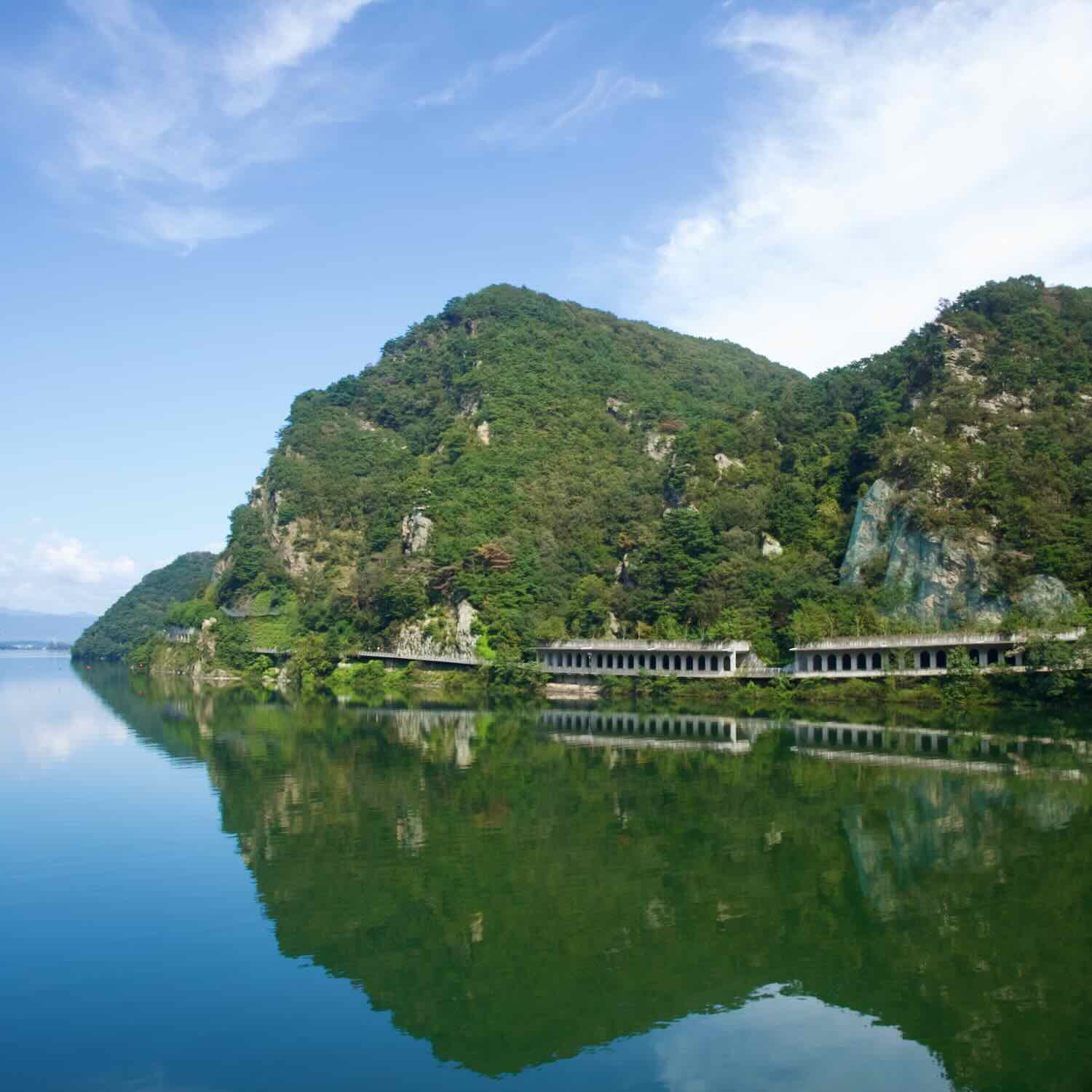
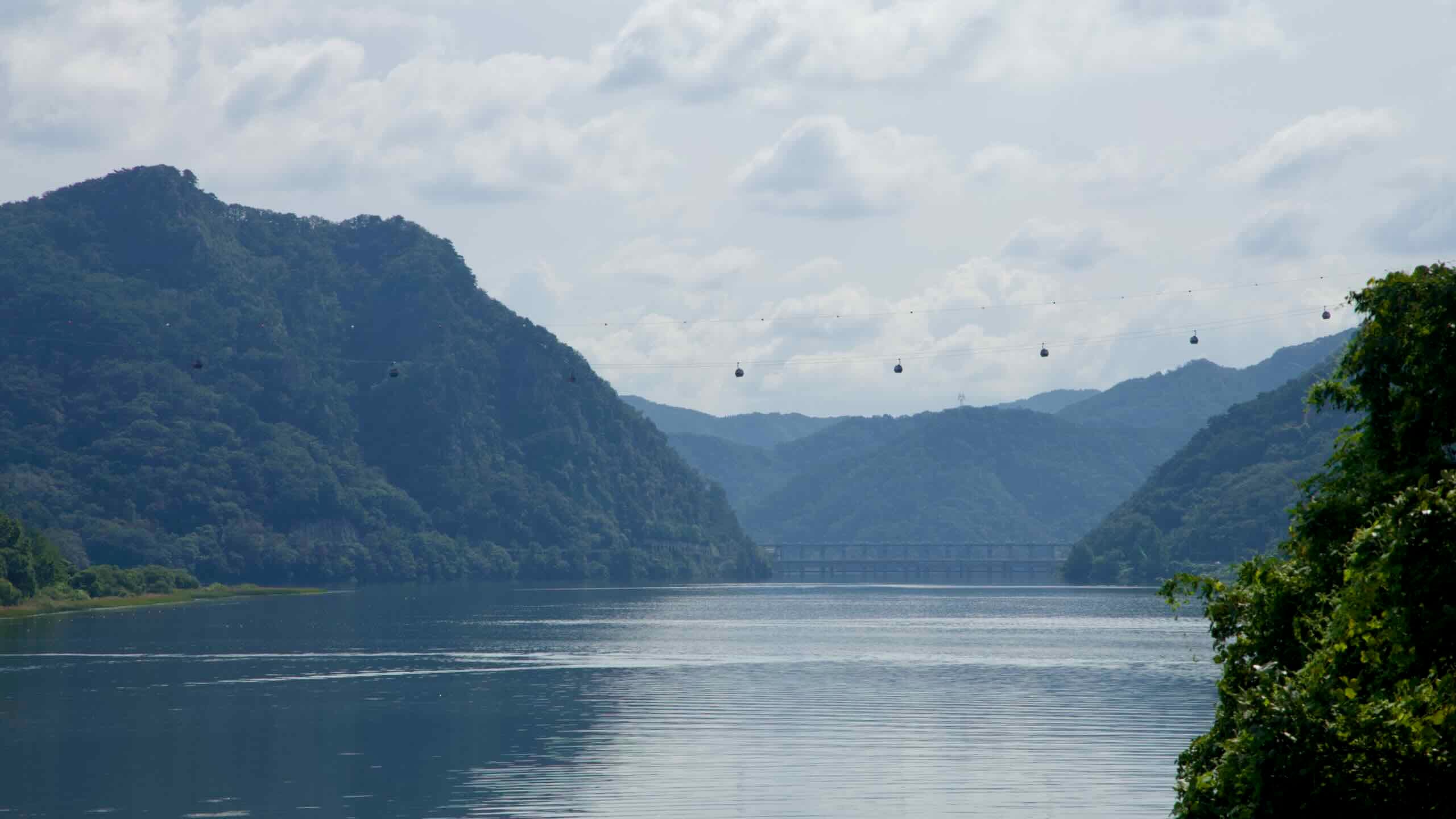
Chuncheon City sits northeast of Seoul along the North Han River (Bukhangang). Known as the “Romantic City,” it lies in a basin where the Bukhangang and Soyang Rivers meet, about 75 km northeast of Seoul.
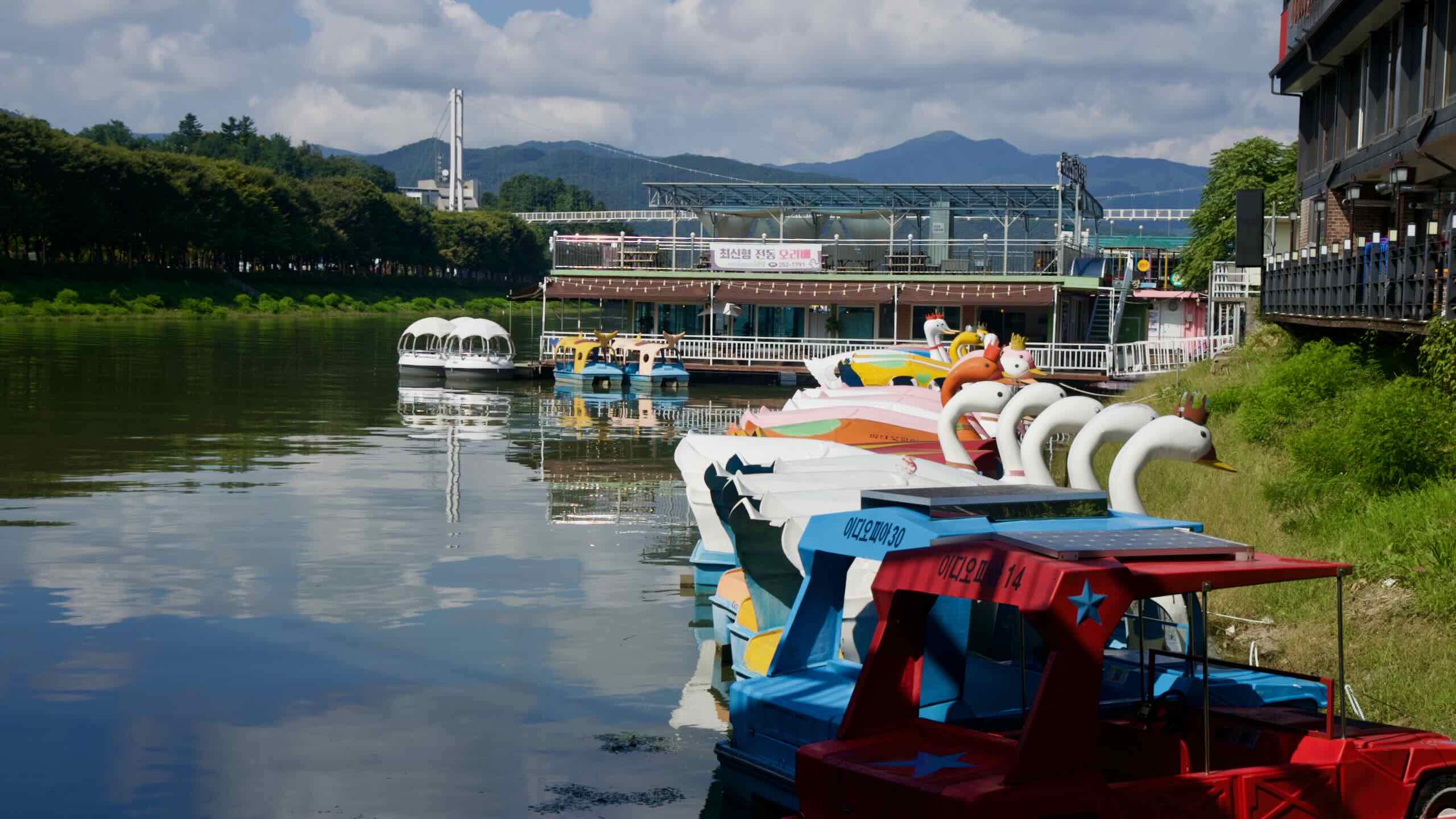
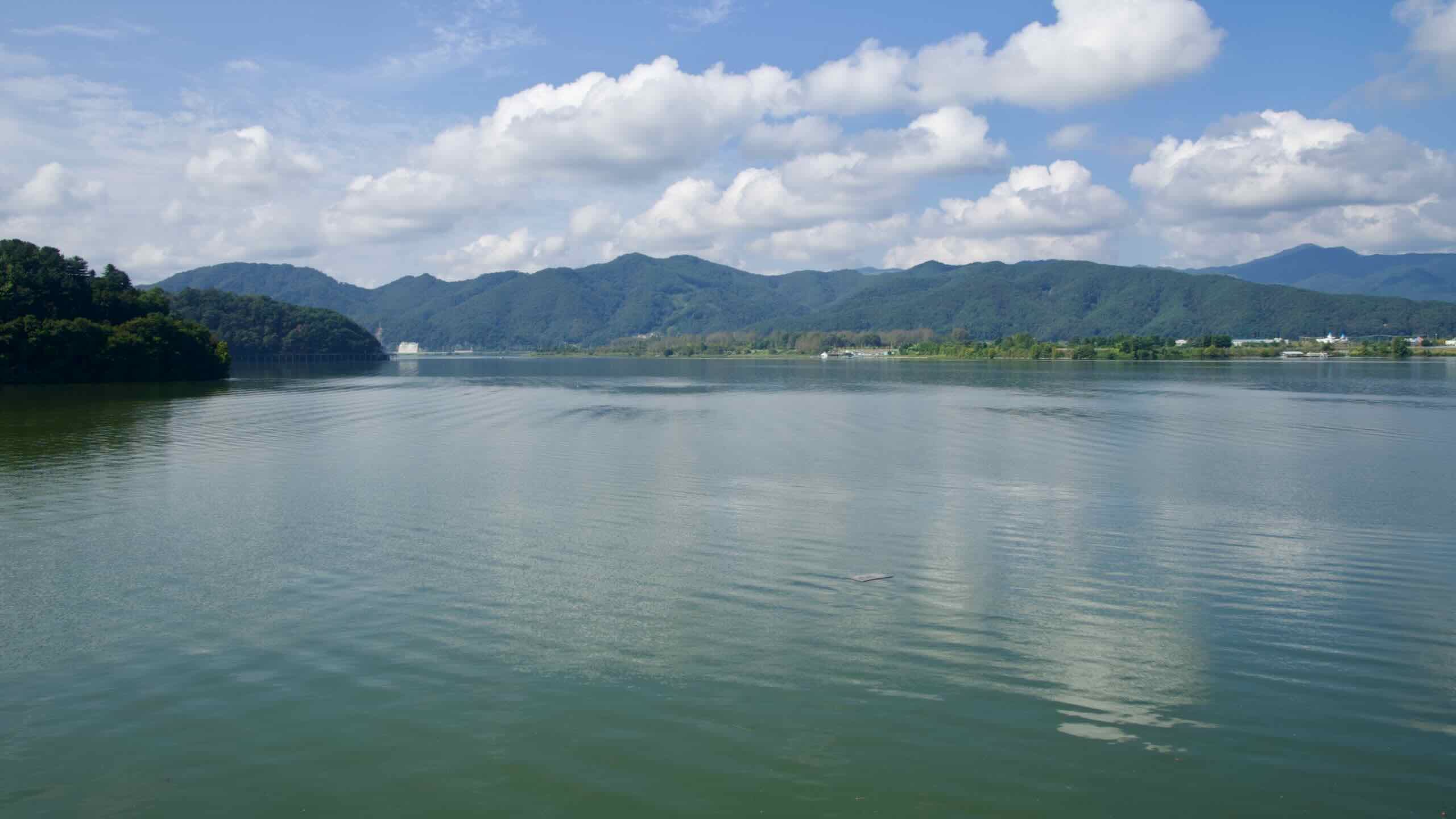
The city spreads between low, forested hills and a chain of artificial lakes—Soyang Lake, Uiam Lake, and Chuncheon Lake—created by mid-20th-century dams. That’s why it’s often branded as Korea’s “city of lakes.”
Designated the provincial capital of Gangwon State in 1896, much of the city was destroyed in the Korean War and rebuilt in the decades that followed.
Today, Chuncheon offers a mix of lakeside recreation—walking and cycling paths, plus plenty of water sports—and viewpoints such as Soyanggang Skywalk, the newer Silo 248 suspension bridge, and Legoland Hajungdo Island. In the center, Myeongdong Street, Jungang Market, and Dakgalbi Alley cluster together in a dense grid of shops, food, and old arcades—still the city’s main place to meet, shop, and eat.
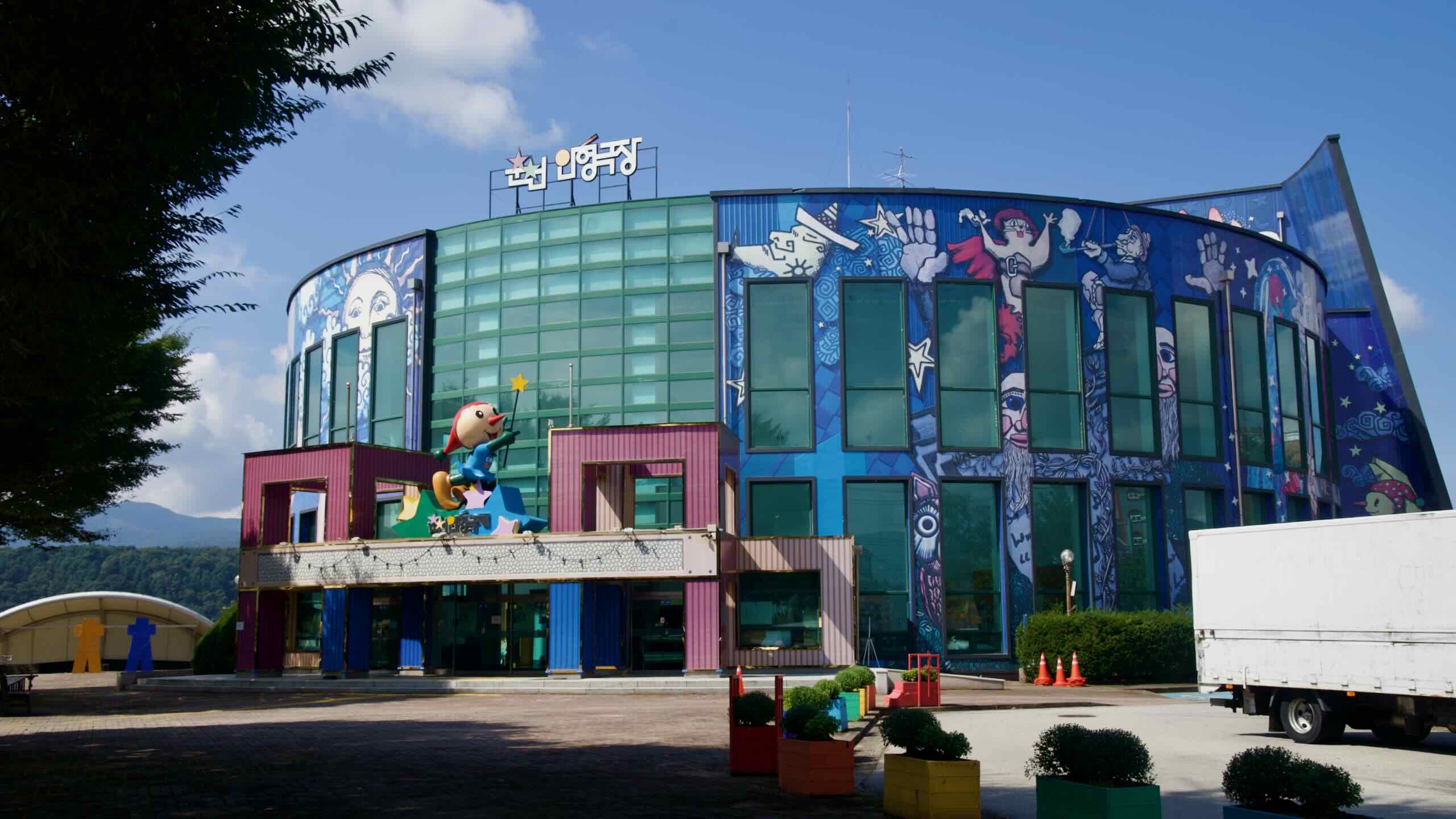
Chuncheon also hosts the long-running Chuncheon Puppet Festival and the UNIMA World Puppet Festival at the lakeside puppet theater and museum. Popular dramas like Winter Sonata (겨울연가; 2002) used its streets and islands as backdrops, drawing waves of visitors in the 2000s.
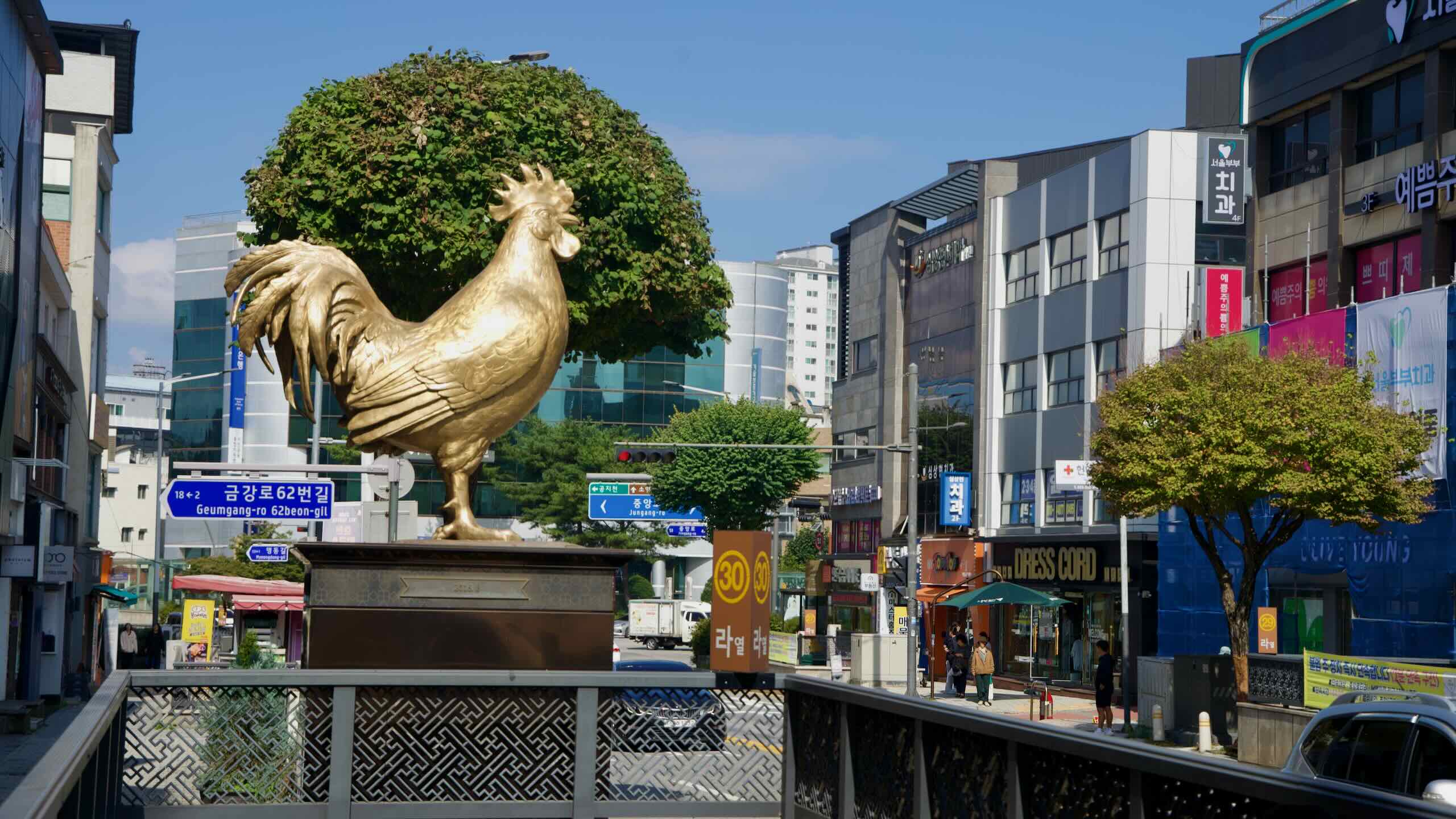
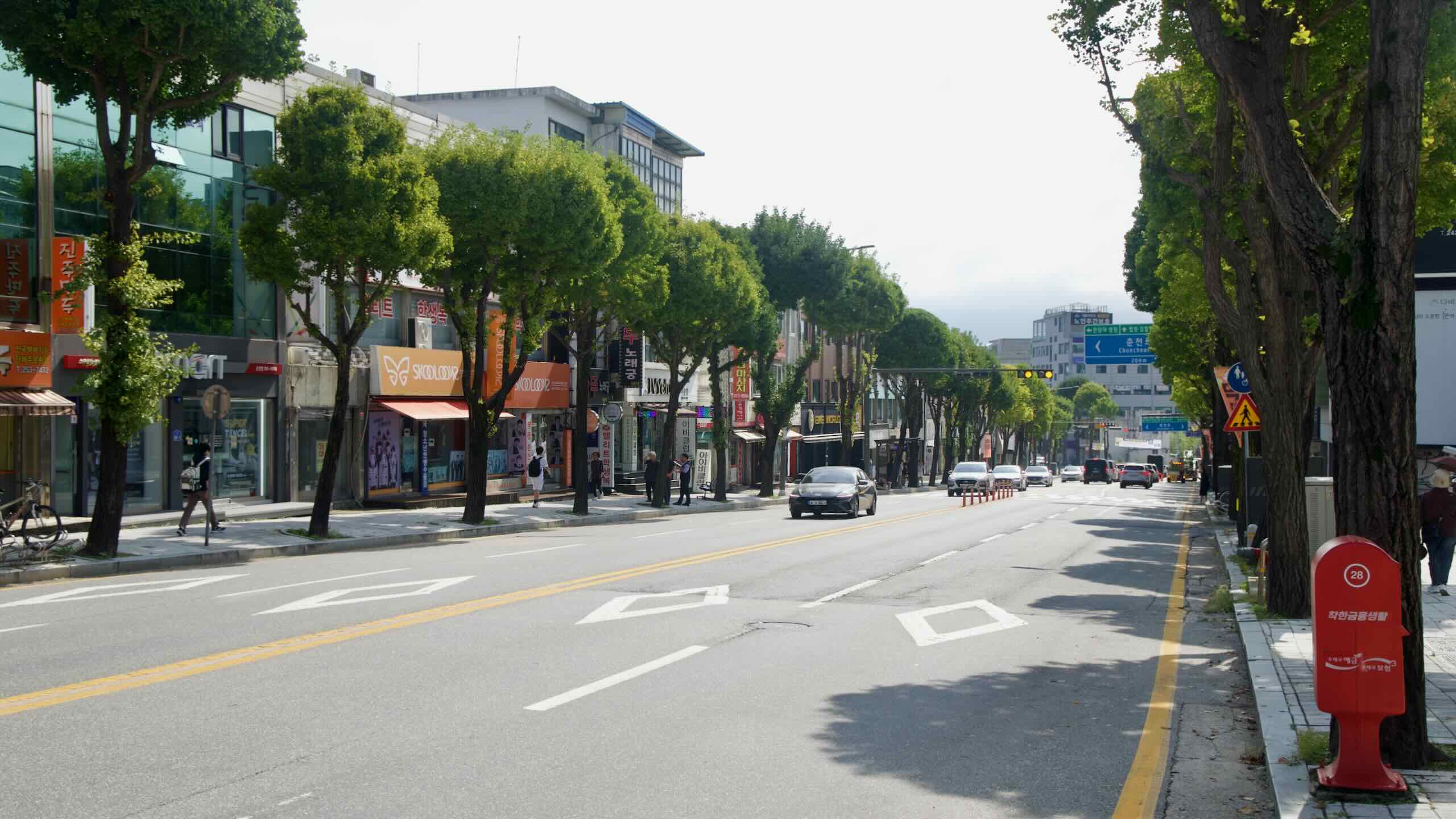
From the bus terminal, push off and head north into the heart of Chuncheon City. Follow expansive cycling lanes embedded into the sidewalks and cross over Gongji Stream (공지천; map). Take a left just past Yaksa Stream Waterfront Park (map) and arrive at Chuncheon Myeongdong Street (춘천 명동 거리; map), the city’s main shopping area (directions; 2.6 kilometers; 13 minutes).
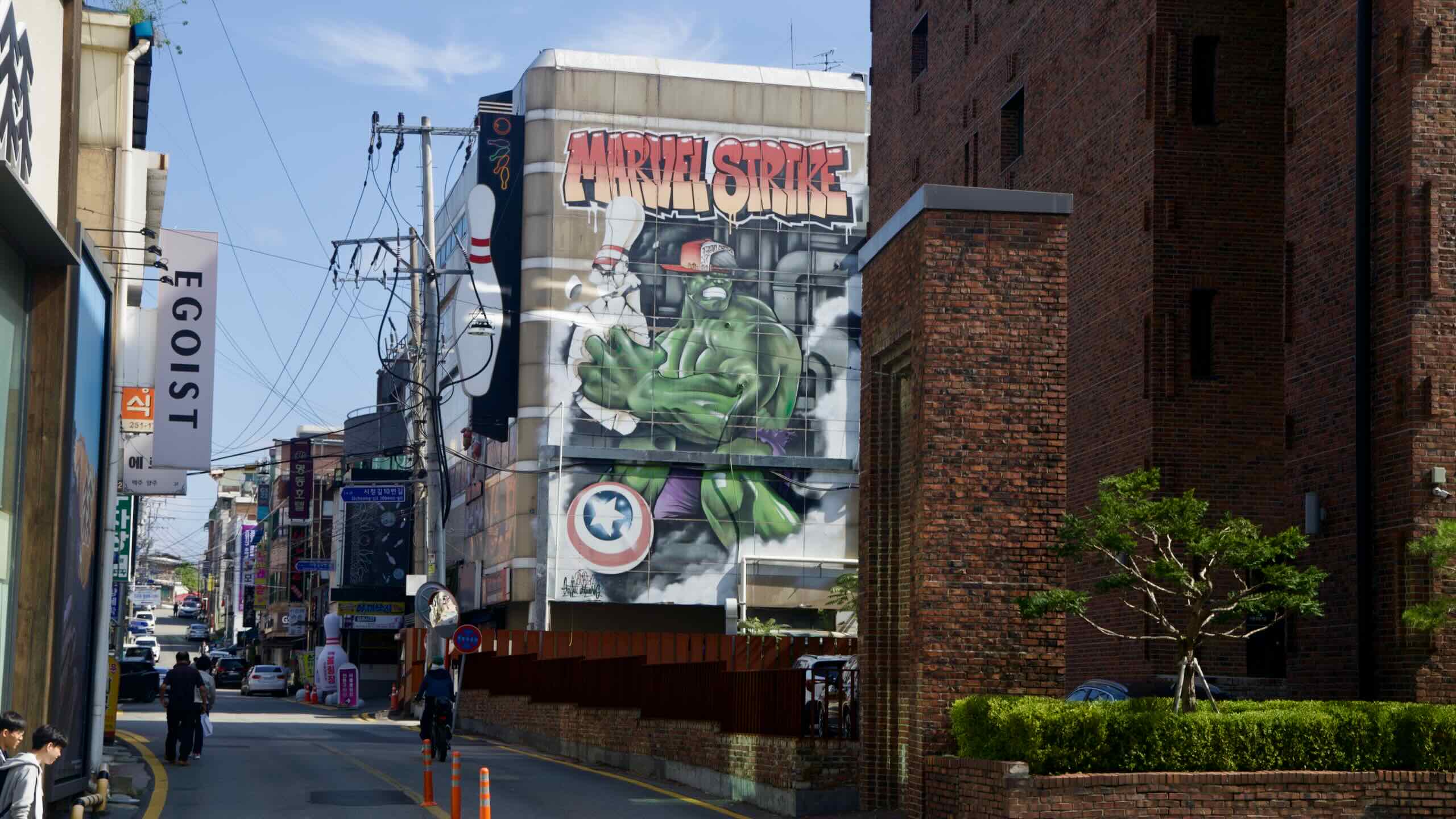
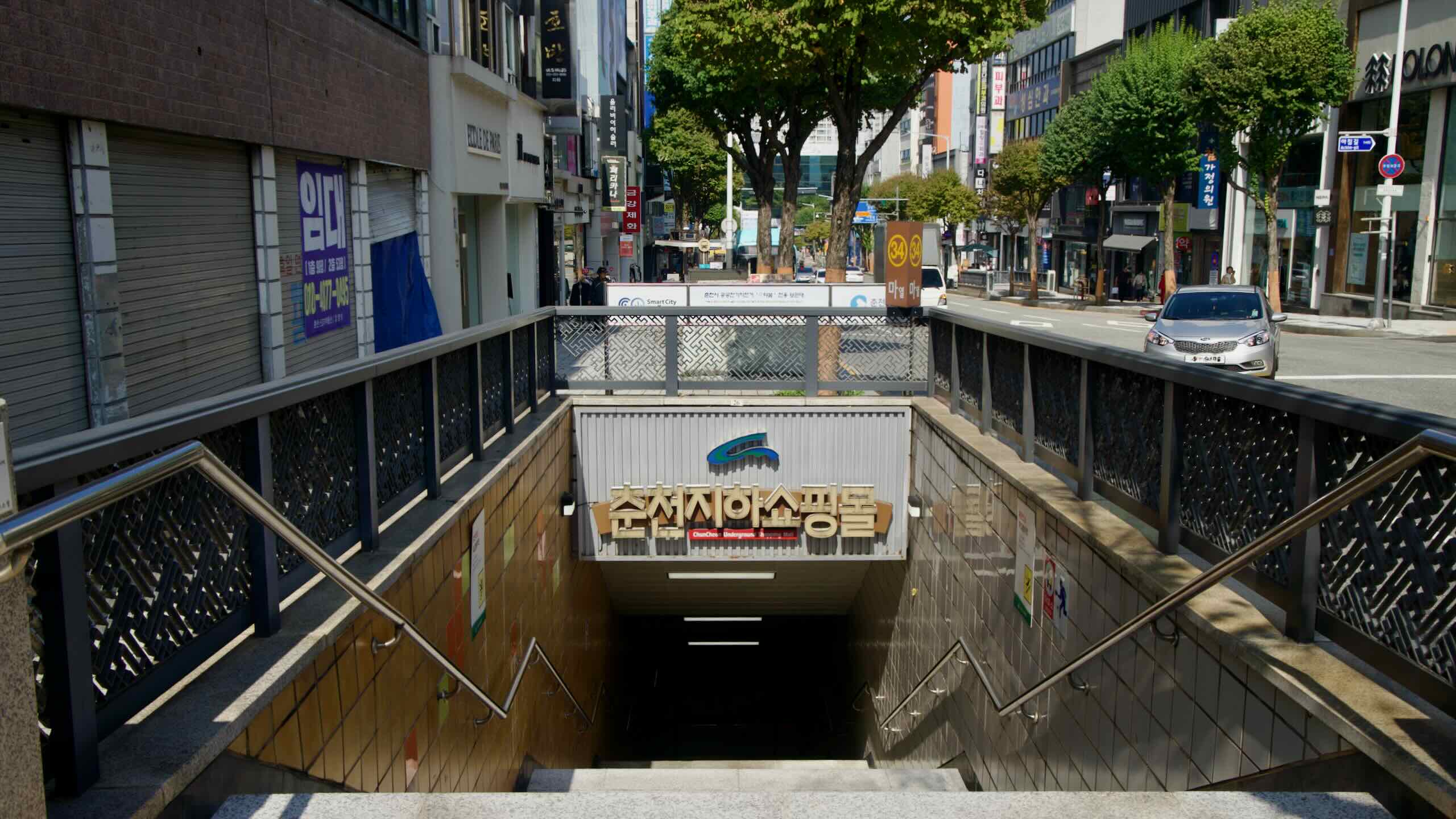
This part of town is Chuncheon’s shopping and nightlife epicenter. The compact, pedestrian-friendly street—named after Seoul’s famed Myeongdong—encompasses Chuncheon Central Market, an underground shopping center, and Chuncheon Dakgalbi Street.
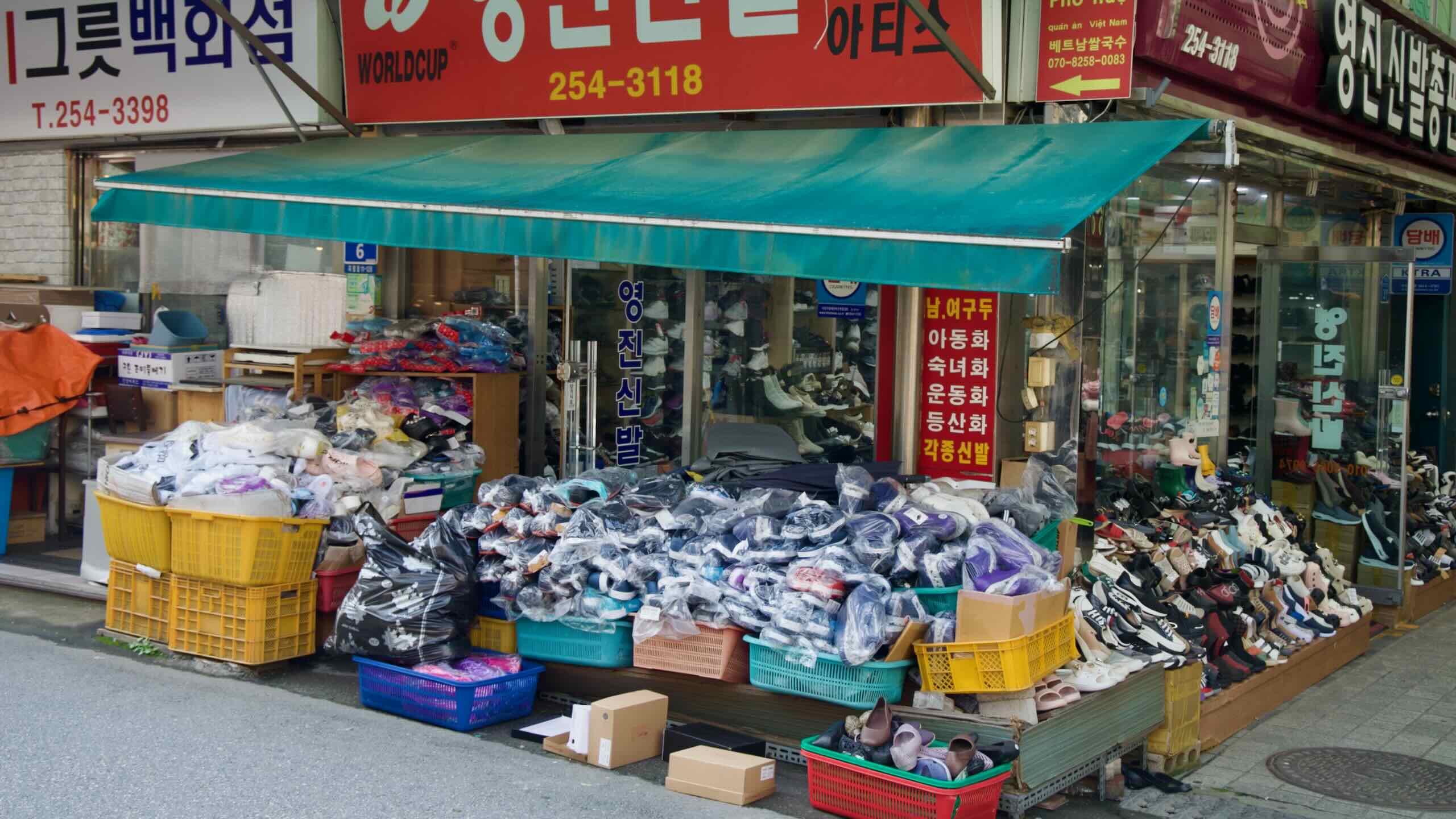
In Myeongdong, find clothing boutiques, cosmetics shops, shoe stores, cafés, and small restaurants, along with everyday city institutions like banks, government offices, and a department store.
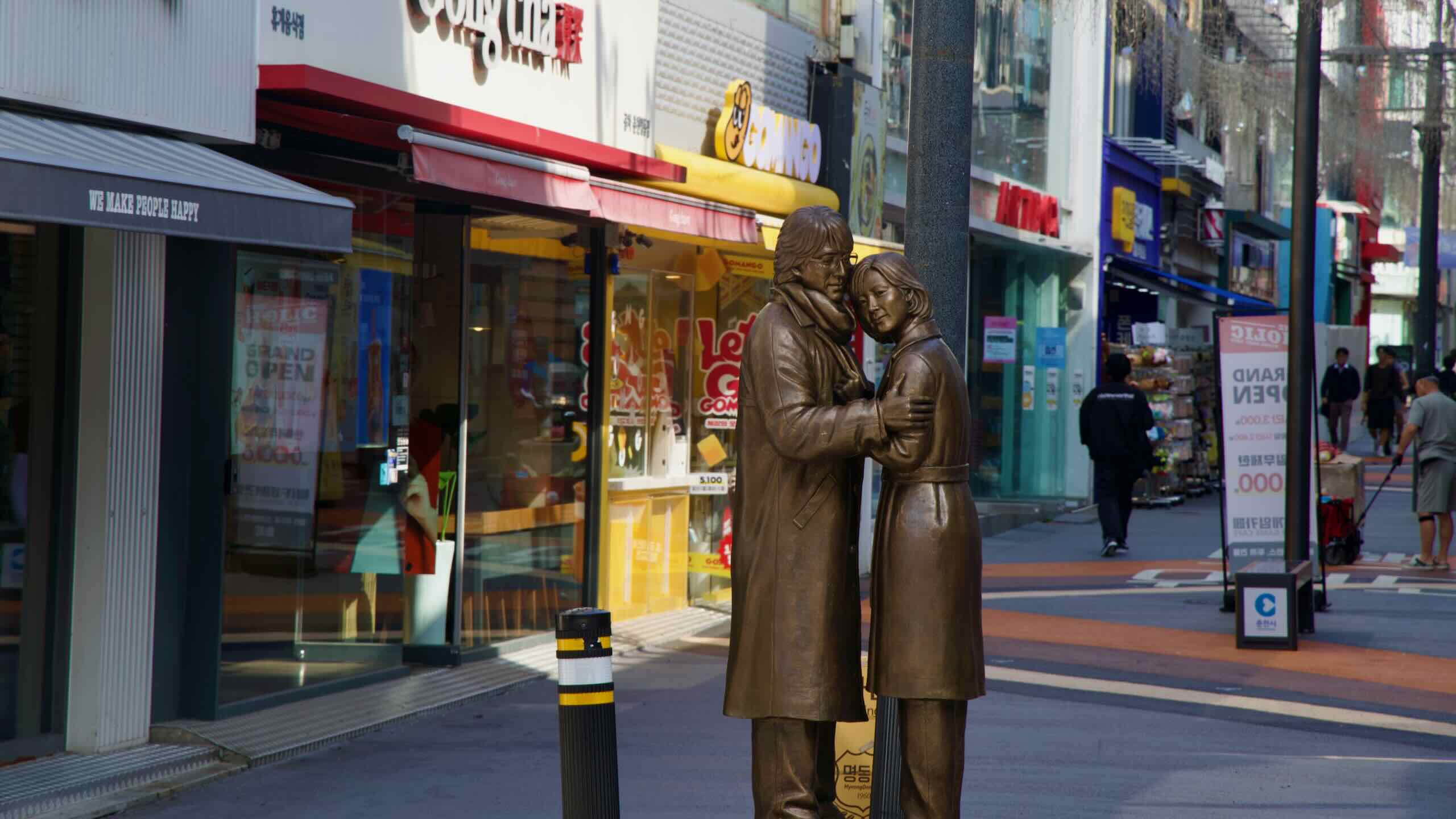
A row of tree-shaped street lamps and a small Winter Sonata sculpture in the central section hint at its brief Hallyu moment, but day to day it works as what it’s always been: the busiest slice of old downtown where locals still come to shop, meet, and eat.
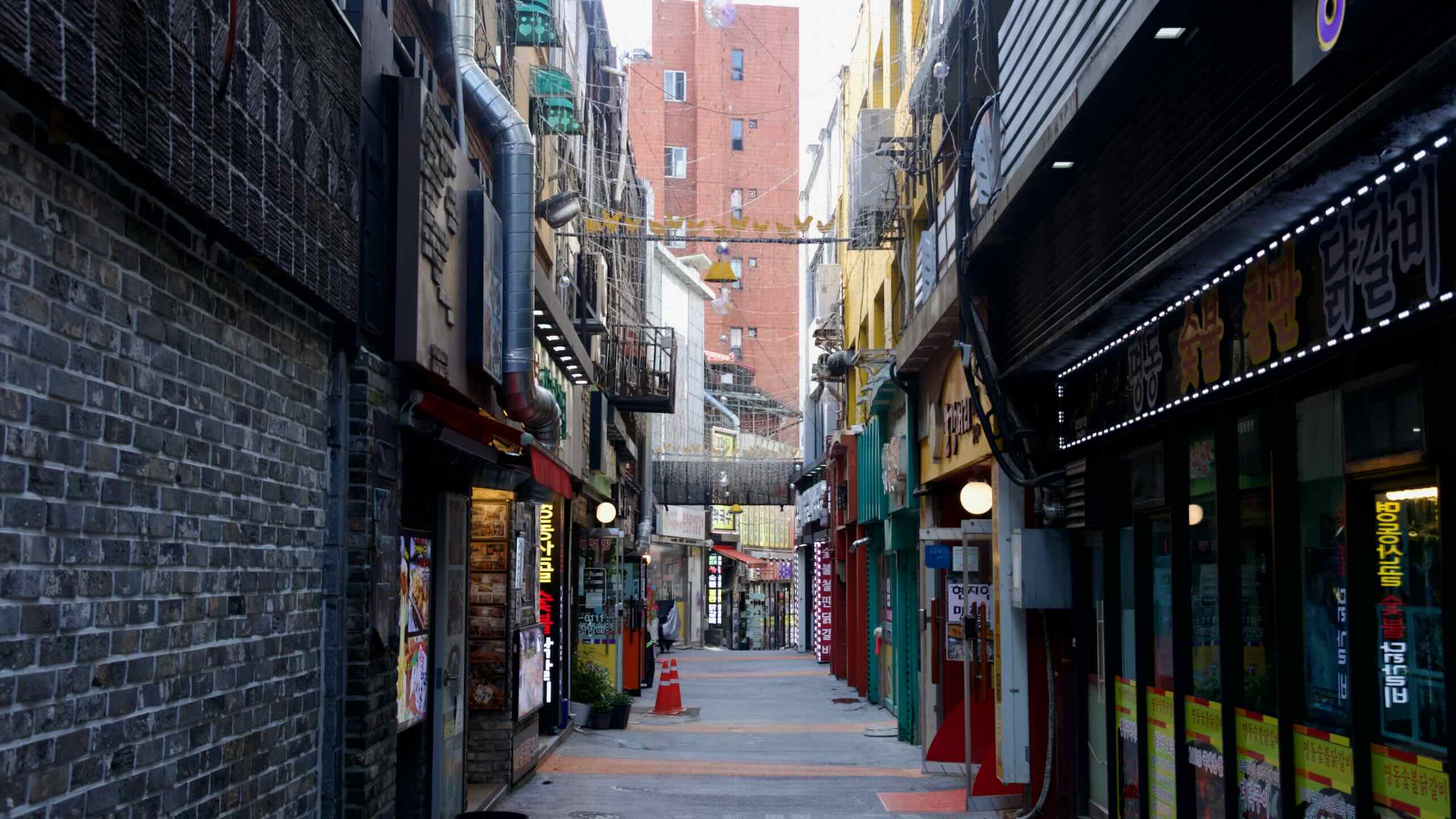
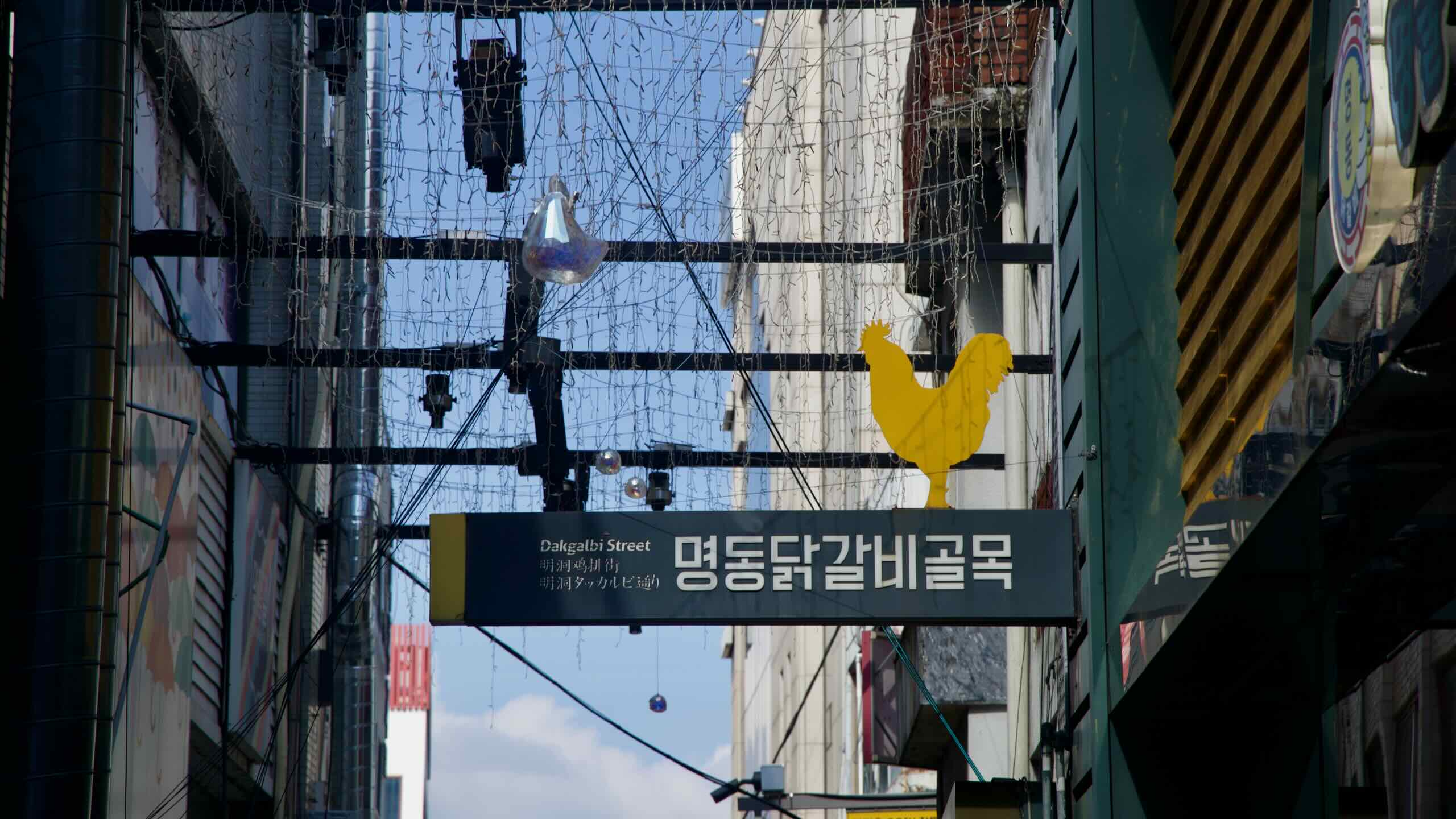
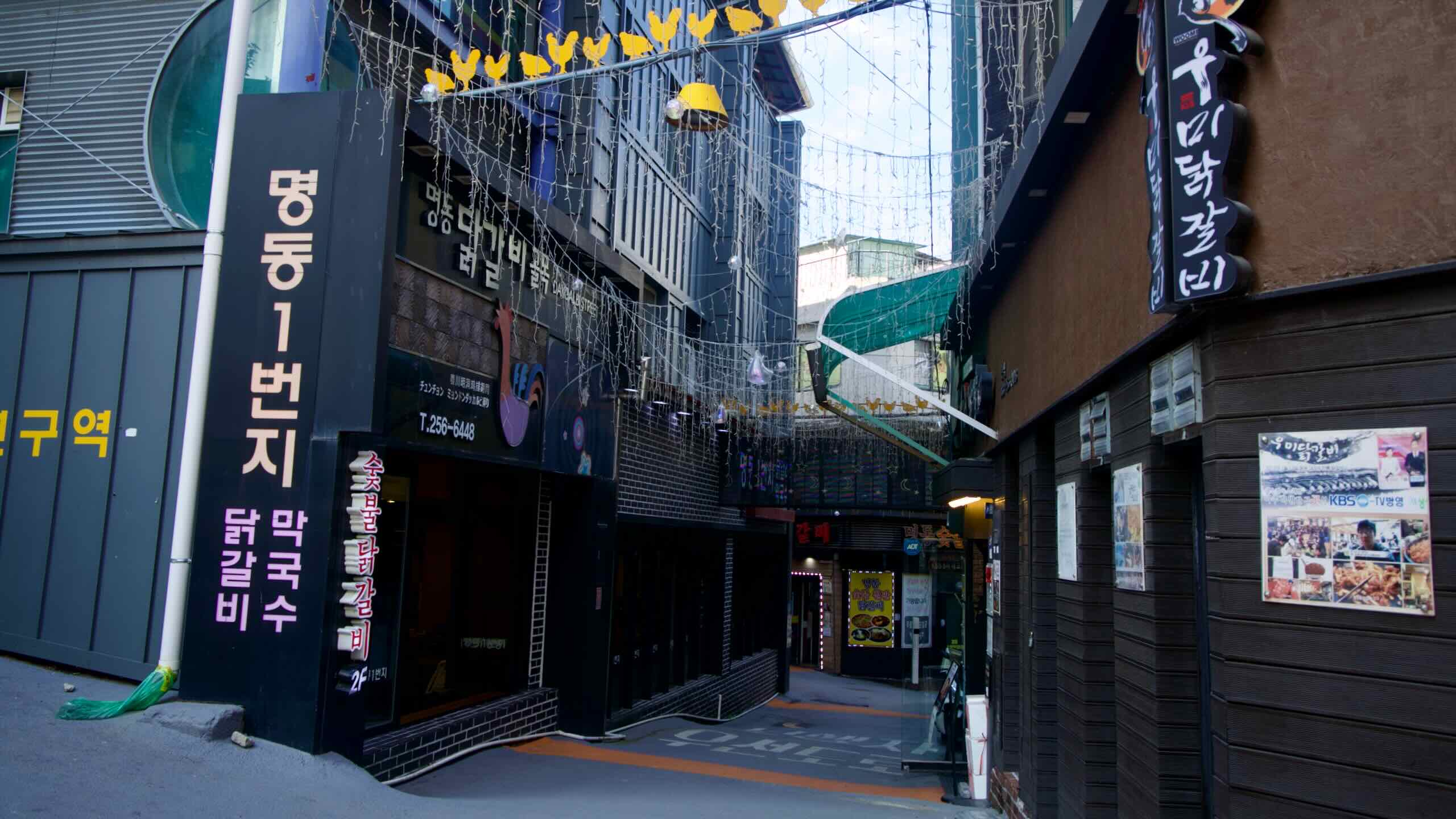
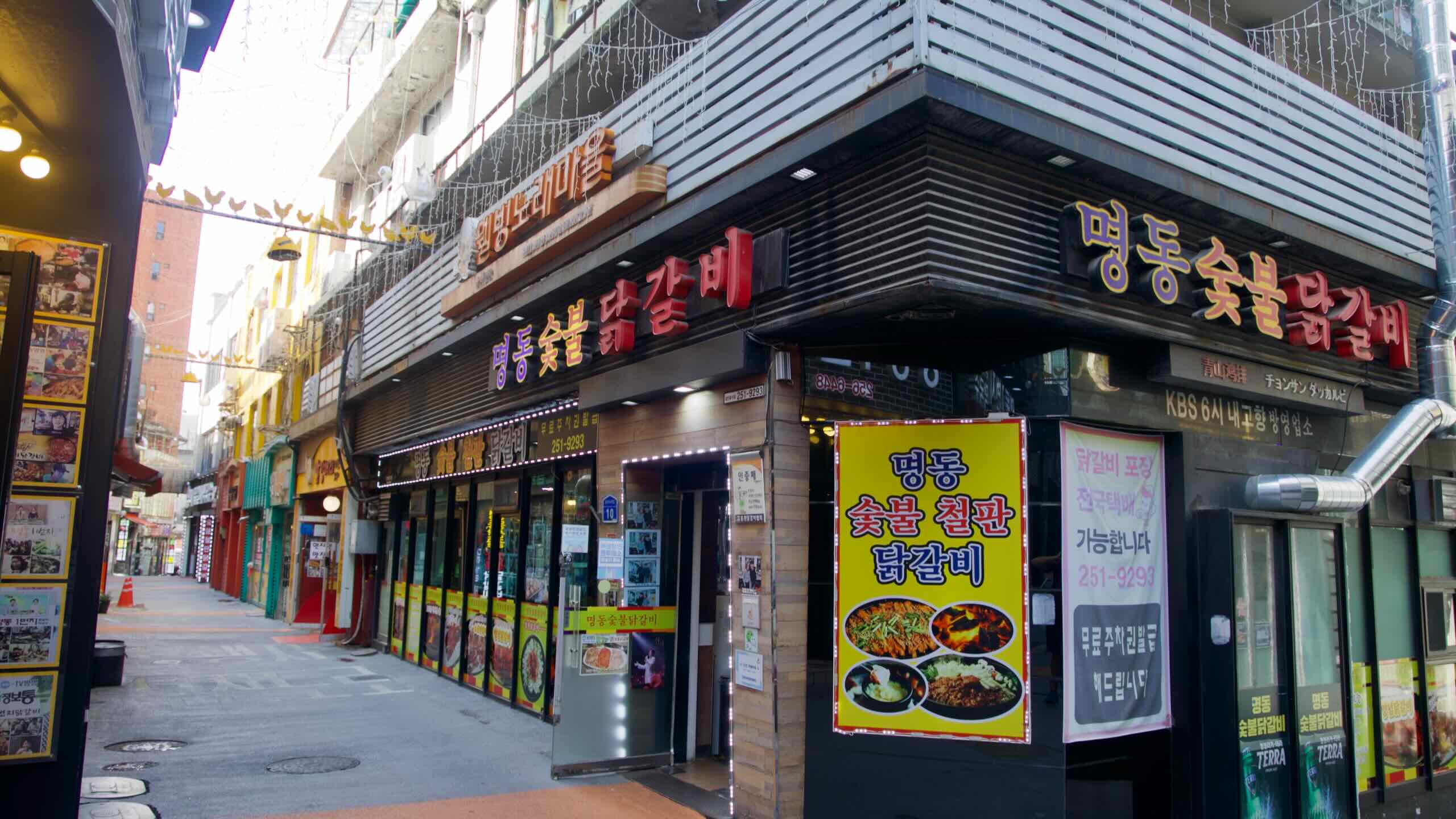
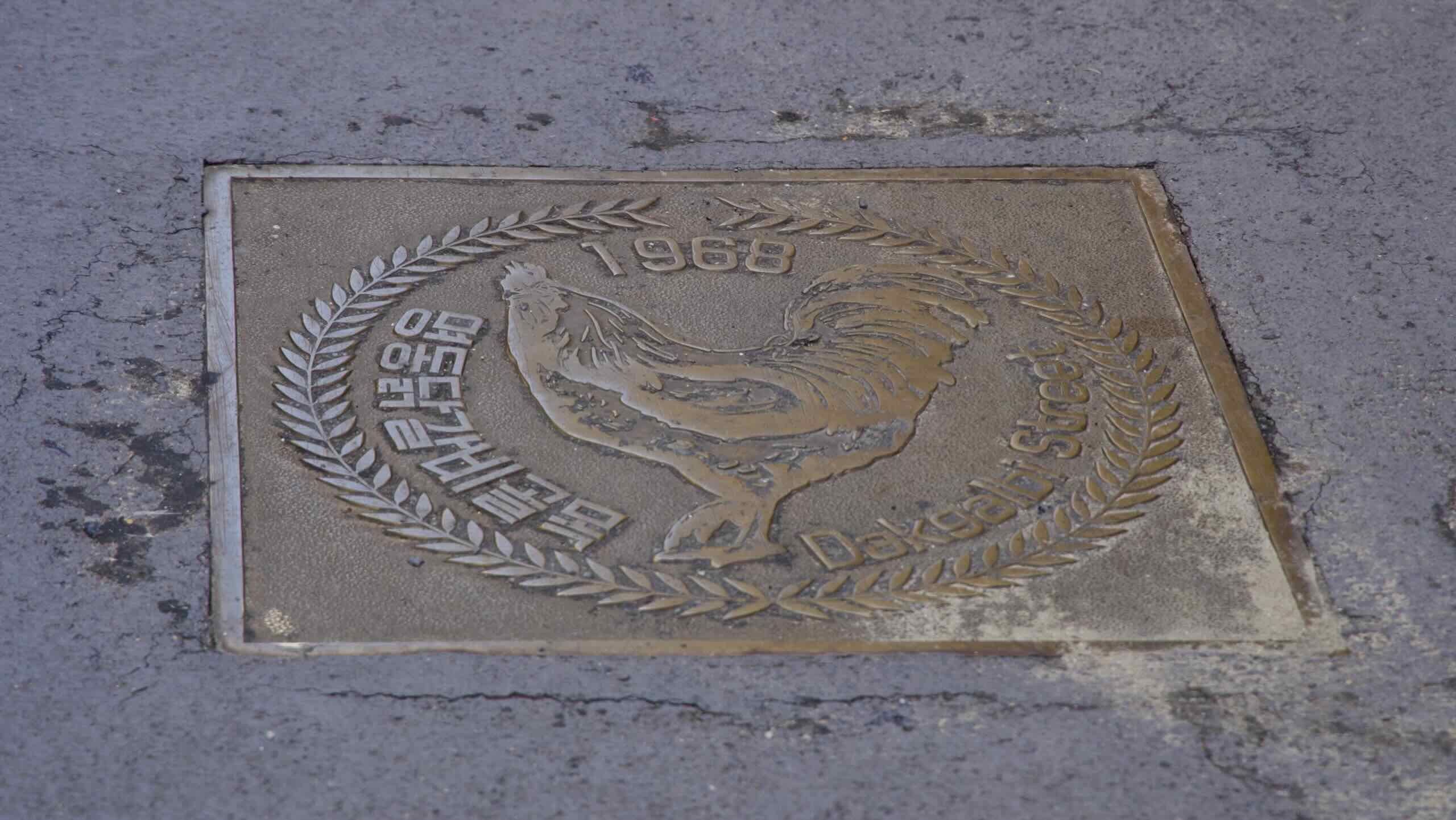
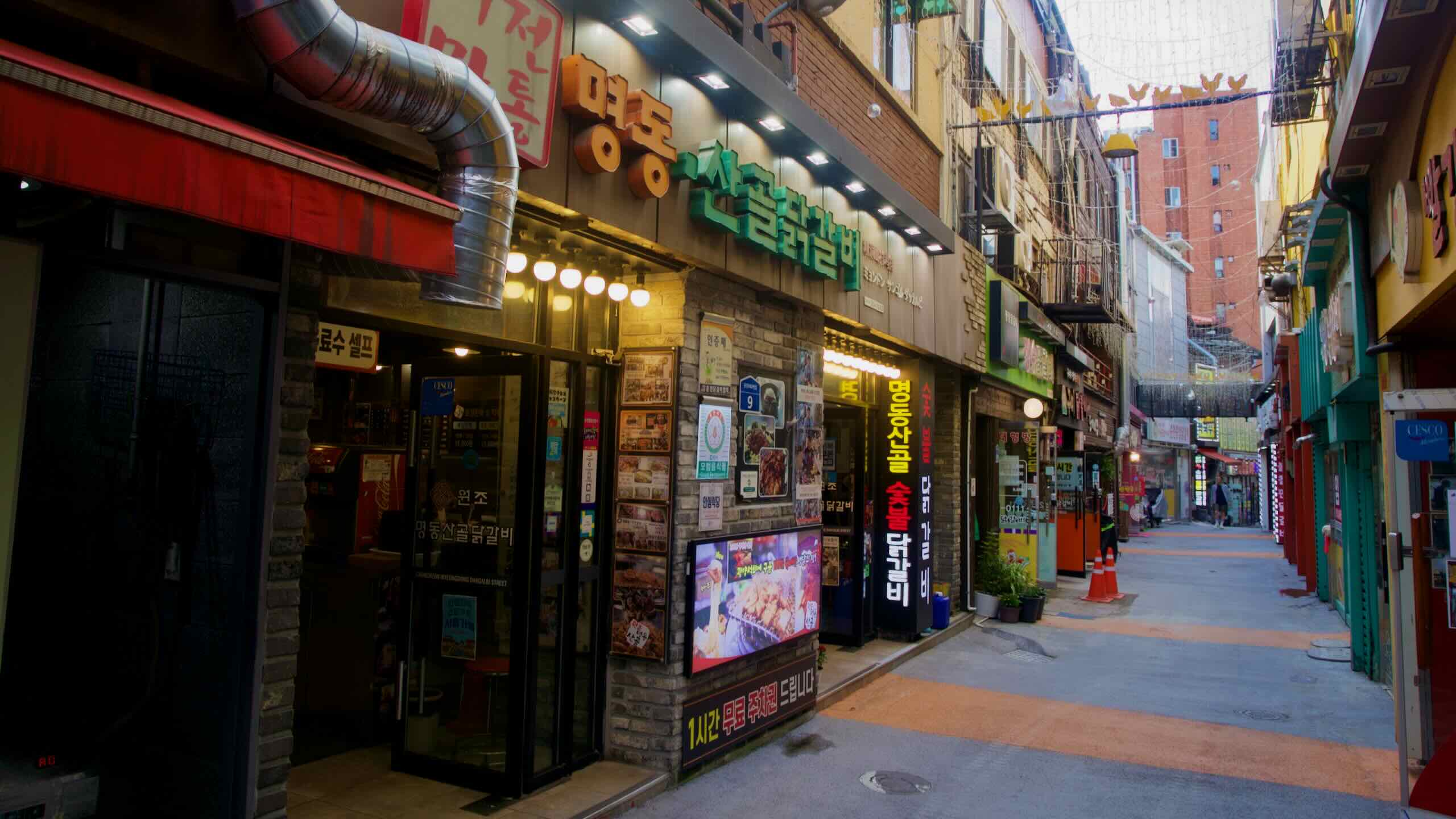
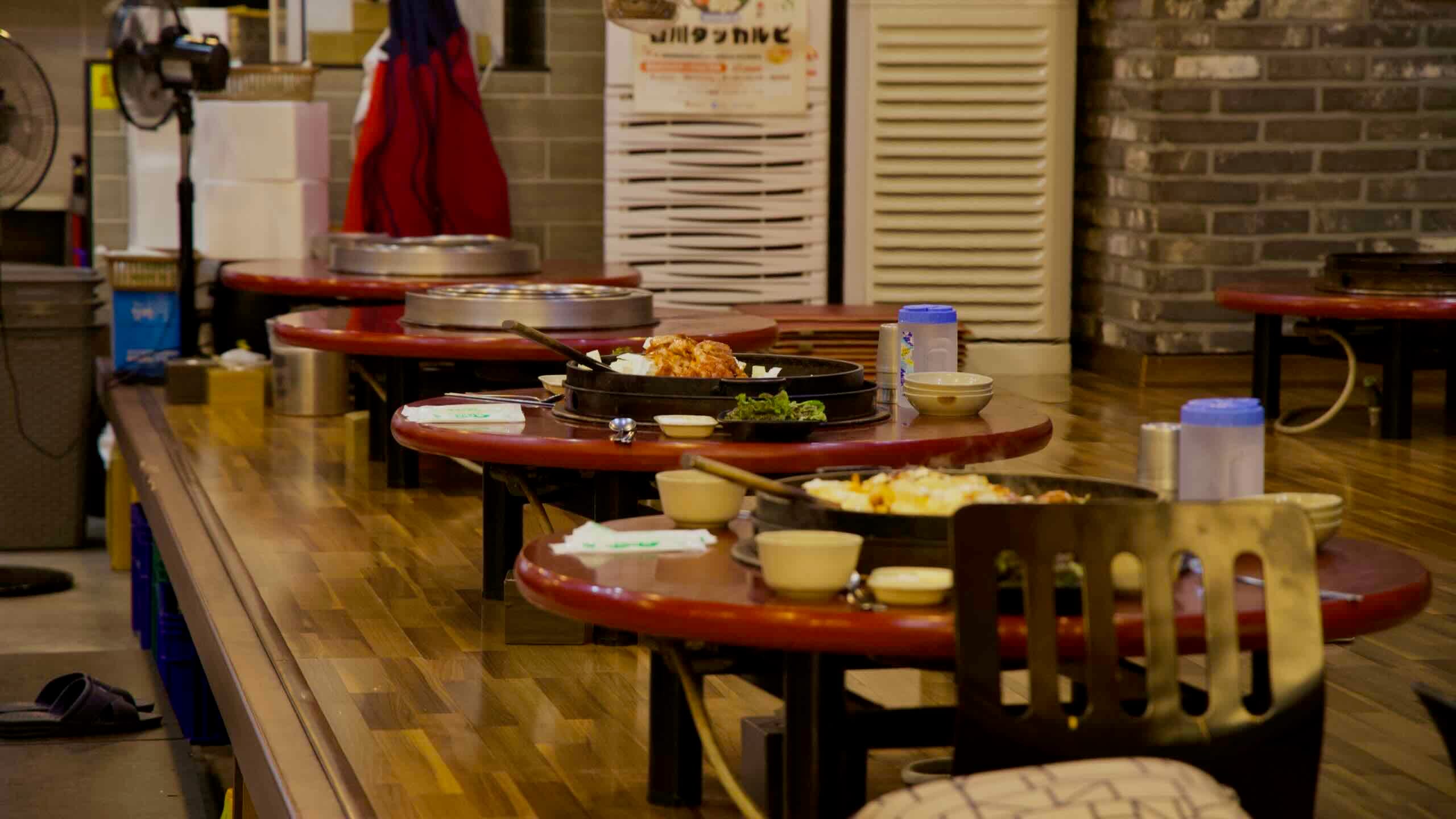
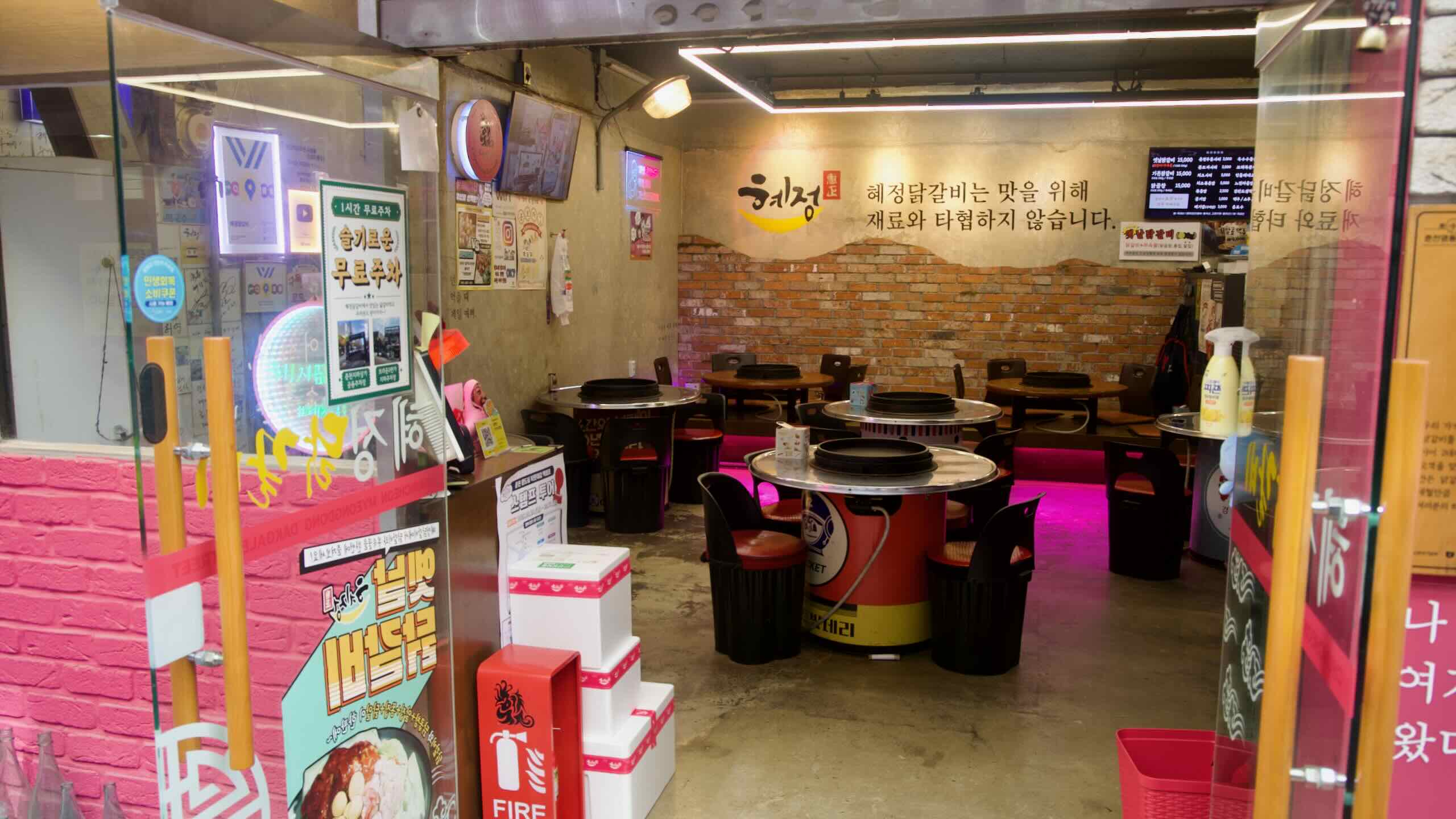
Chuncheon Dakgalbi Street (춘천명동닭갈비골목; map) is the narrow back street behind Myeongdong’s main drag where almost every storefront is a dakgalbi restaurant. The lane took shape in the 1970s and 80s as chicken rib joints opened one by one in the alleys, turning into a 150-meter corridor lined on both sides with charcoal-grilled and iron-plate dakgalbi places—most of them also serving buckwheat makguksu.
Dakgalbi itself grew out of cheap tavern food in 1960s Chuncheon and became known as “people’s galbi” and “college students’ galbi” because the portions were big and the price was low. That student-and-soldier crowd helped make this alley famous.
Today, the restaurants’ glowing entrance signs, mural-covered walls, and rows of sizzling pans make it feel like a dedicated food district inside downtown—part local canteen, part food-themed street, and a minor Hallyu stop where TV shows have filmed among the smoke and steam.
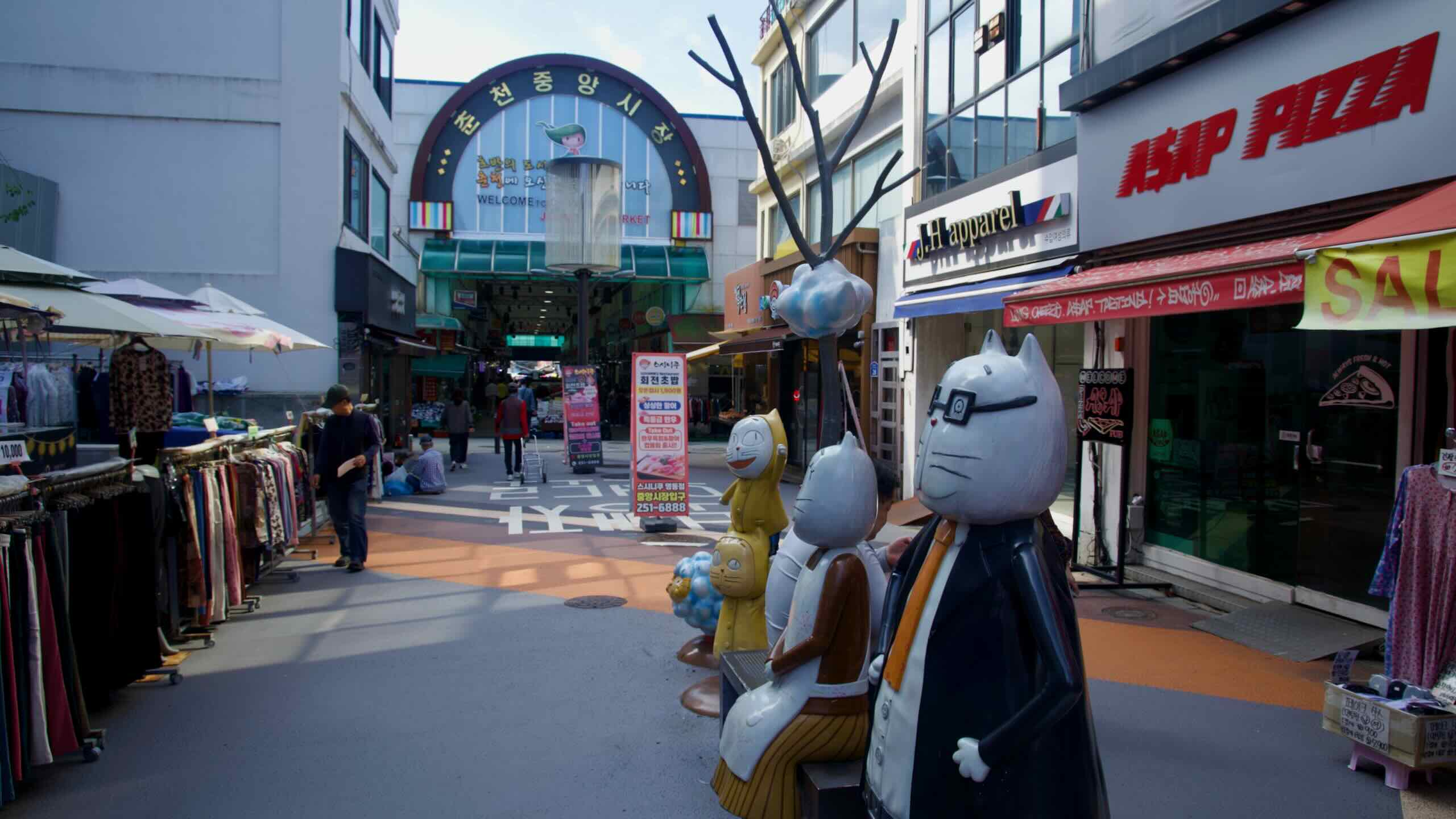
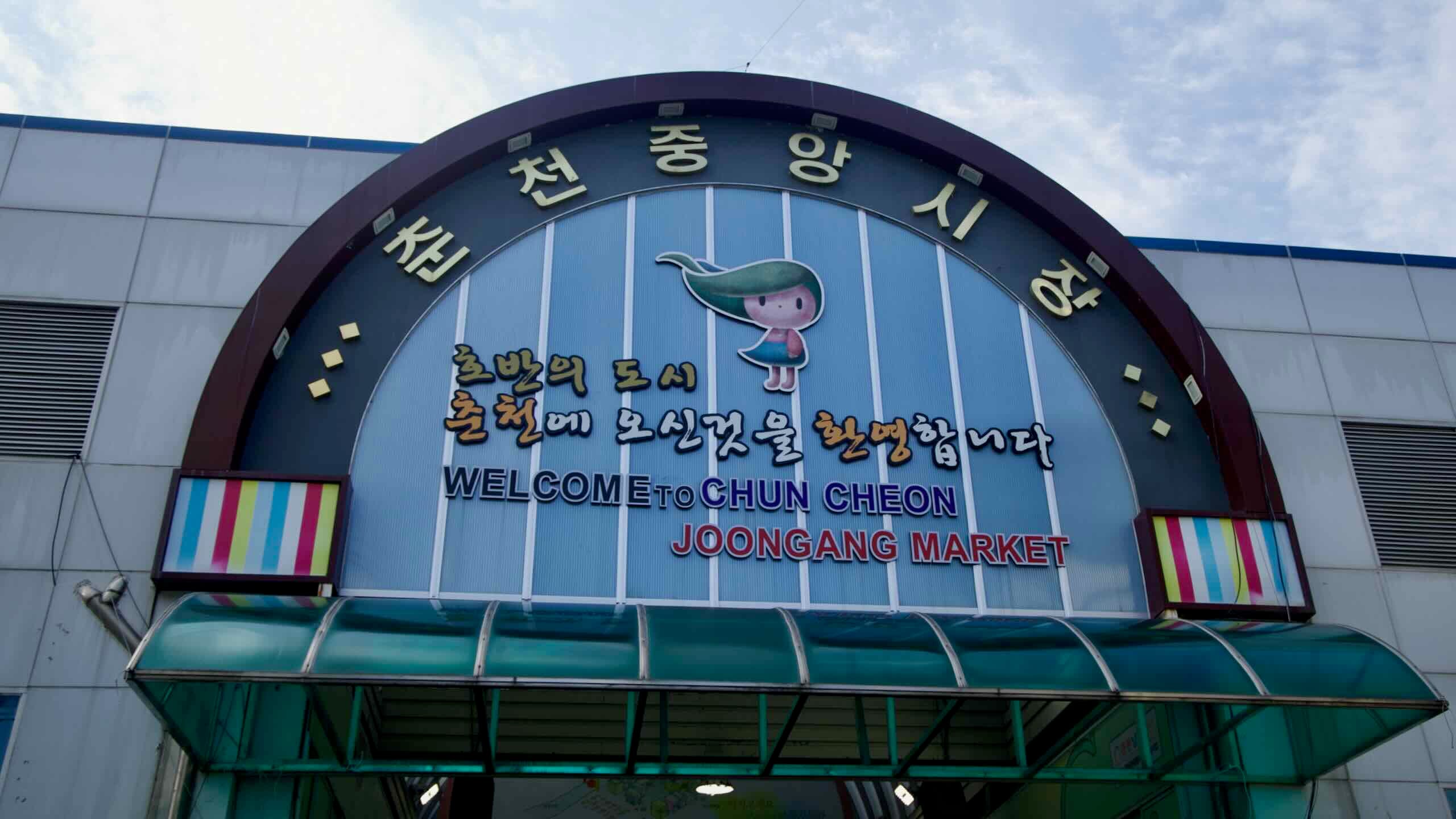
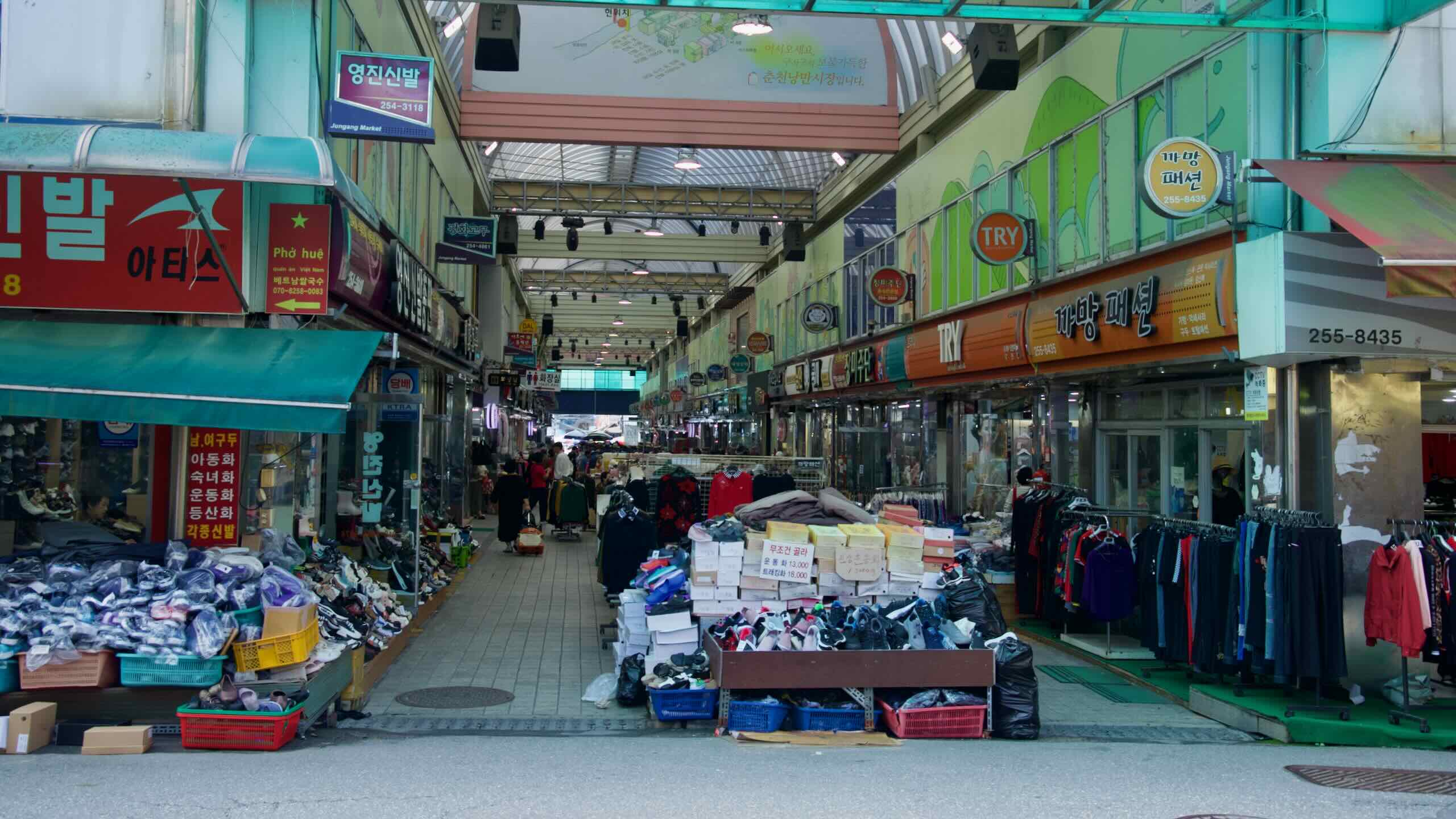
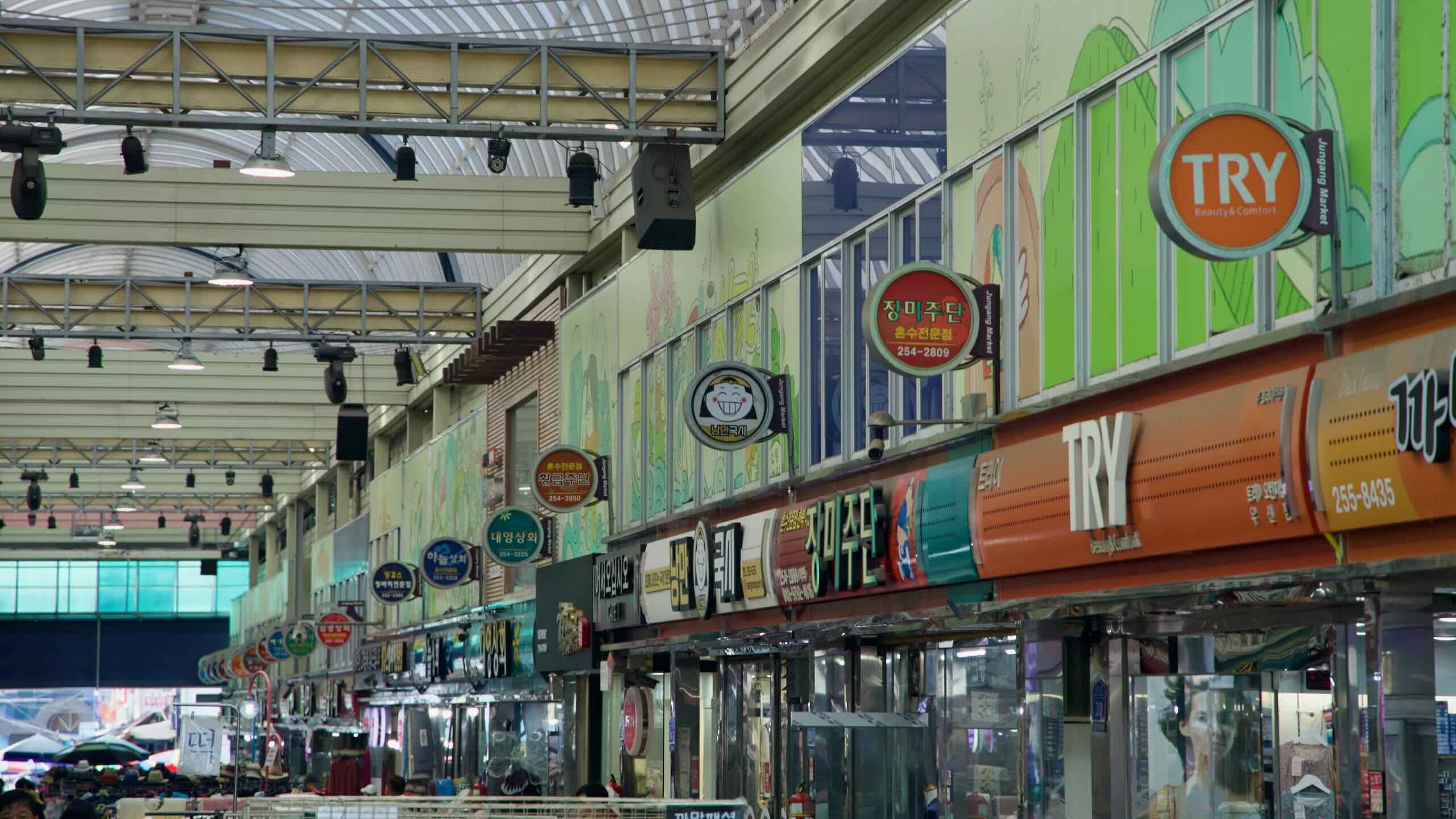
Just inside Chuncheon Myeongdong, find Chuncheon Central (Jungang) Market (춘천중앙시장; map). Now promoted as Chuncheon Romantic Market, this is the city’s main traditional market.
Laid out as a covered arcade since the 1960s, it threads together small clothing shops, hanbok and bag stores, household goods, butchers, greengrocers, and simple snack stalls—all under a roof that keeps it busy in every season.
The market stands on the old Joseon-era town market site and was rebuilt after the Korean War. Modernization projects in the 2000s added new facades, signage, murals, and small sculptures in the side alleys. Scenes shot at the market for Winter Sonata drew Japanese and Southeast Asian visitors here. Some vendors picked up basic foreign phrases, and occasional events are geared toward tourists.
Let’s head out of the shopping area and onto some real bike paths. From the Myeongdong area, find Jungang Road (중앙로; map) and cycle 1.7 kilometers (8 minutes) to Gongji Stream (공지천; map; Gongjicheon).
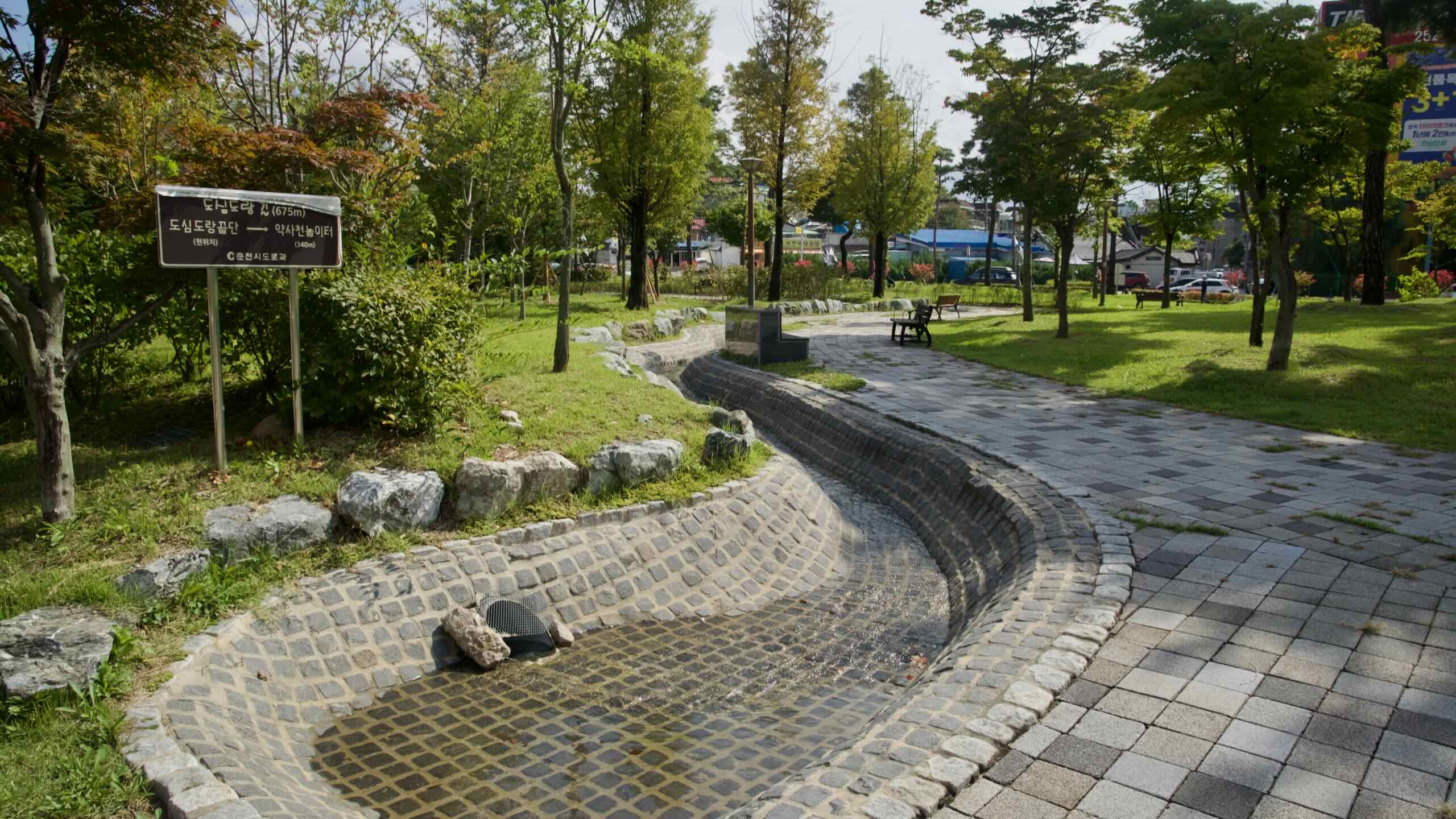
Gongji is the small river (or large stream) that cuts through the middle of Chuncheon before emptying into Uiam Lake. Its lower stretch has been turned into one of the city’s main urban parks. Both banks are laid out as the Gongji Stream Recreation Area, with lawns, walking and bike paths, and a string of sites like Gongjicheon Sculpture Park, Uiam Park, an inline-skating rink, an outdoor stage, and the Memorial Hall for Ethiopian Veterans in the Korean War.
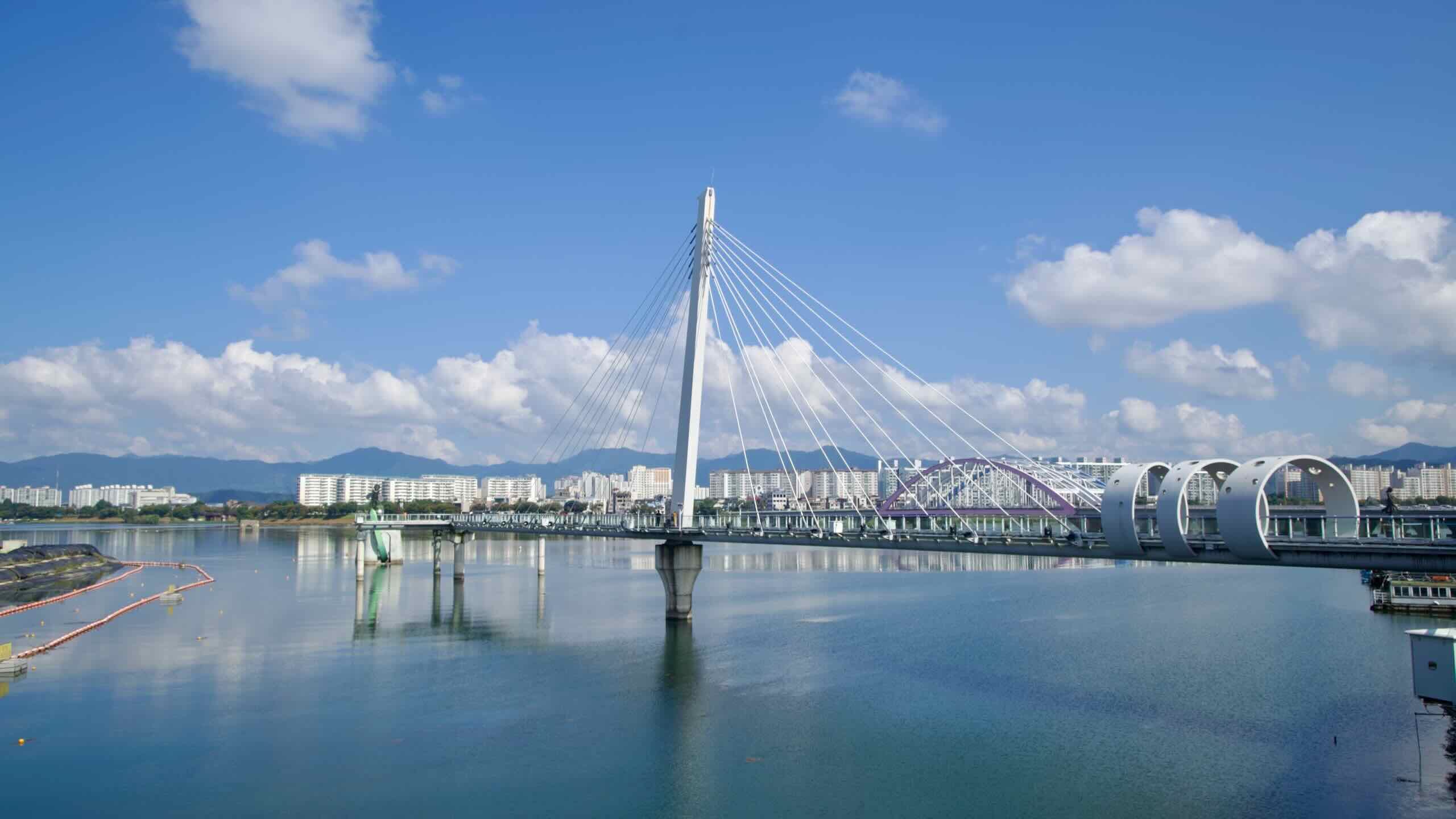
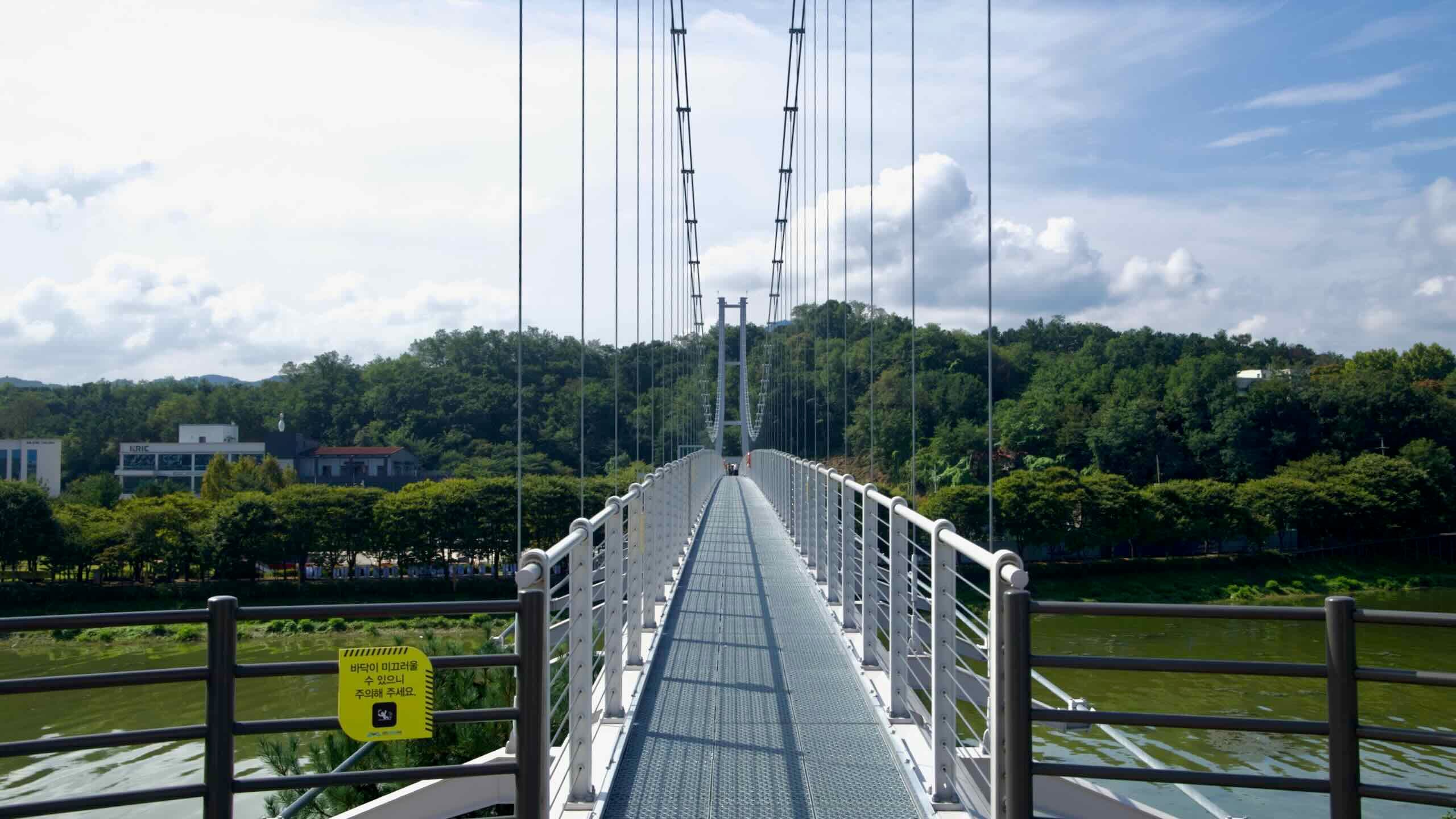
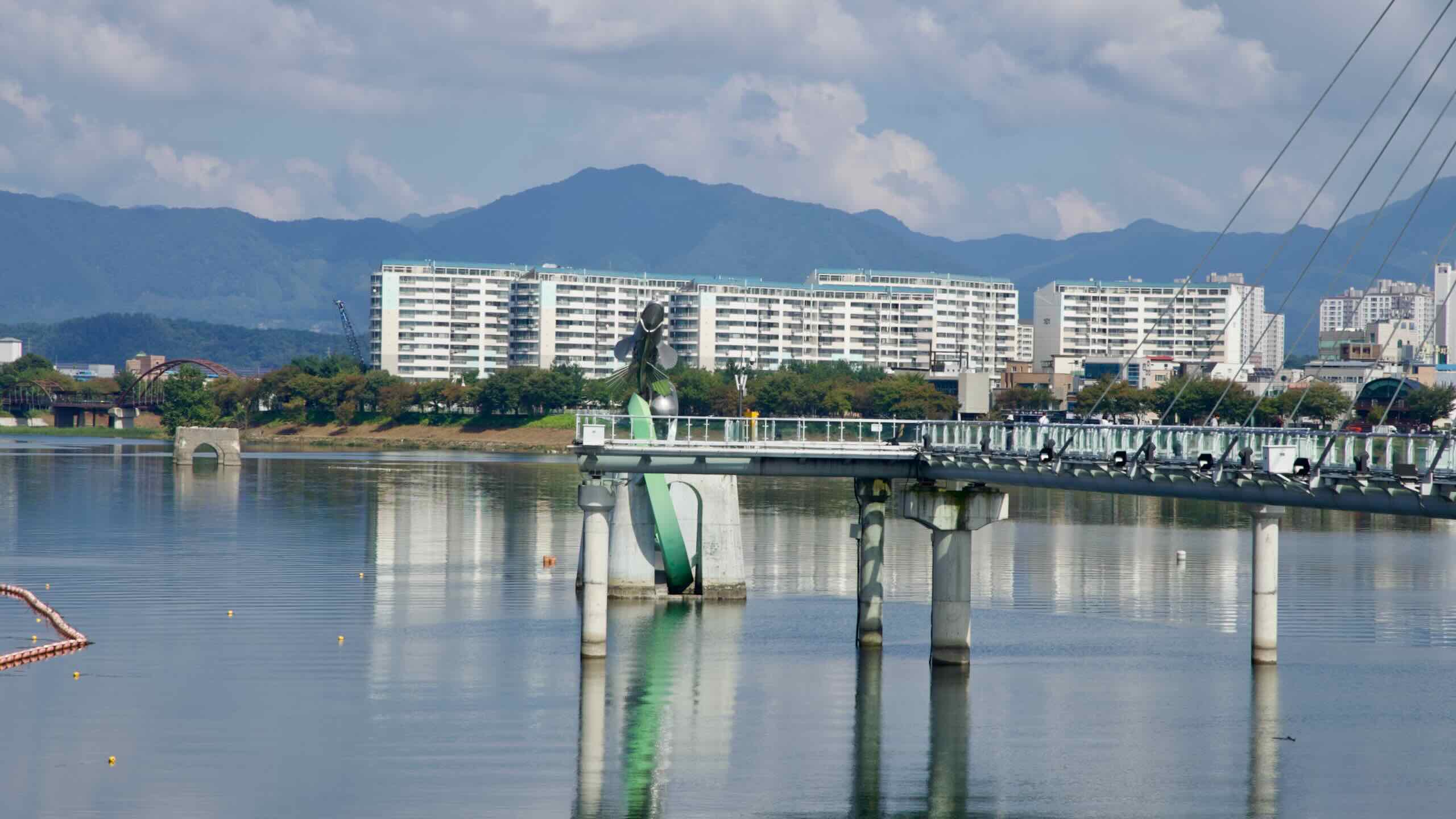
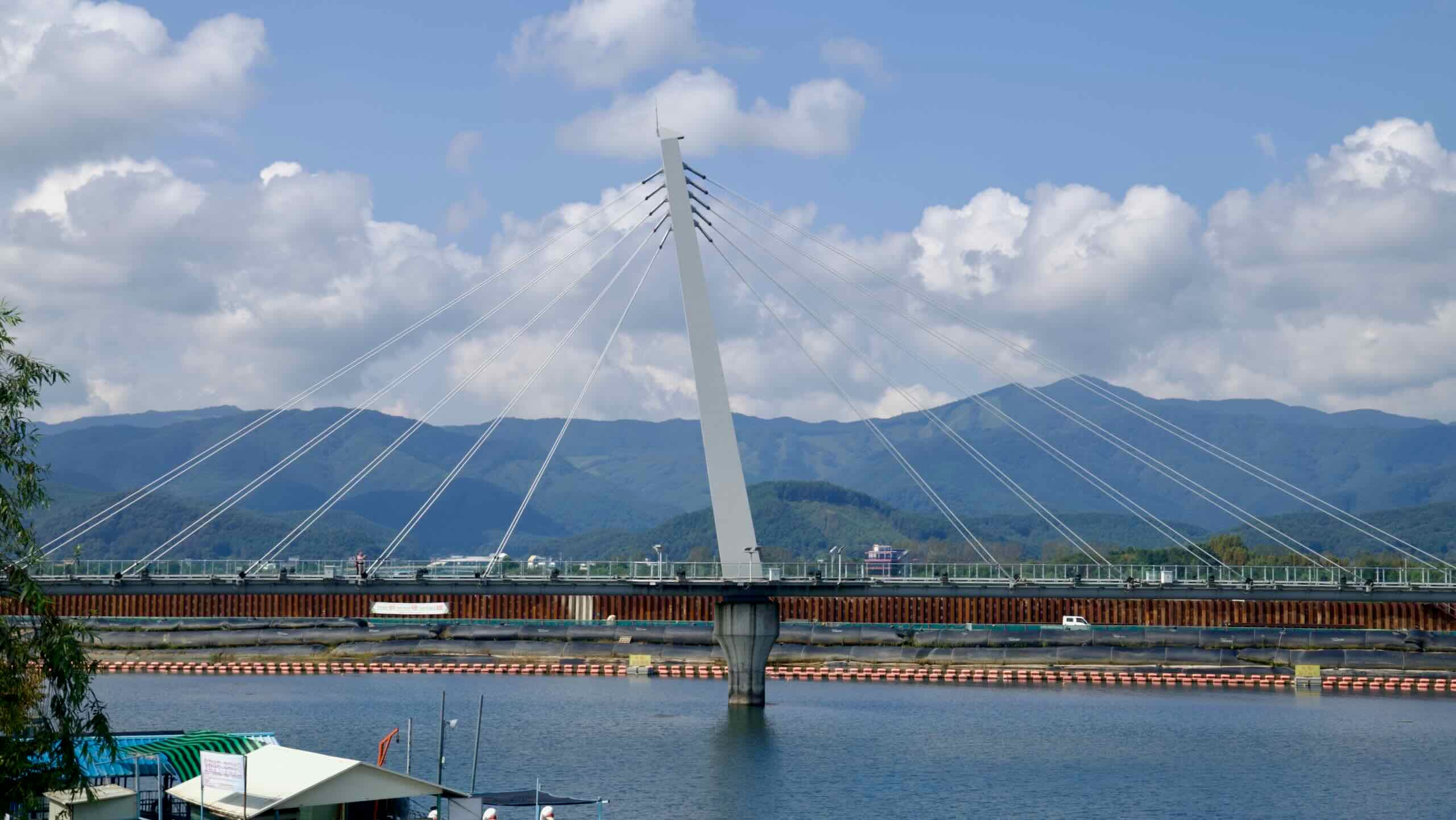
Once you land on Gongji Stream’s bike paths, begin pedaling downstream (northbound) toward the wide waters of Lake Uiam. Just before the mouth of the stream, find Chuncheon Sairo 248 (춘천사이로248; map), a long suspension footbridge that hangs over the water. Opened on Christmas Eve 2024, it stretches 248 meters with a narrow 1.5-meter deck made from see-through steel grating—so you can look straight down at the water and feel the sway under your feet.
The bridge’s name blends sairo (“toward each other” / “toward memories”) with its exact length (248 meters). It was built as a new lakefront landmark to give people a clear, elevated viewpoint over Lake Uiam, Chuncheon Bridge, Legoland on Hajungdo, and the surrounding shoreline.
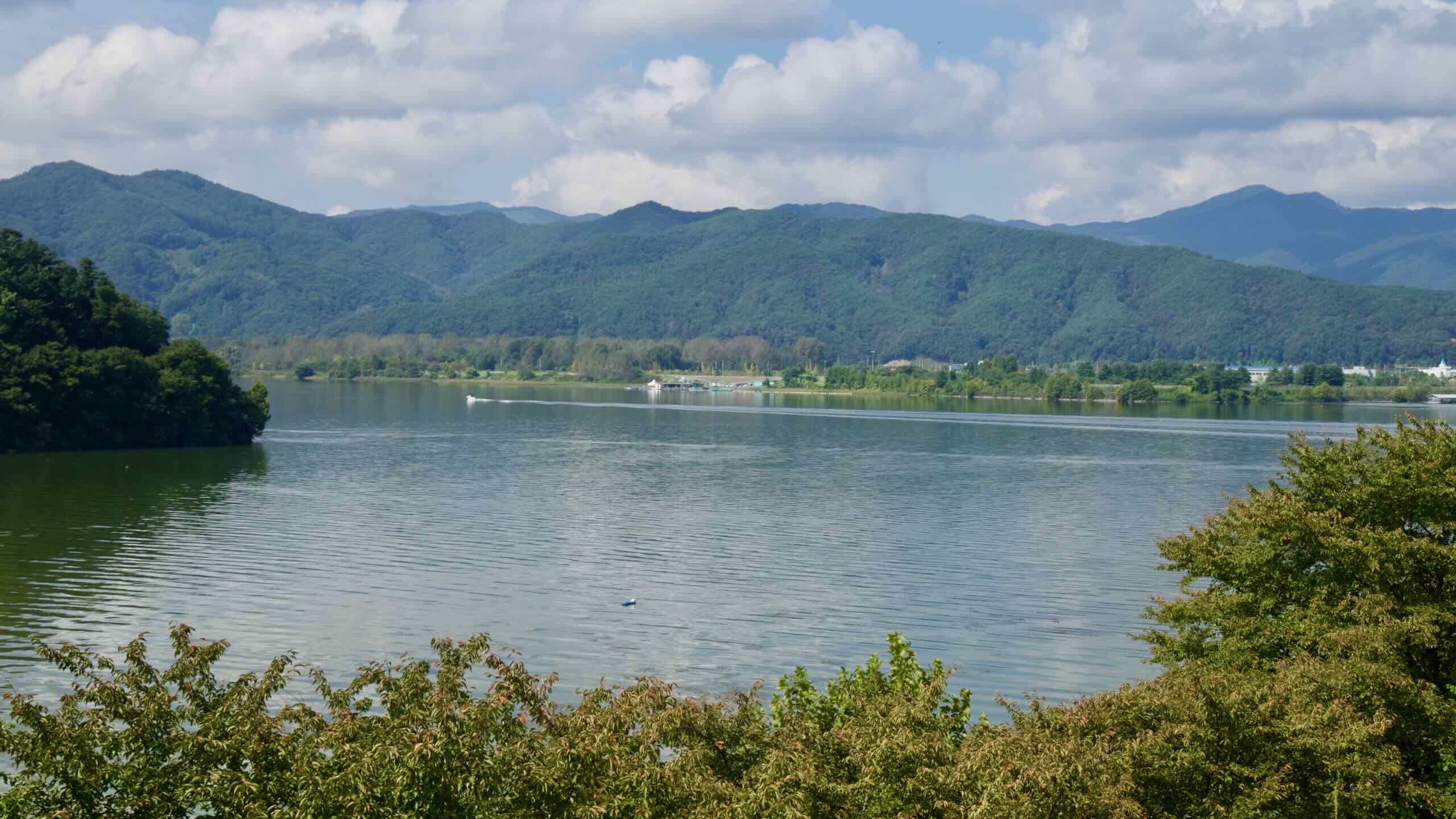
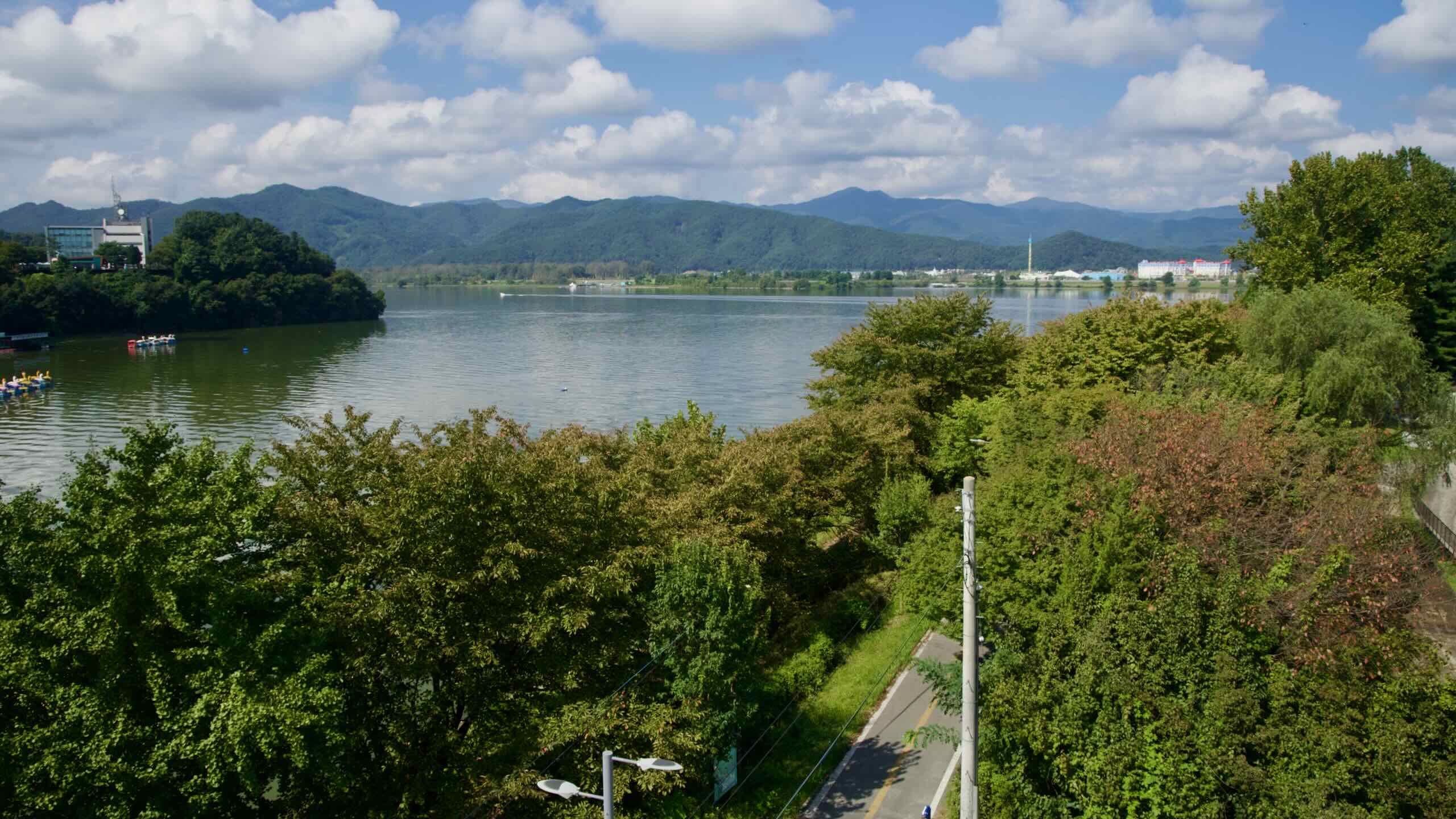
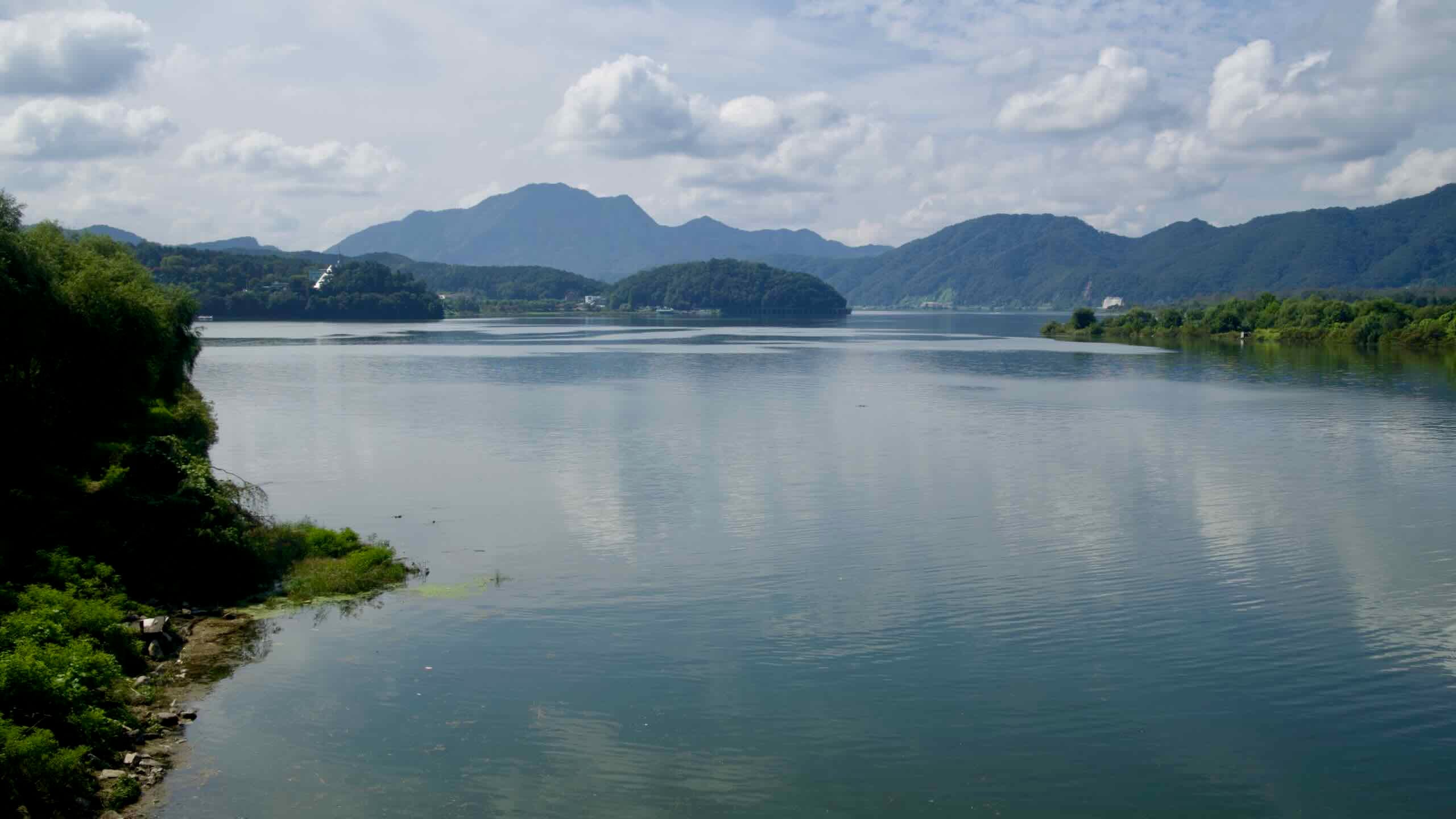
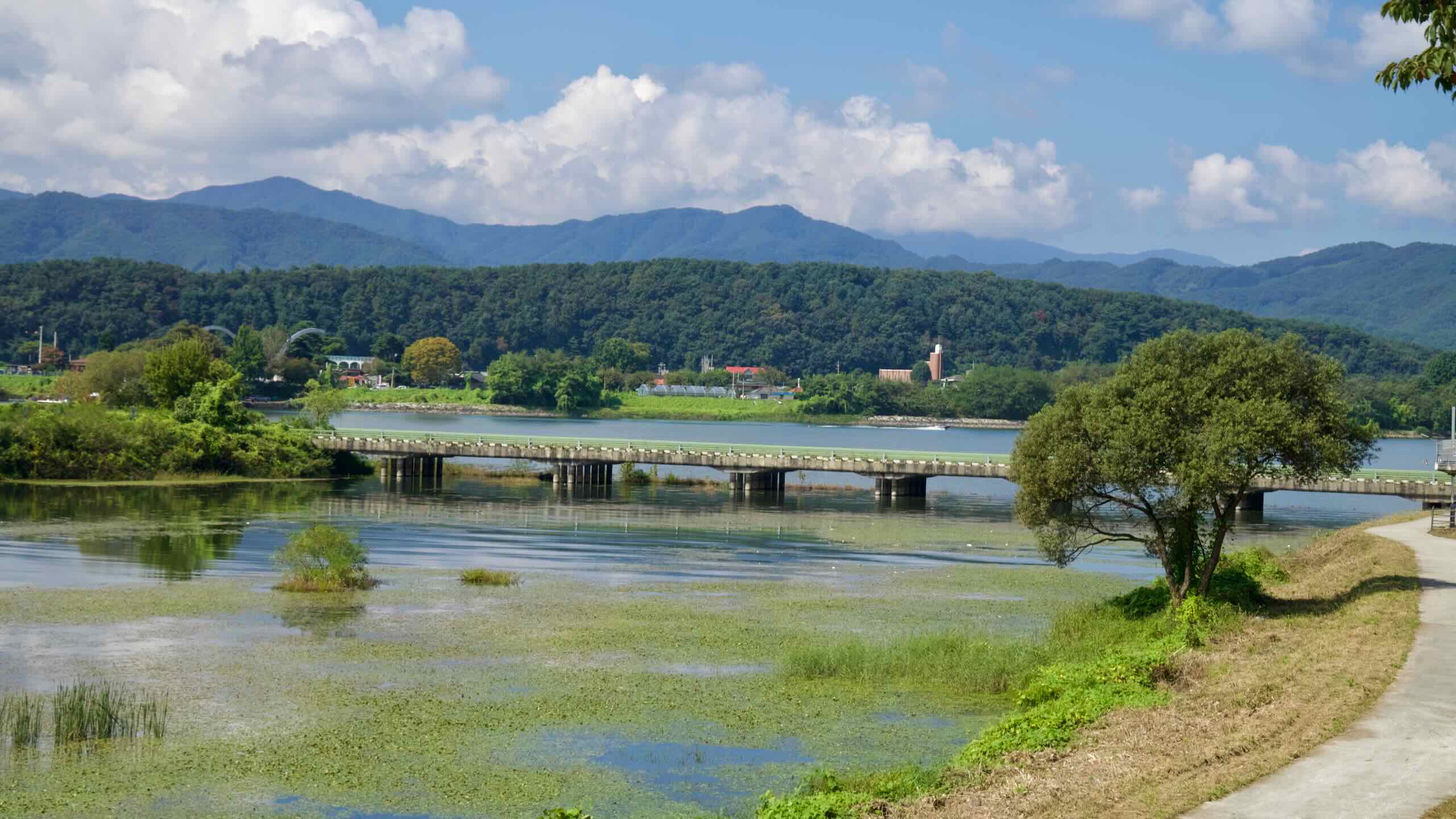
Keep pedaling downstream until Gongji Stream spills into Lake Uiam. Stop and admire the broad body of water in front of you. It’s a Bukhangang Bike Path highlight.
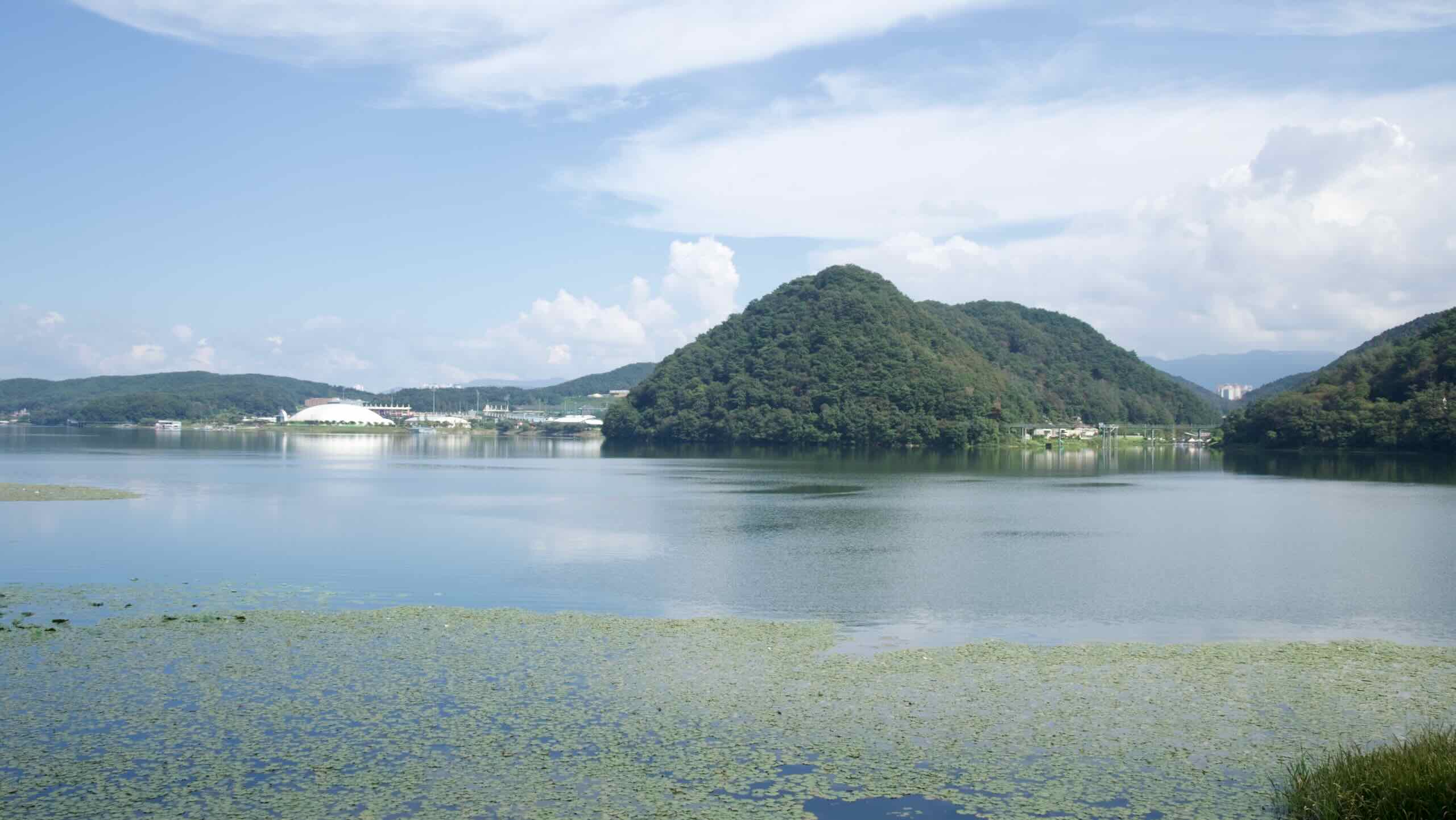
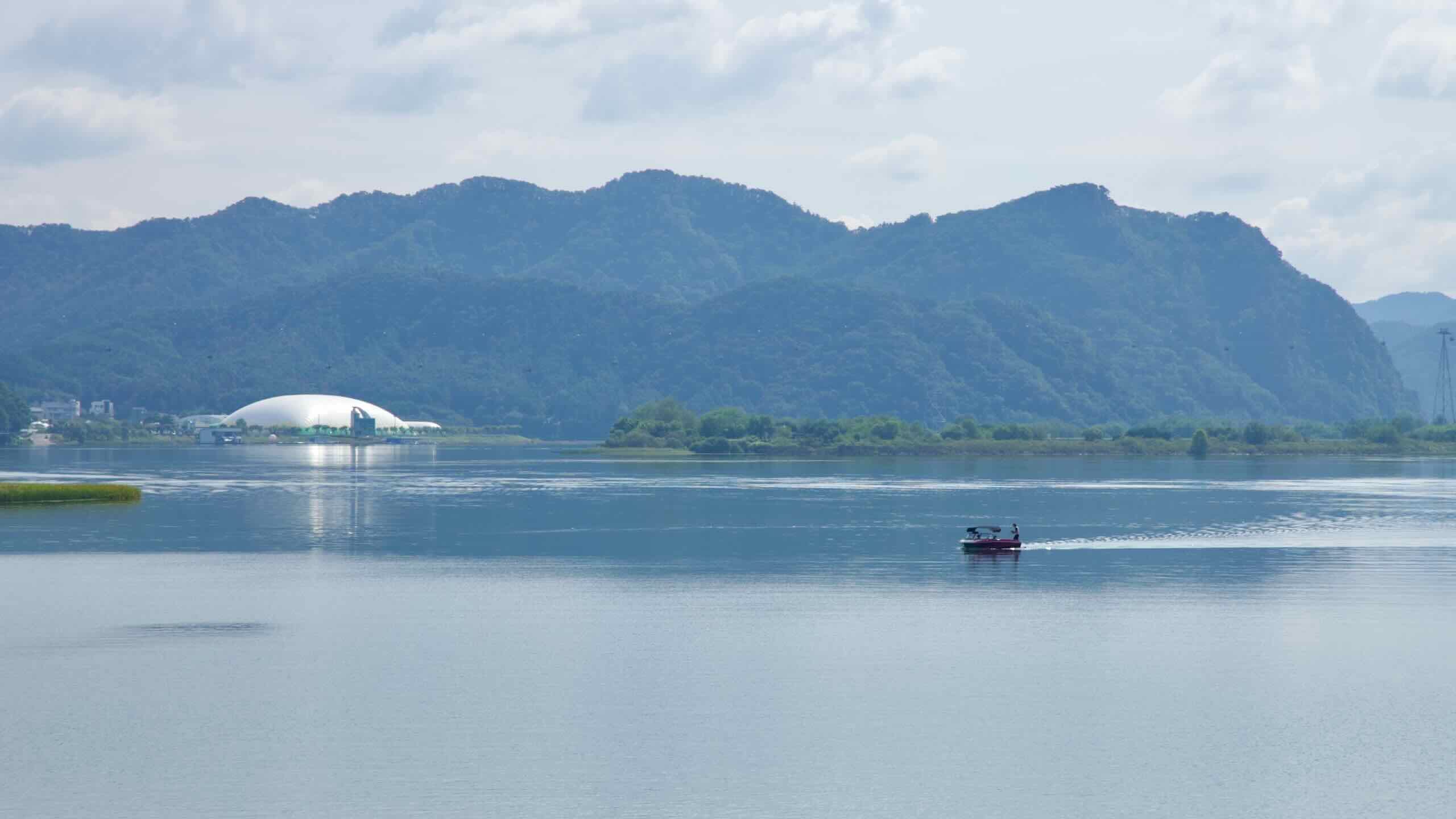
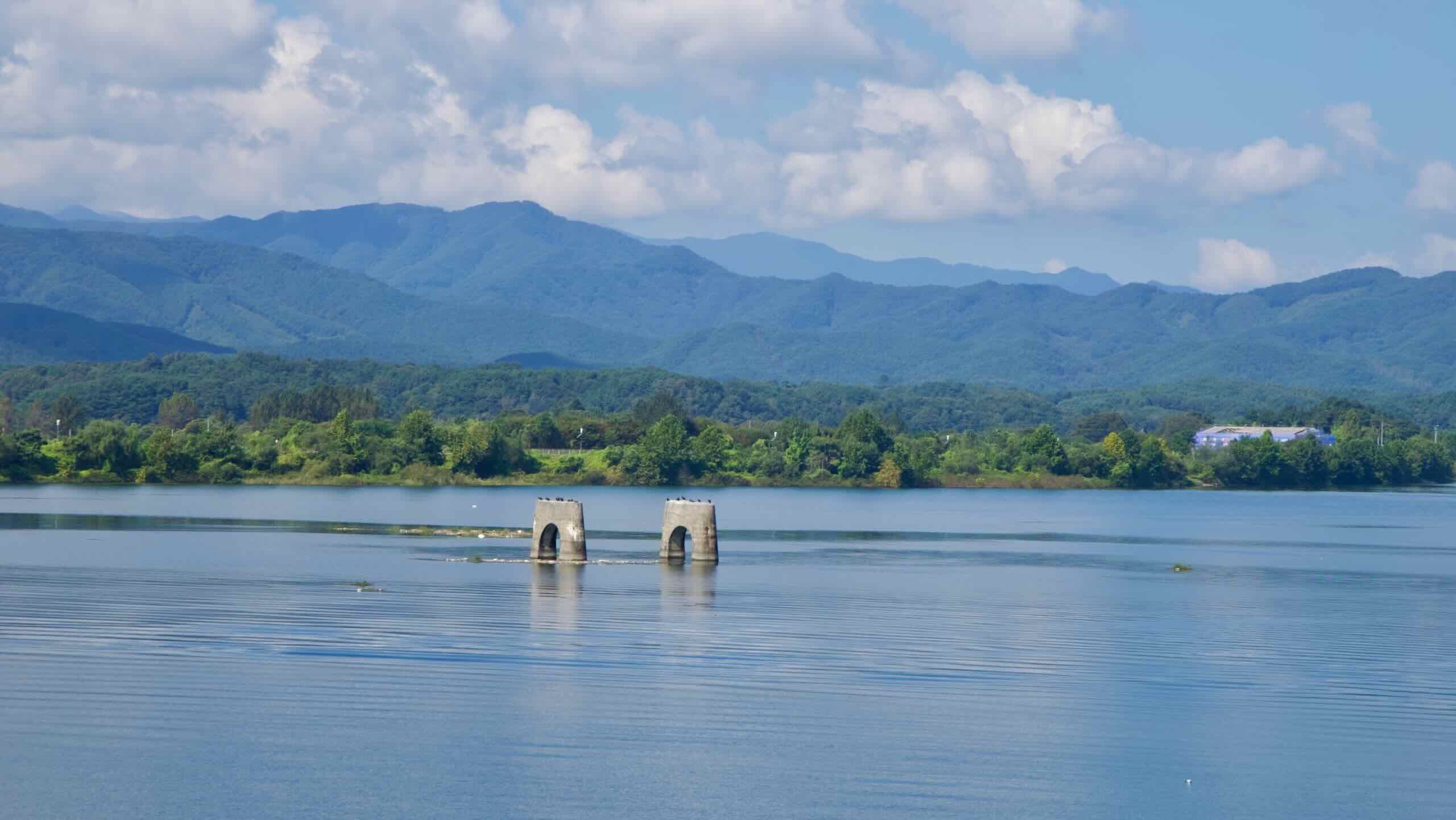
Lake Uiam is a man-made reservoir created in 1967 with the construction of Uiam Dam.
The dam powered South Korea’s mid-20th-century modernization efforts. It also flooded a mid-river gorge where the Bukhangang and Soyanggang meet, creating an oval lake about 8 km long and 5 km across, with roughly 80 million tons of storage.
Scattered across the water are small islands with friendly nicknames—Bungeoseom, Sangjungdo, Hajungdo, “Sweet Potato Island,” and “Hedgehog Island.” The shores are ringed by parks, forested slopes, and a full loop of lakeside road and bike path that helped turn Chuncheon into Korea’s “lake city.”
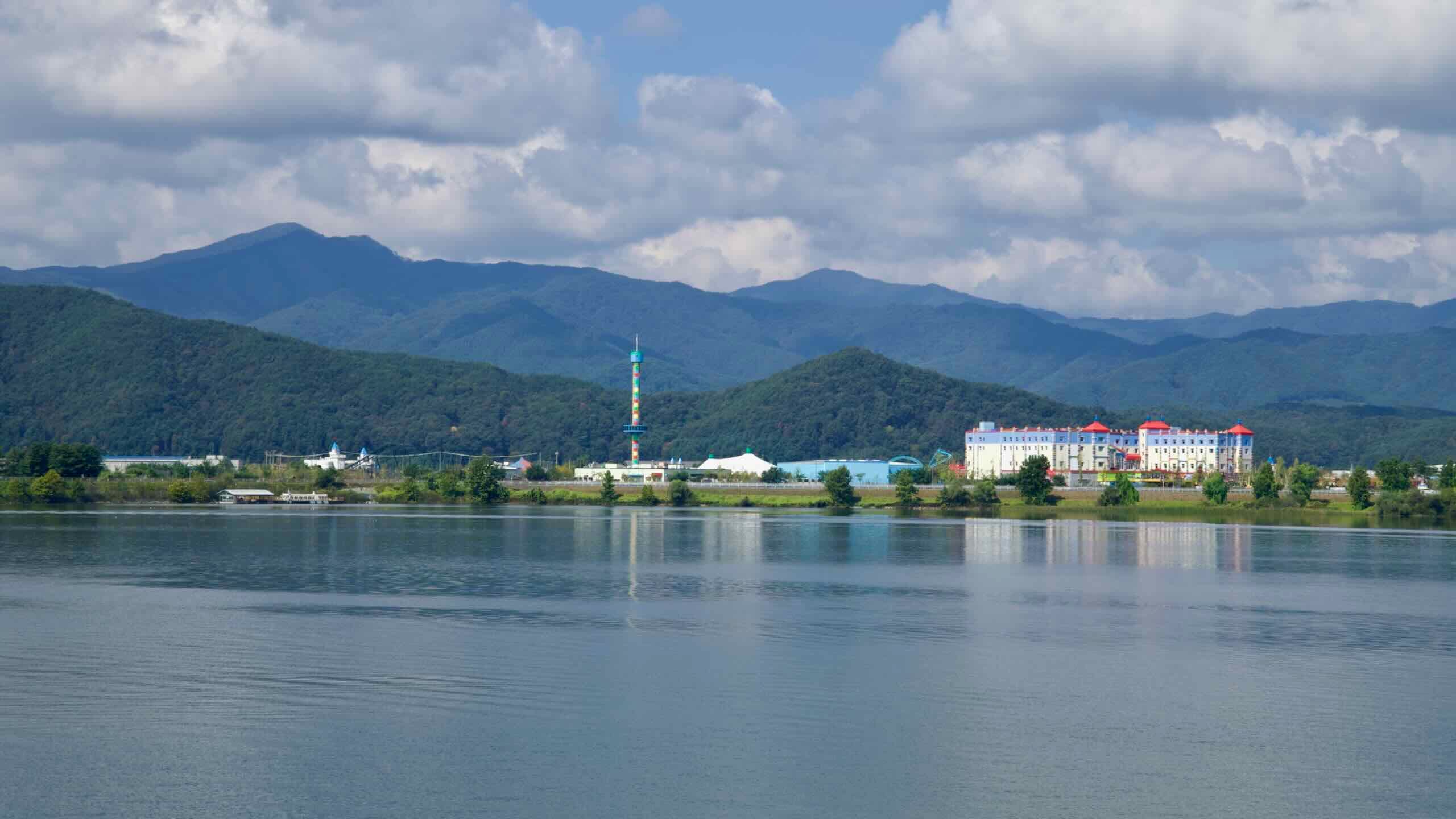
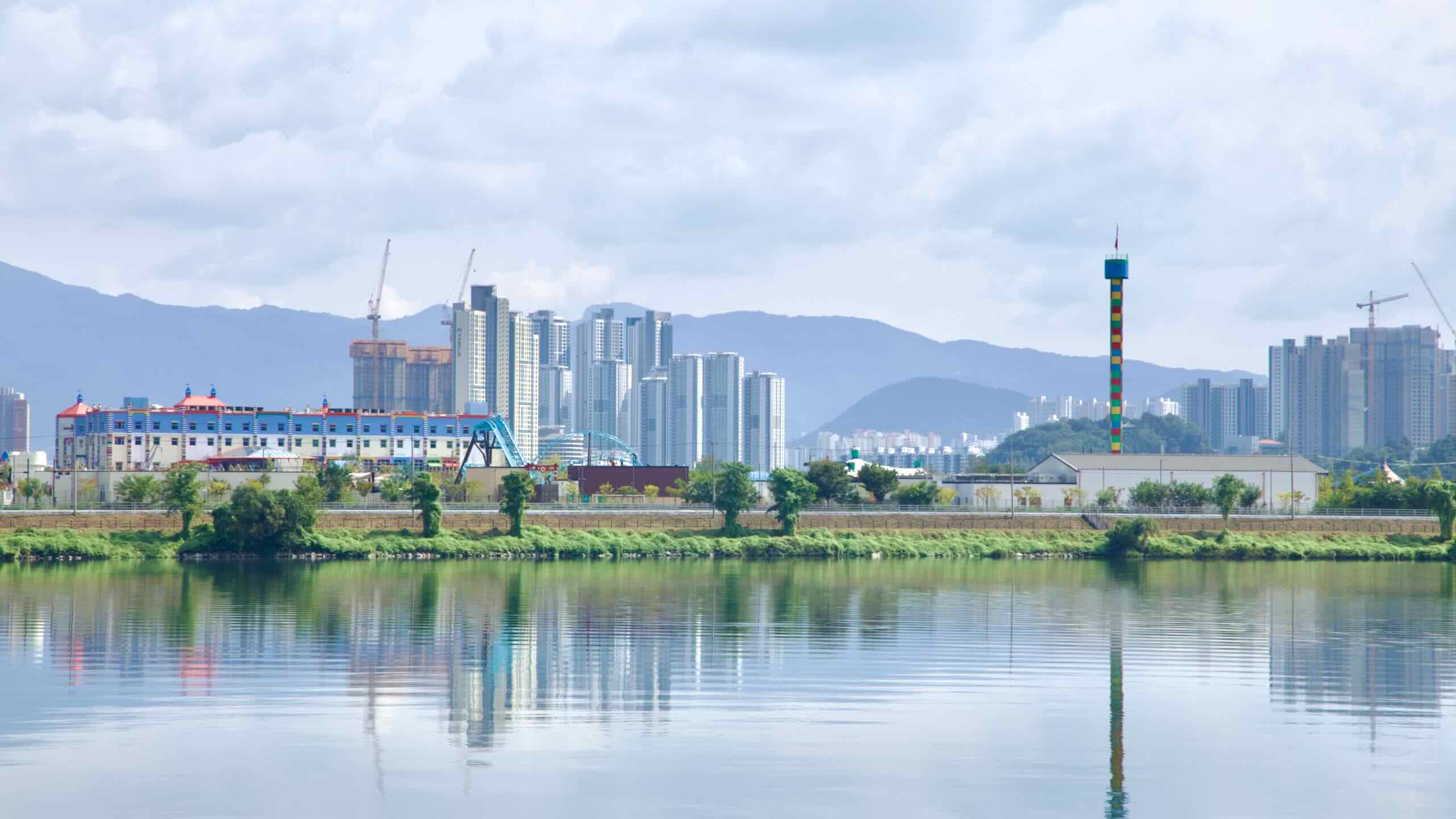
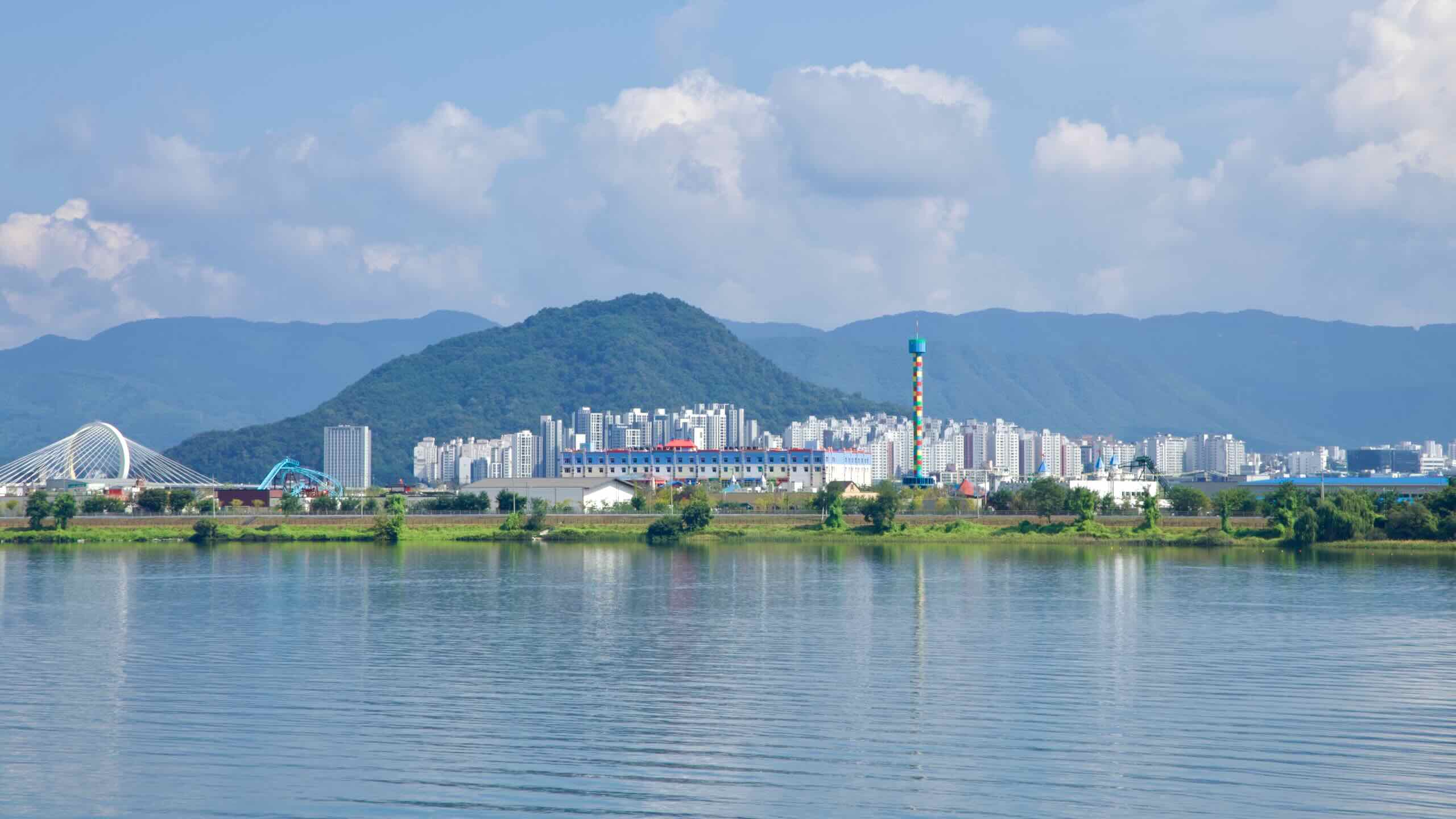
From the mouth of Gongji Stream, look out into Uiam and find a mass of land in the middle of the lake. That’s Hajungdo (Hajung Island), home to Legoland Korea—another Bukhangang Bike Path highlight.
Hajung Island (하중도; map) was originally part of a single island called Jungdo, later split into Sangjungdo and Hajungdo when a navigation channel was cut through the middle. Today, the southern tip is laid out as Hajungdo Riverside Ecological Park, a low-key green space with lakeside walking paths, simple shelters, benches, and photo spots.
Legoland Korea Resort (레고랜드 코리아; map) occupies most of Hajungdo. It opened in May 2022 as Korea’s first Legoland, the world’s 10th, and the third in Asia. It has over 40 rides and attractions spread across themed zones such as Miniland, Lego Castle, and Bricktopia.
The entire park and its hotel sit on Hajung Island, so Legoland offers a constant view of Lake Uiam and the surrounding hills behind the bright Lego structures.
Beneath Legoland is one of Korea’s most important prehistoric sites. Previous excavations uncovered the remains of a large Neolithic–Bronze Age settlement—house foundations, fields, graves, and a surrounding ditch—dated to around 3000 BCE. The settlement was thought to have supported a community of several thousand people.
The decision to build a theme park on top of such a site has been controversial, and it is still cited in debates about how Korea treats archaeological heritage.
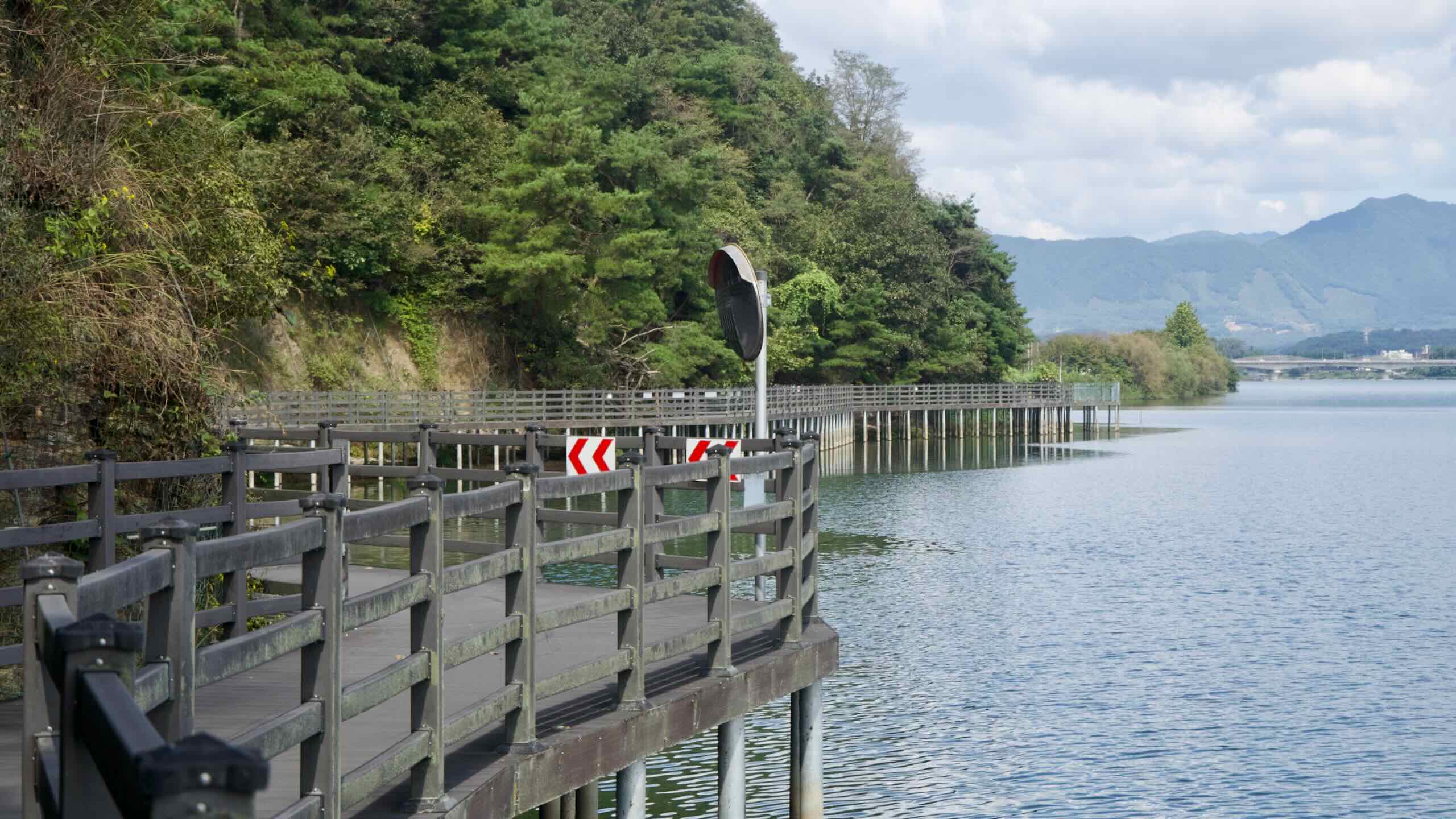
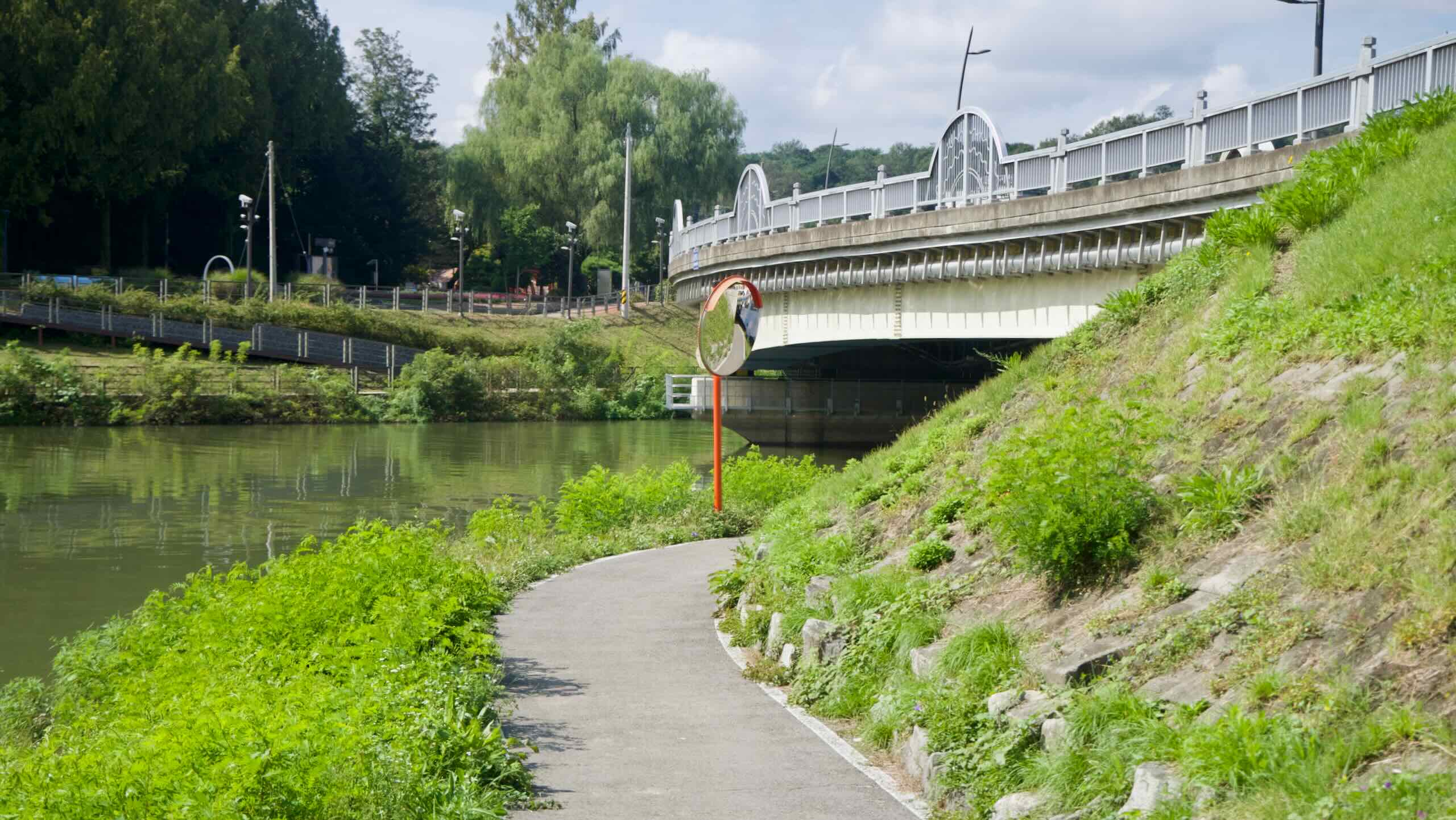
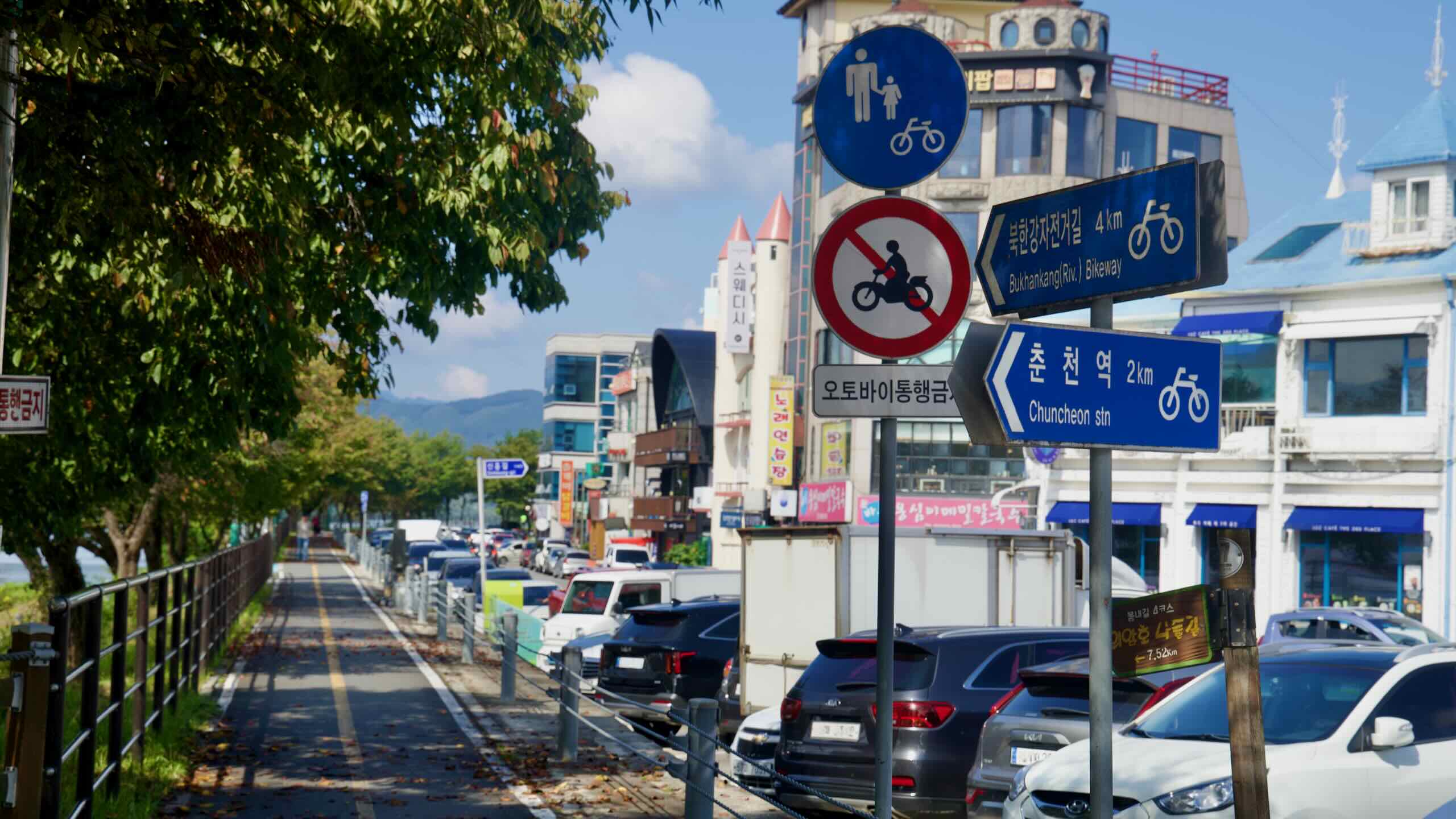
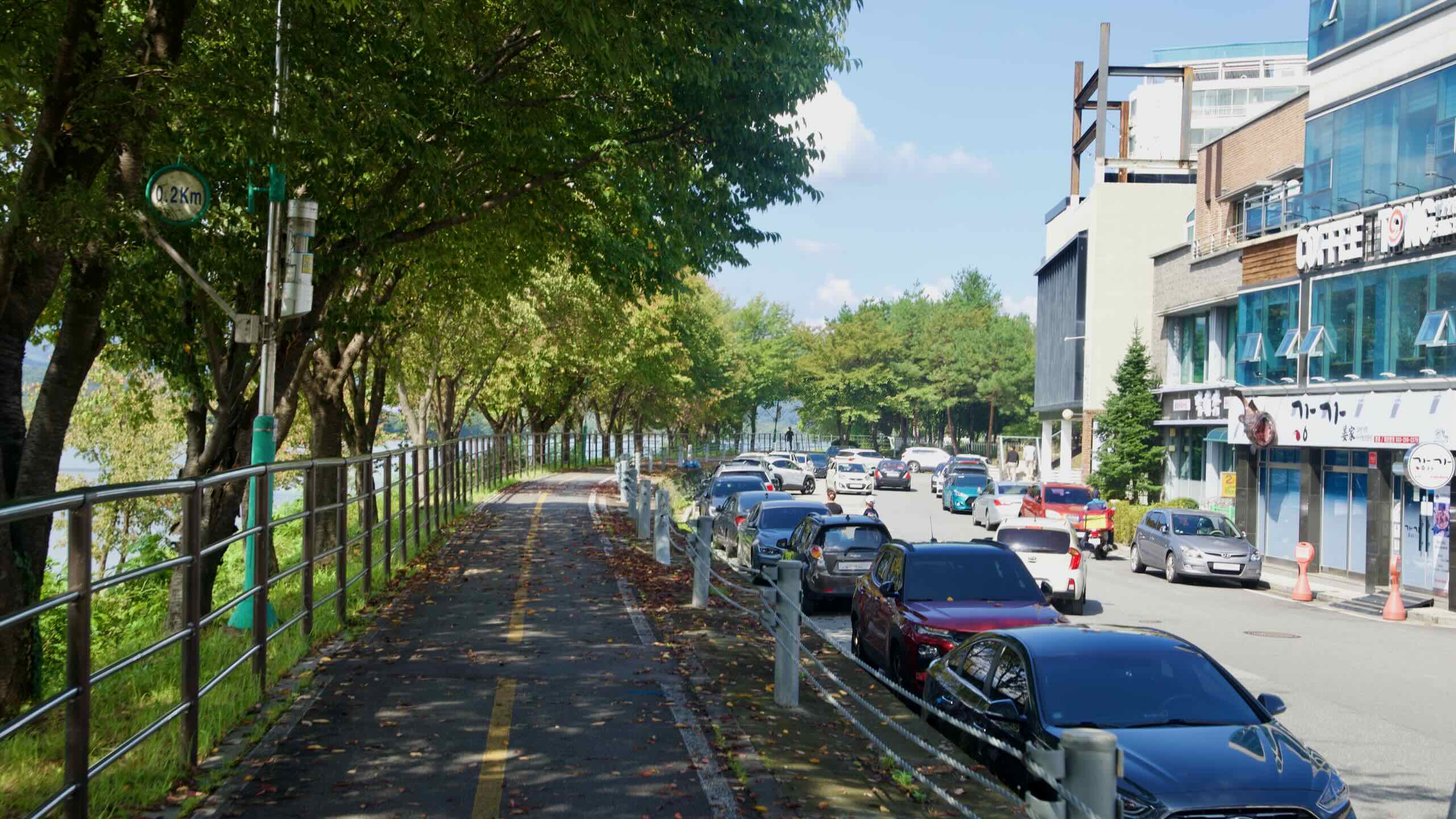
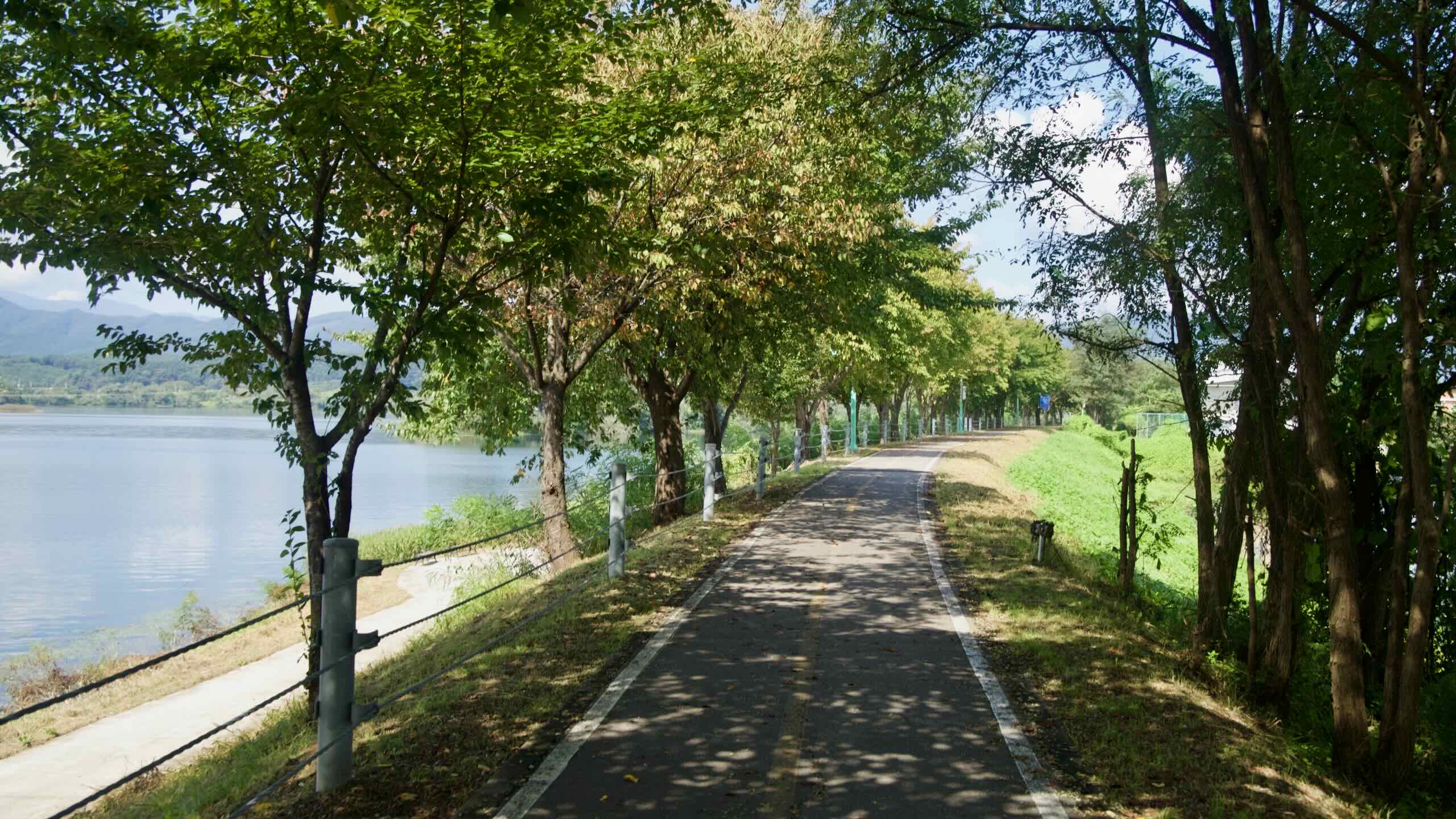
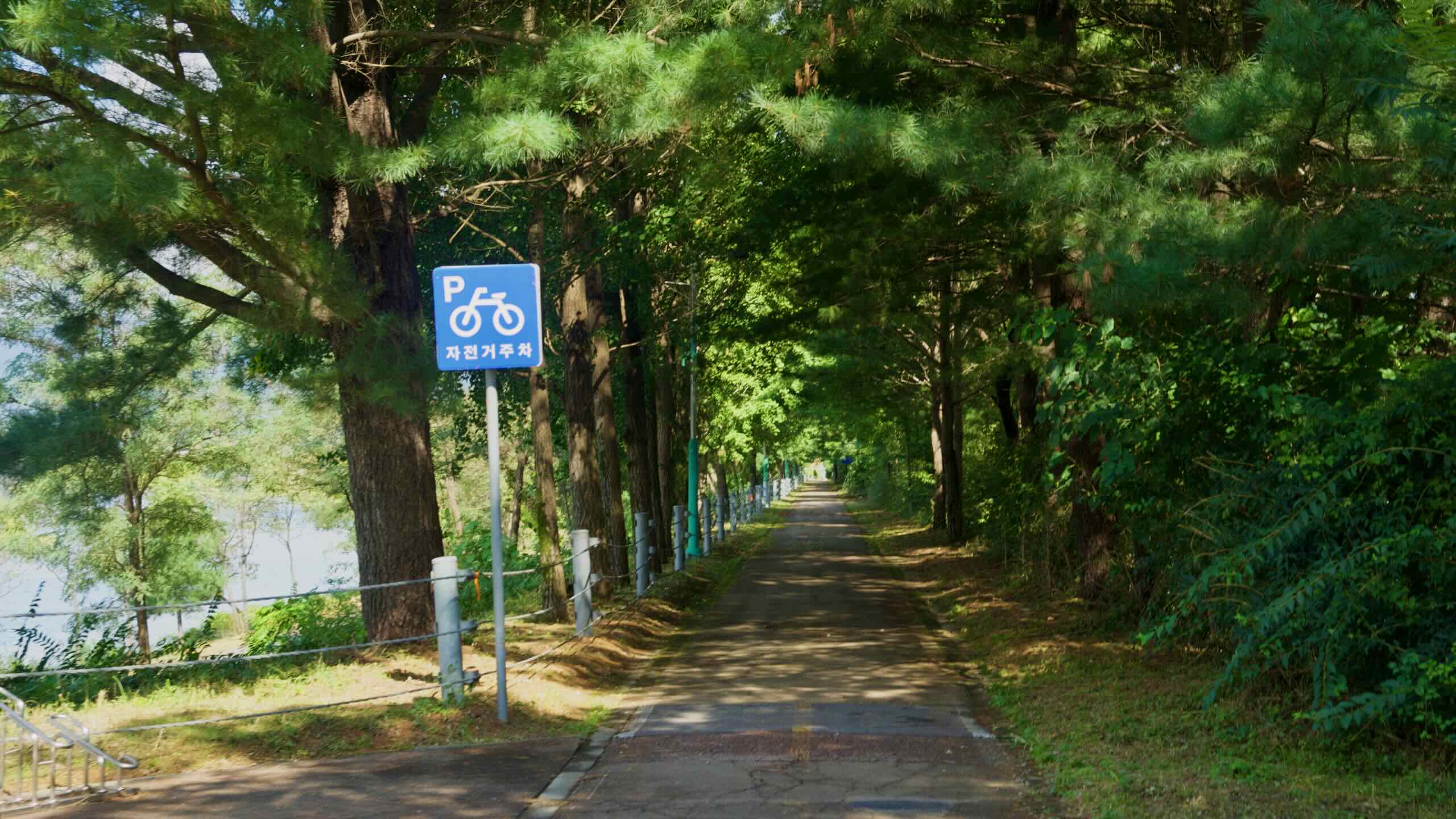
Back on the mainland, keep pedaling along the bike path from Gongji Stream onto the shore of Lake Uiam. Follow bike paths under shady trees on the green outskirts of downtown Chuncheon.
This section is known as the Soyang River Riverside Trail (소양강변길; map). Beginning behind Chuncheon Station, the looping course skirts along Lake Uiam’s waterside, up to the Soyang River—a tributary that spills into the North Han River near the top of Chuncheon—then zips back down through the city.
Running about 6–7 kilometers, it hops a few bridges, passes plentiful viewing and resting spots, and features cherry blossoms in spring.
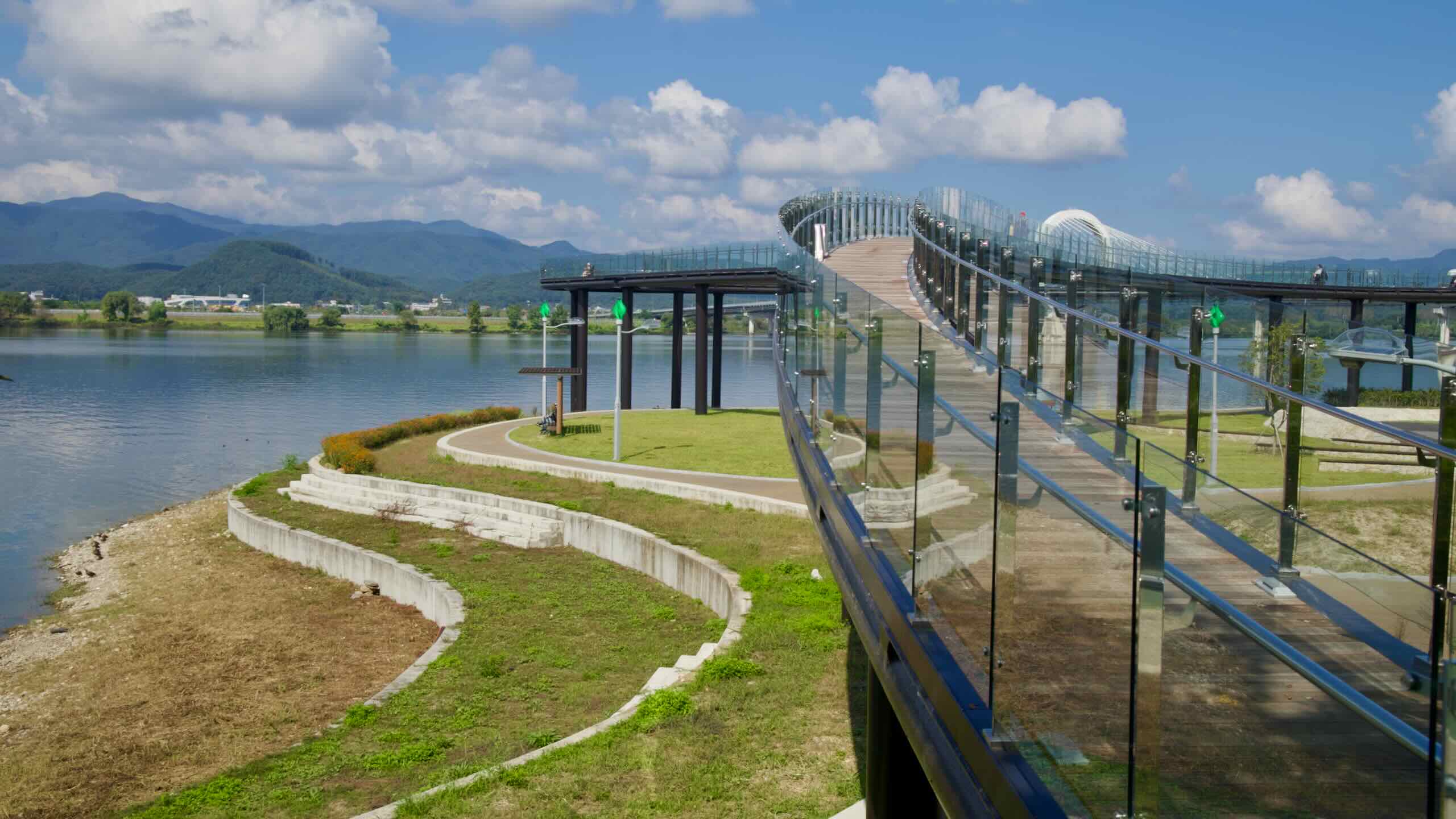
After about a kilometer on the riverside trail, you’ll come upon a large raised walking deck that hovers over the green banks and offers terrific views of the river.
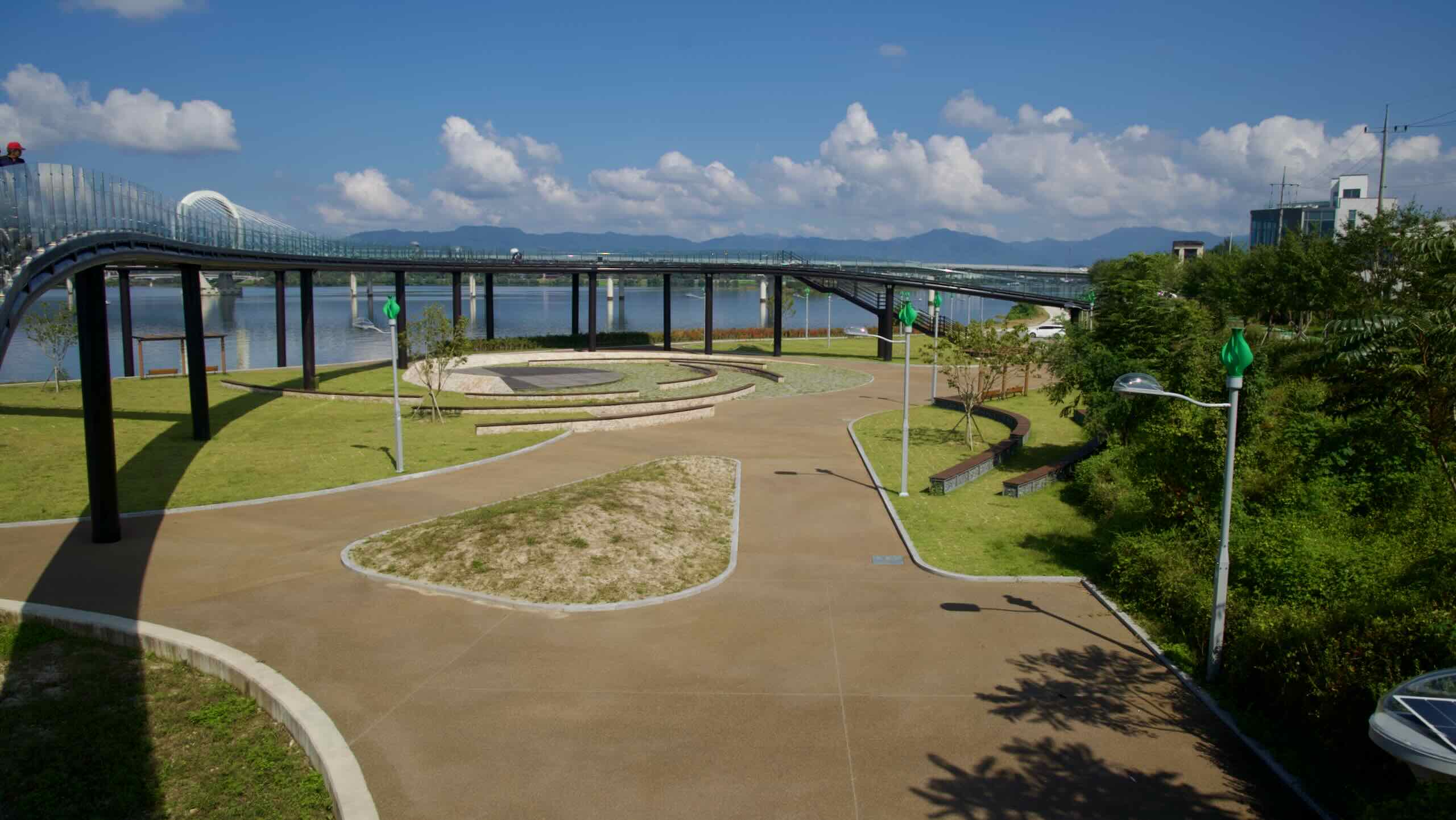
Known as Munhwa Gwangjang Forest (문화광장숲; map), this waterfront plaza and park was built on the site of an old small-boat landing. It transforms the leftover slipway into a layered public space, with a low skywalk, lawn terraces, wildflower beds, viewing decks, and an outdoor performance area right beside the water.
Built as part of a broader effort to upgrade the Uiam Lake shoreline—along with Chuncheon Sairo 248 and the Gongji Stream parks—at night it hosts colorful illuminations and fountain shows.
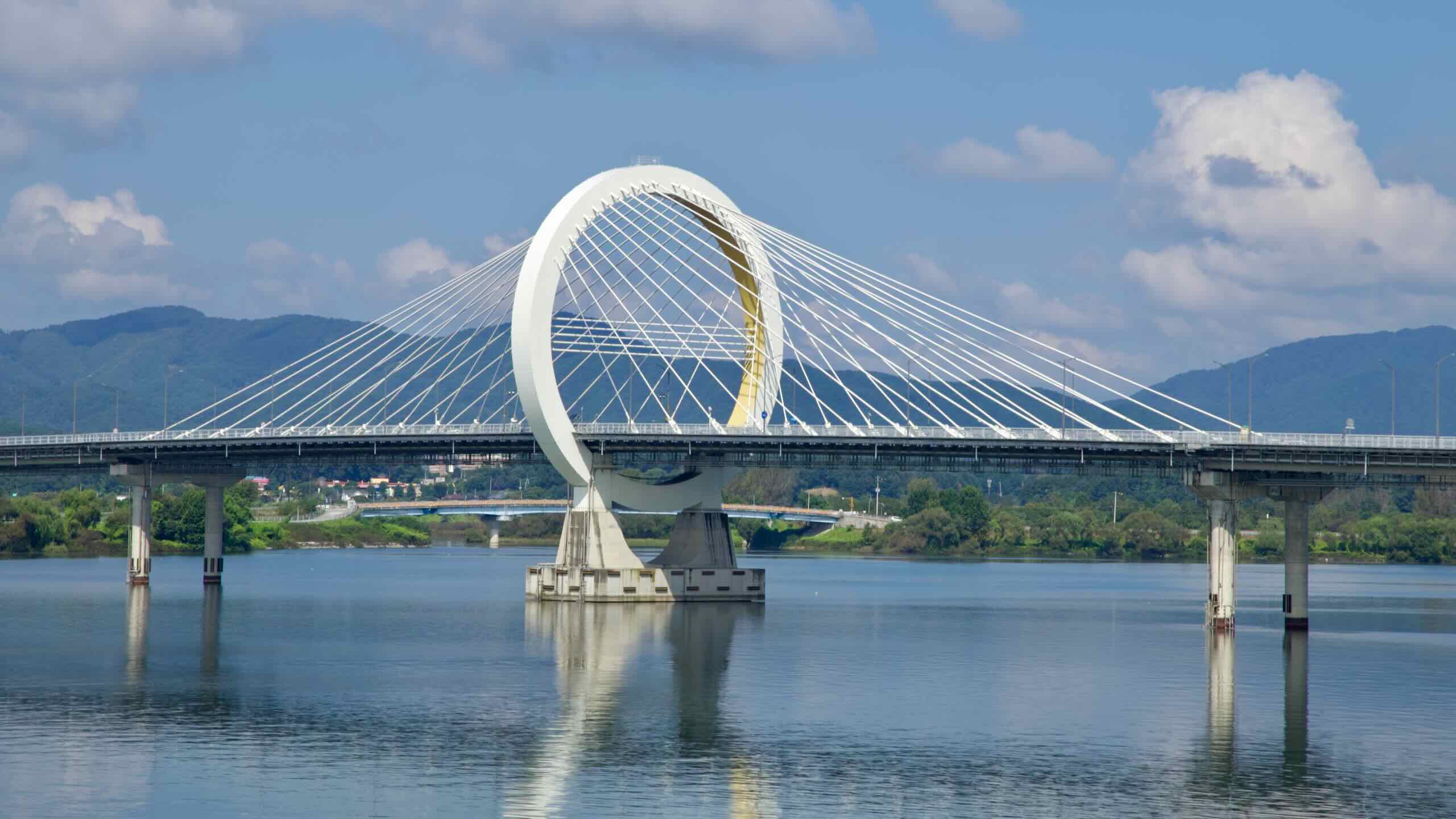
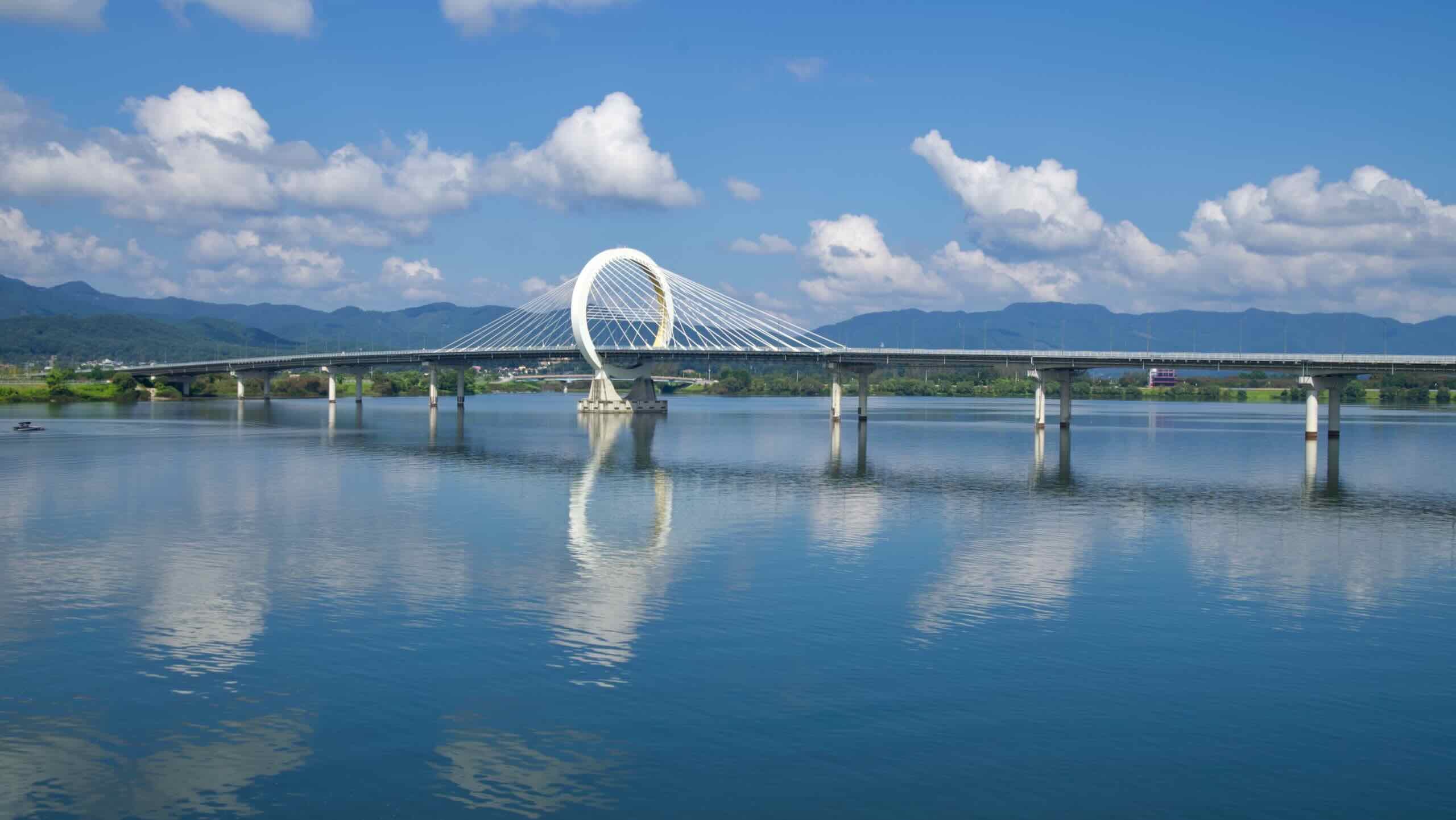
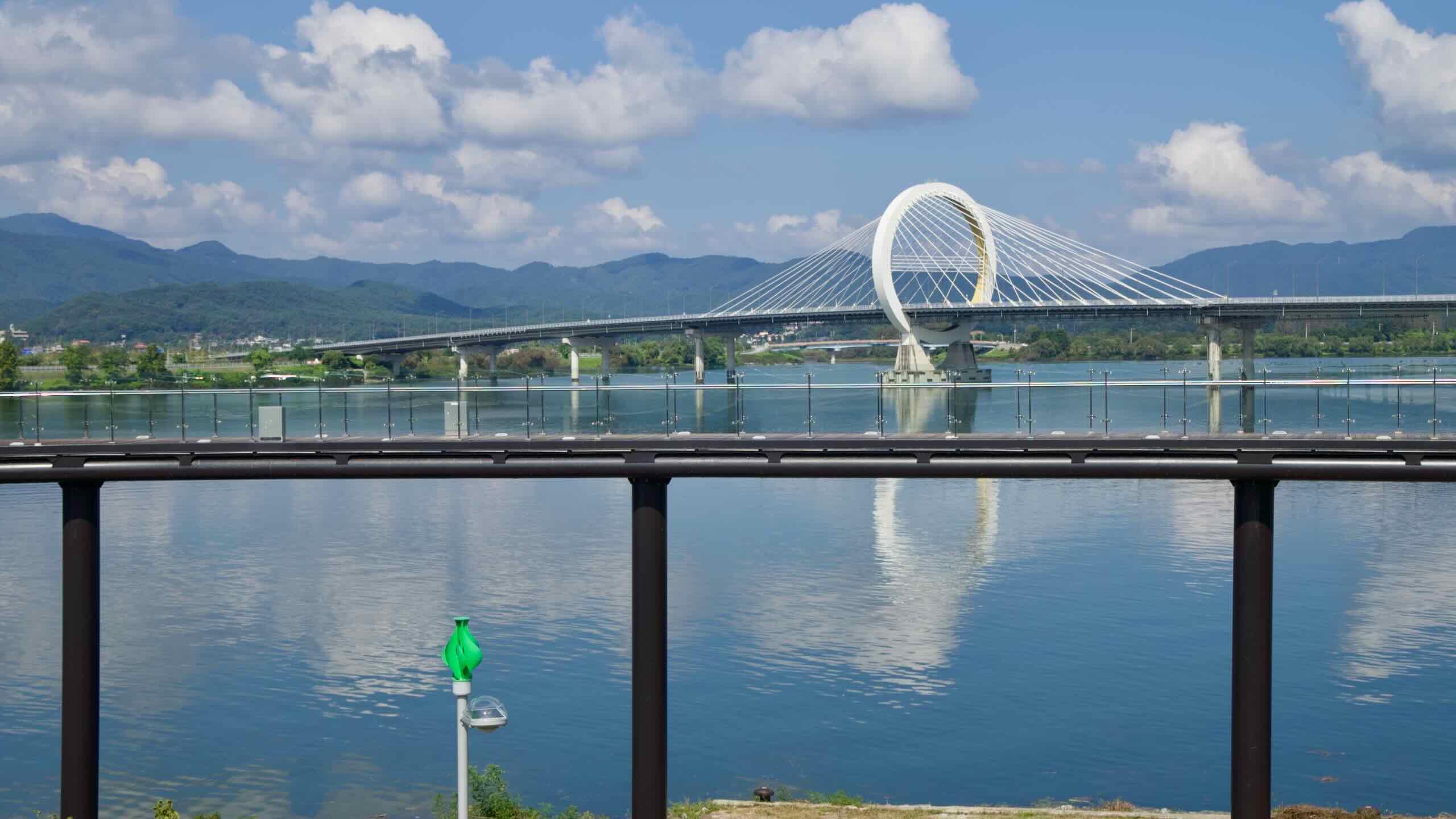
Walk along Munhwa Gwangjang Forest’s raised walkway and you’ll reach Chuncheon Grand Bridge (춘천대교; map). This large cable-stayed road bridge links downtown Chuncheon to Hajungdo Island and the entrance to Legoland Korea. With a roughly one-kilometer crossing, it uses ultra-high-performance concrete and a distinctive 45-meter circular pylon inspired by Lego bricks. The result is a bridge that reads like a huge sculpture and has won several design awards.
Continue along Lake Uiam’s waterside on the edge of downtown Chuncheon. After about a kilometer, the bike path climbs an embankment and joins the sidewalks along city roads.
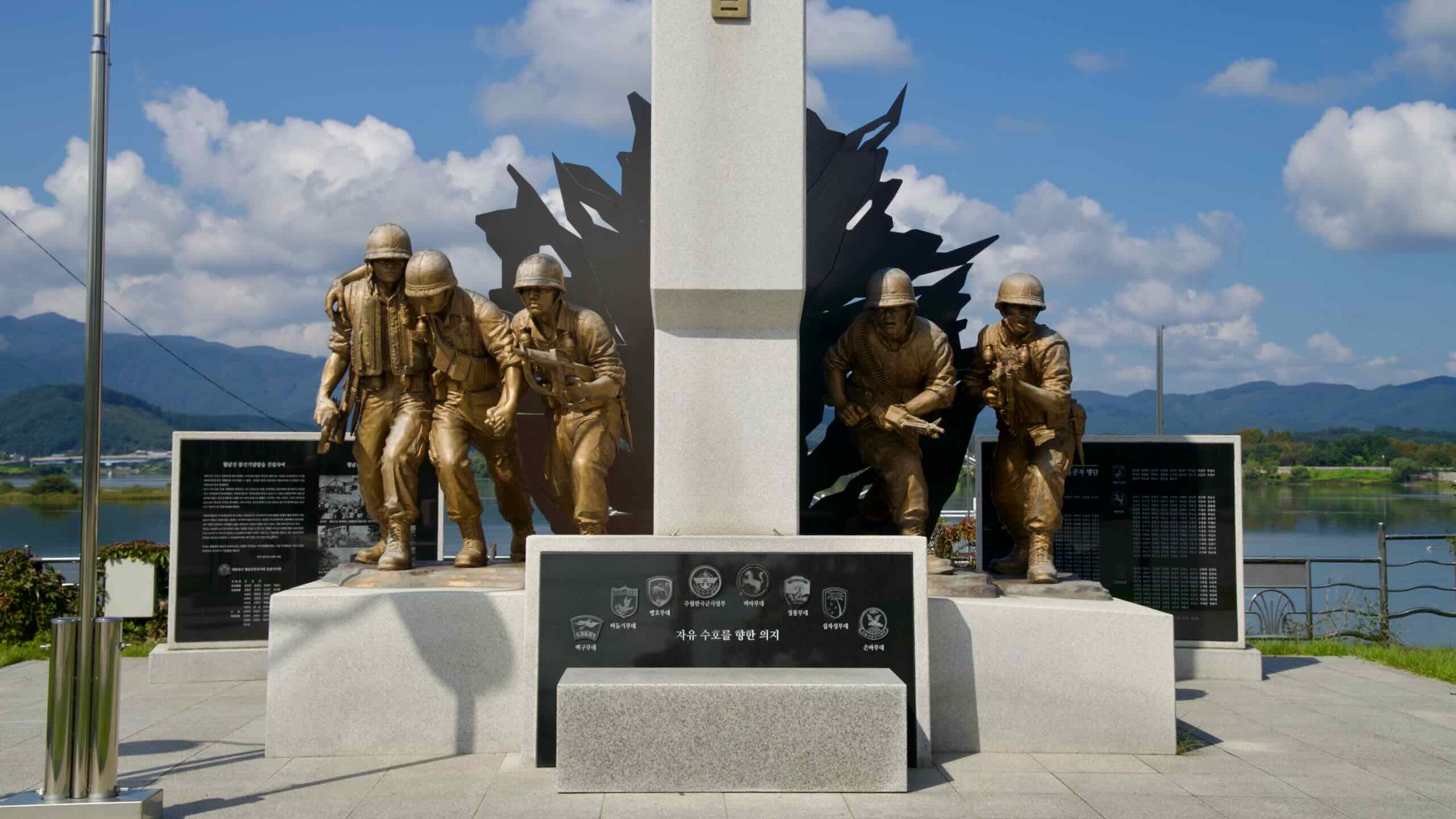
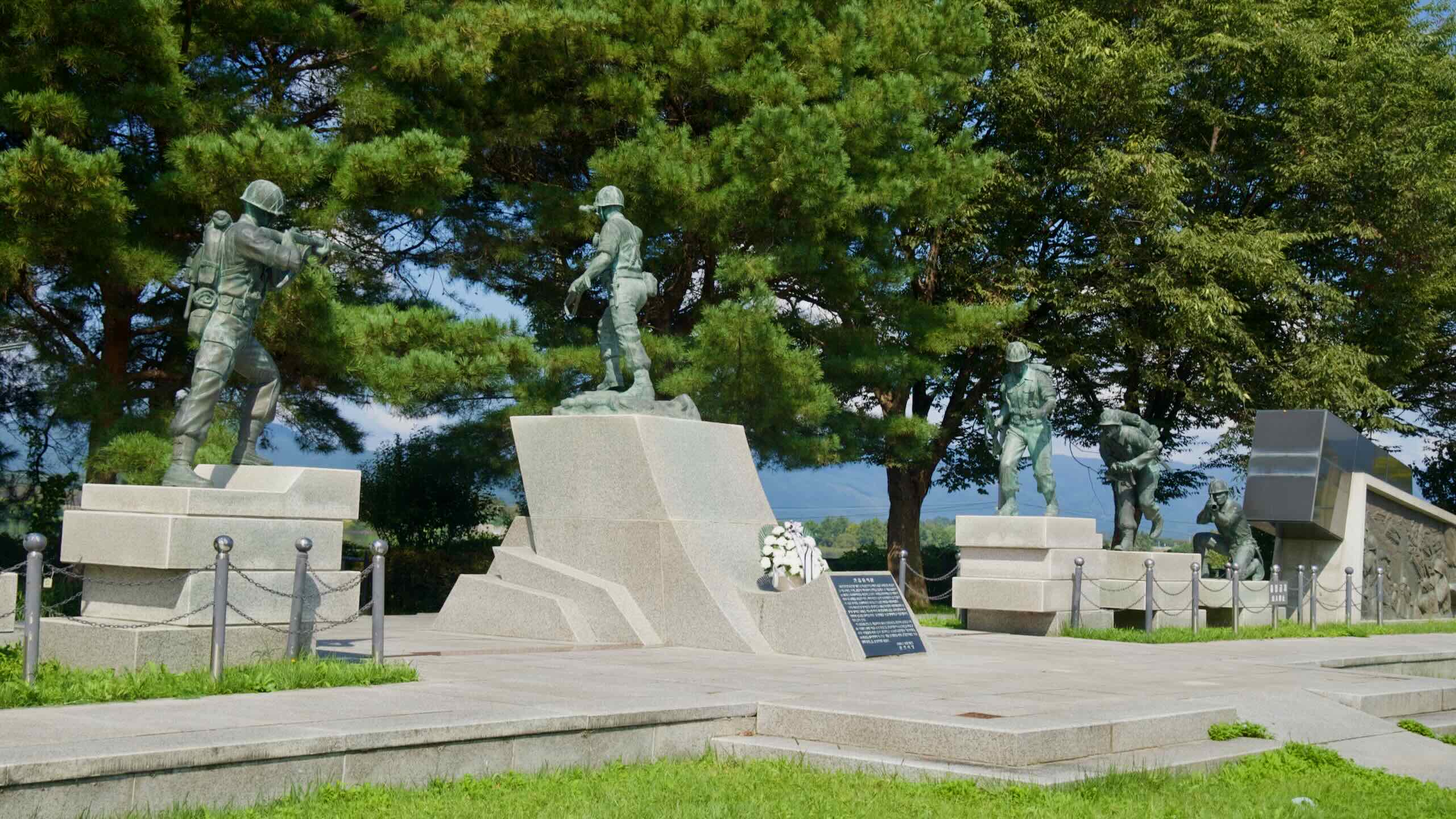
To your left—between you and the lake—find Chuncheon Battle Memorial Peace Park (춘천대첩기념평화공원; map). This elongated park features several statues commemorating the Battle of Chuncheon (춘천전투), fought June 25–27, 1950, during the opening days of the Korean War. The park includes explanatory panels, along with a cluster of memorial towers and war-themed sculptures.
Just as the park ends, look for a set of stairs leading up to a wide platform. Hop off your bike, climb up, and you’ll reach another Bukhangang Bike Path highlight.
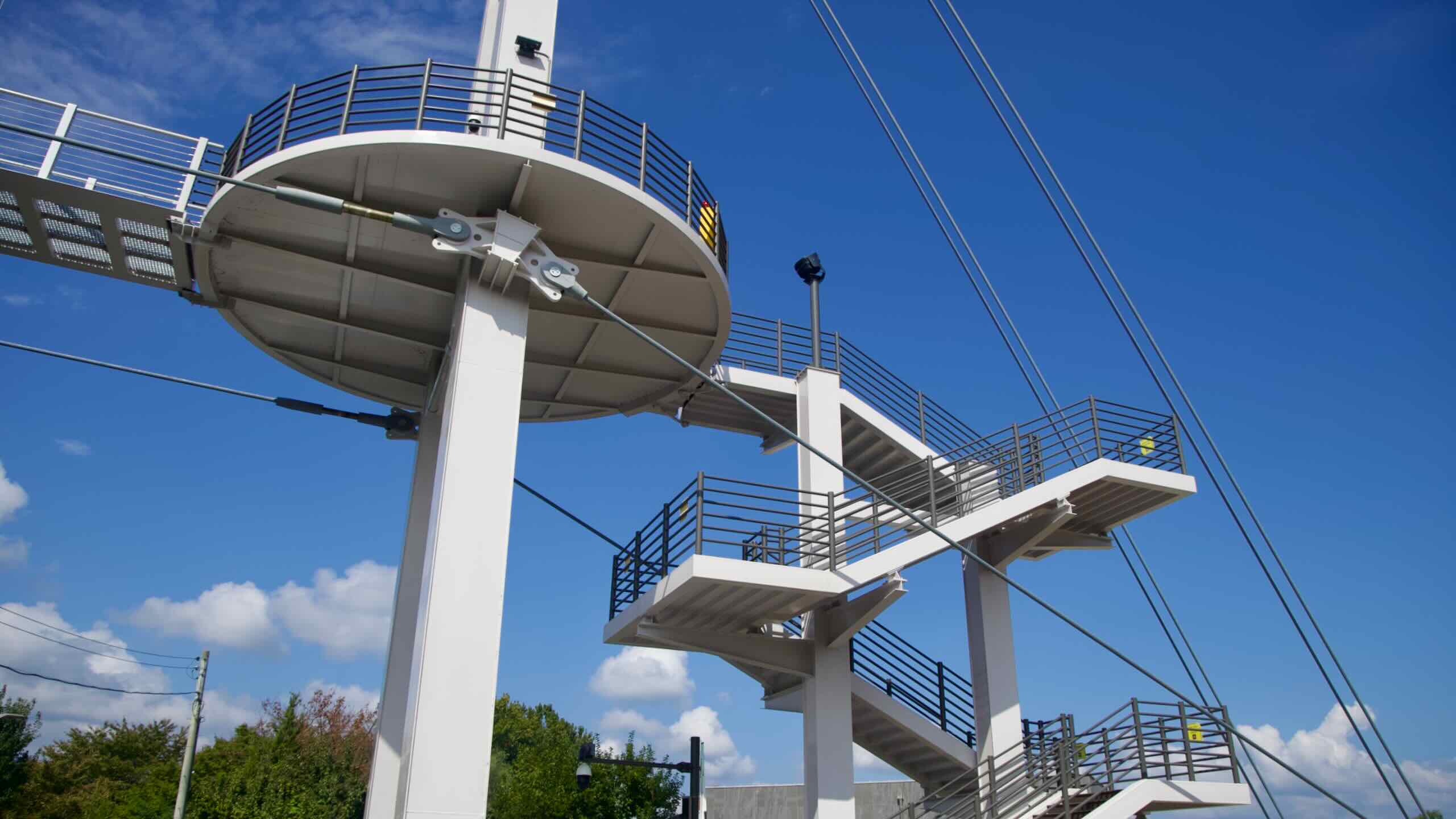
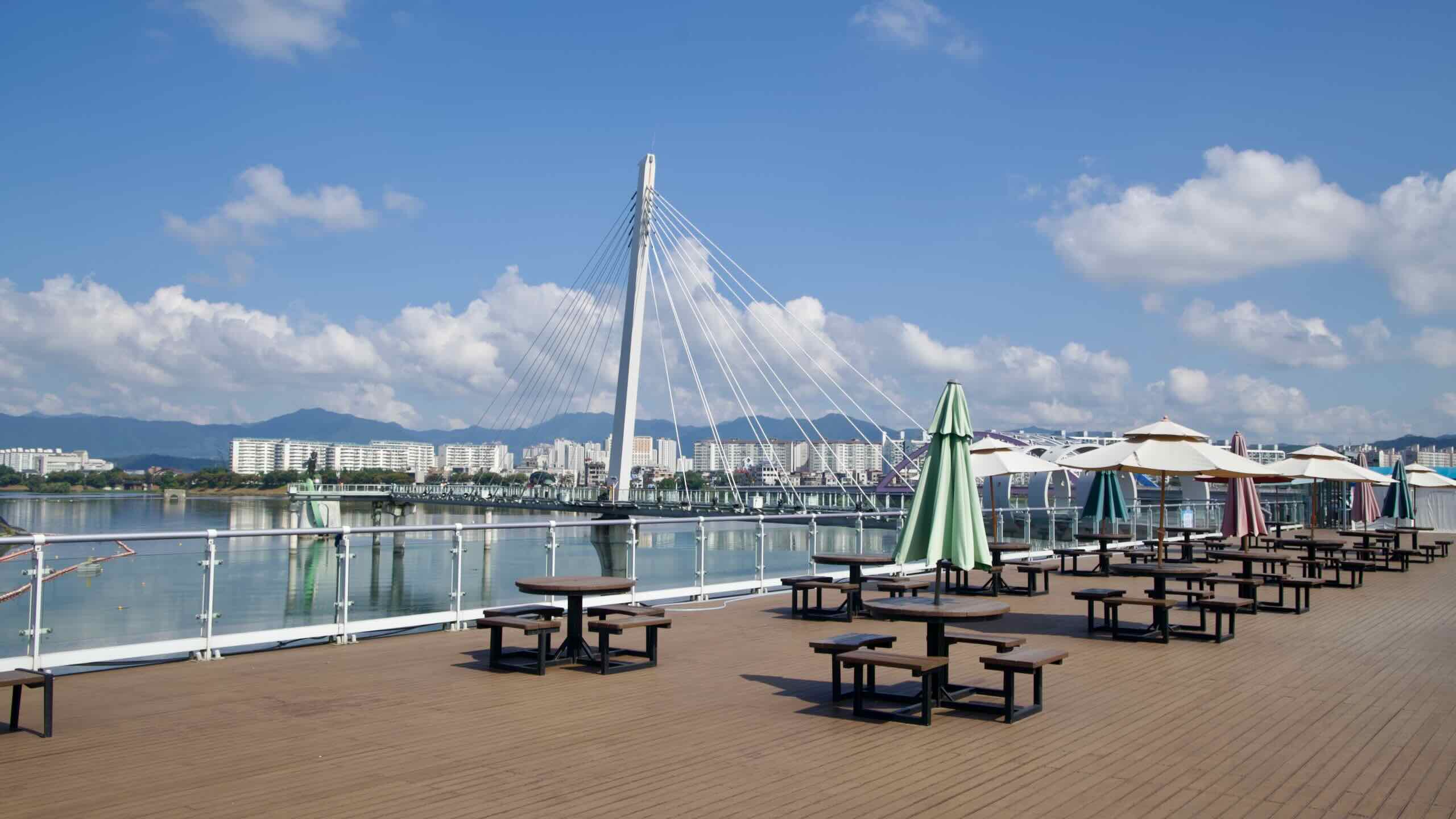
Soyang River Skywalk (소양강스카이워크; map) is a glass-floored observatory bridge that extends out over Uiam Lake on the Soyang River. Opened in 2016, it stretches about 174 meters from shore, with roughly 150 meters made from layered tempered glass—so you can see straight down to the water and feel like you’re walking on the river.
A single white pylon and suspension cables frame the walkway, and at the far end there’s a circular plaza and viewing platform looking back toward the city, the Soyang River corridor, and low hills on the horizon. At night, the whole structure glows with LED lighting, and occasional fountain shows add to the effect. The reflections in the glass and on the lake turn it into a kind of floating light tunnel.
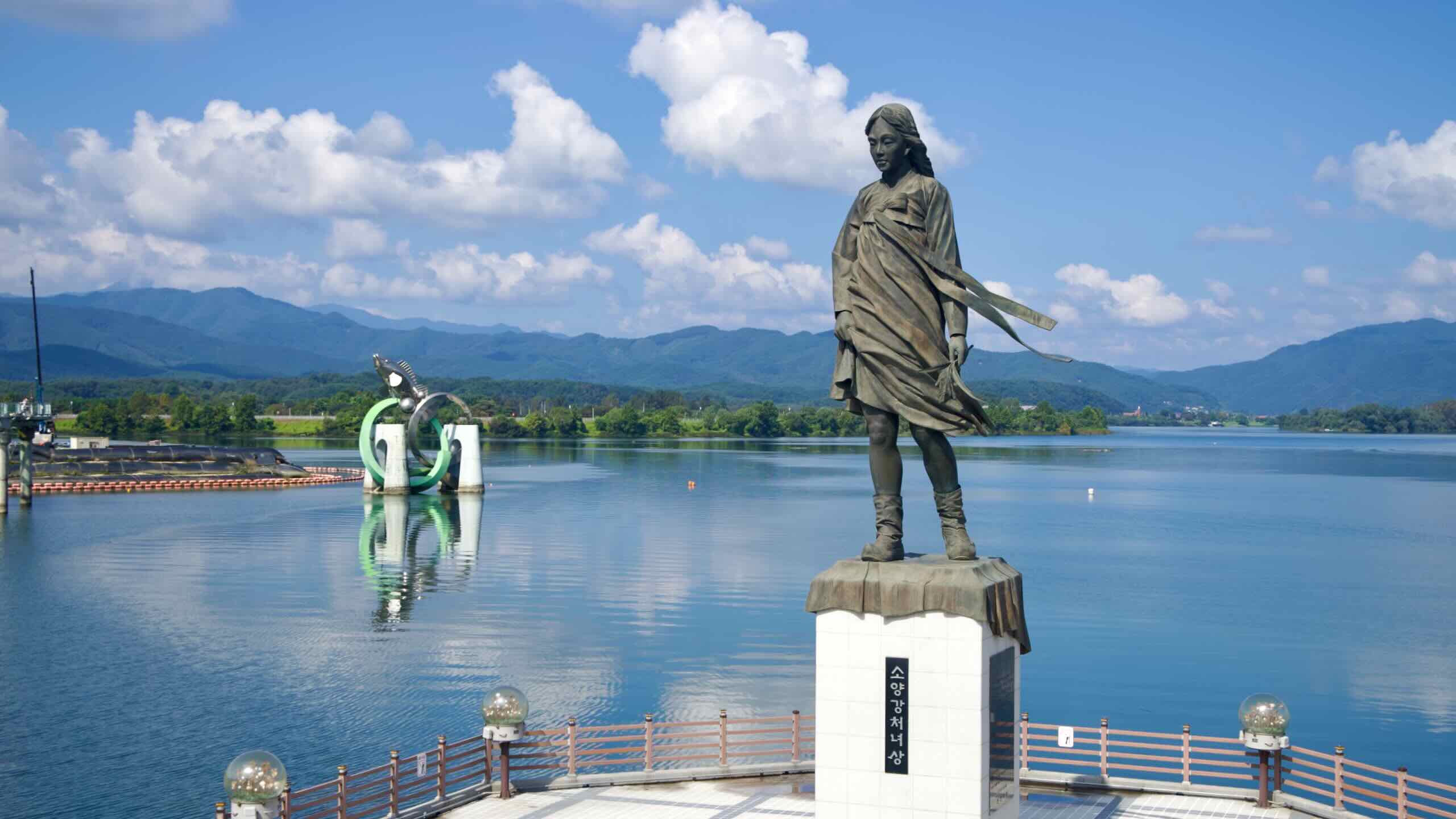
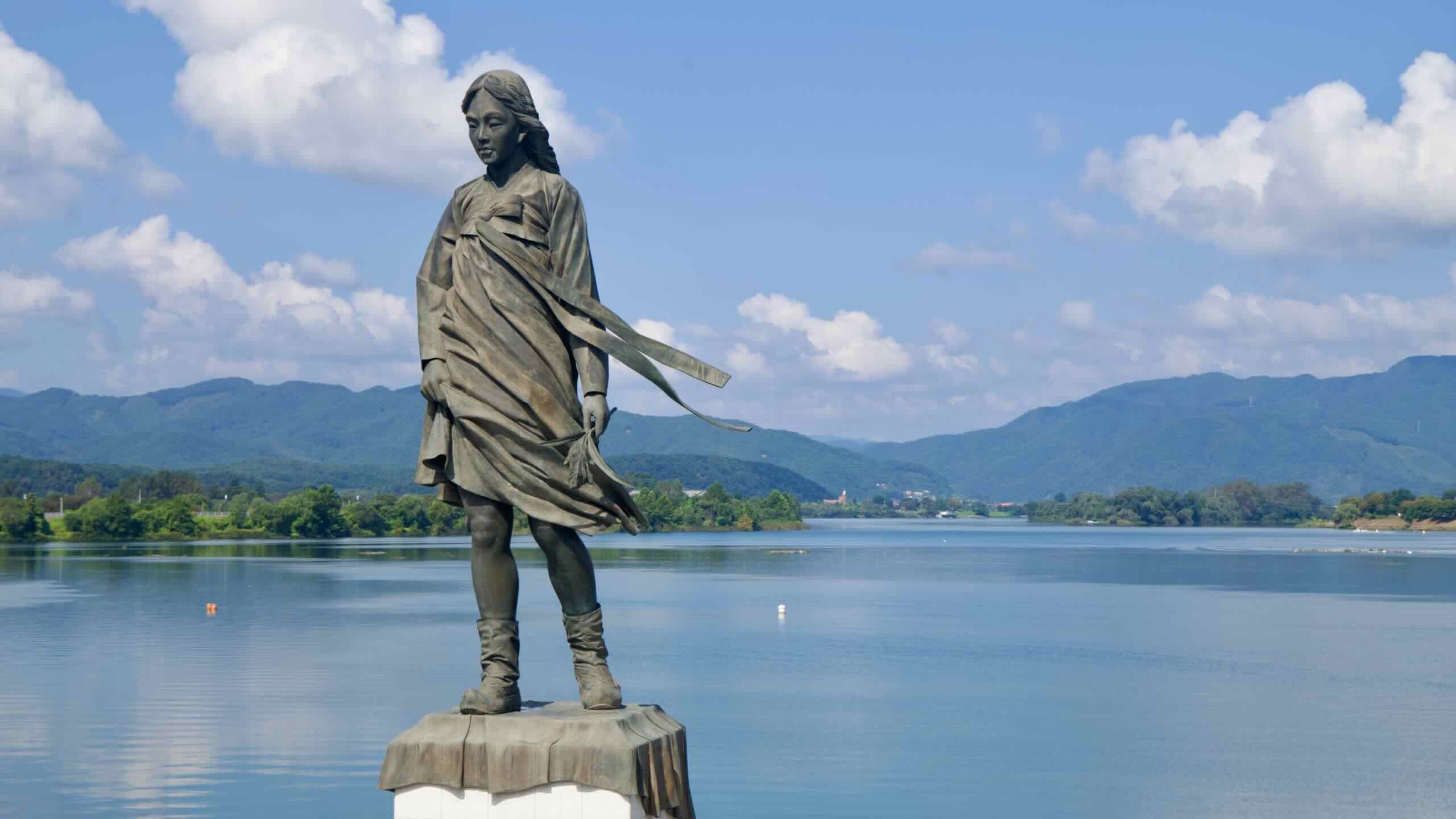
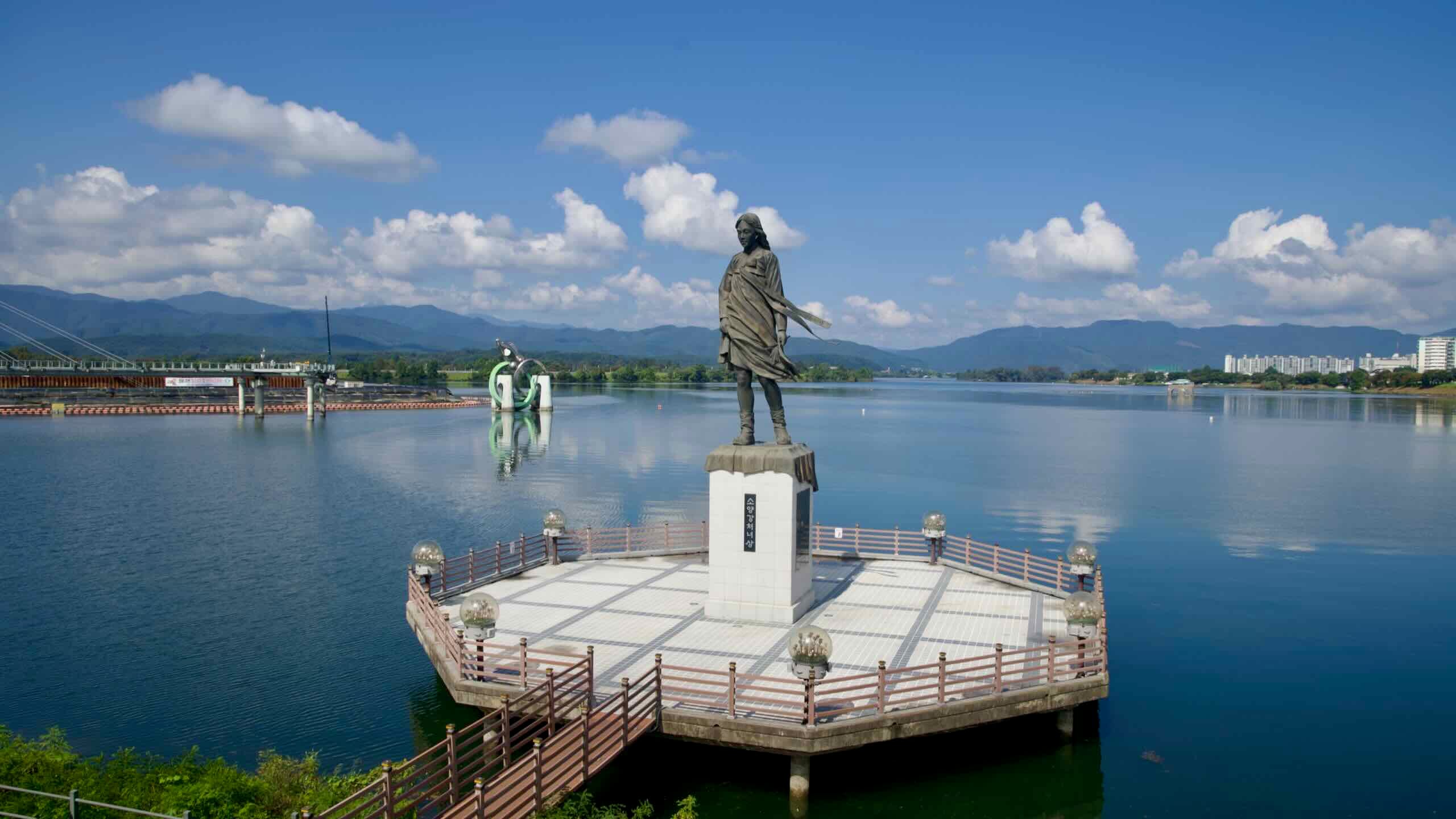
Just a few meters downhill from the skywalk sits another visual staple of Chuncheon City: The Lady of the Soyang River (소양강처녀상; map), also called the Soyanggang Maiden Statue. This 12-meter monument features a 7-meter bronze figure of a young woman holding her skirt and a reed as wind from the river whips at her clothes.
It was erected in 2005 to commemorate the hugely popular trot song “Soyanggang Cheonyeo” (“Soyang River Maiden”; 소양강 처녀), a Korean trot composed in 1969. The lyrics describe a young woman waiting by the Soyang River—sunset over the water, reeds, and the ache of longing.
The song became a national favorite, reemerging at #1 on Korean karaoke popularity rankings in 1992 and later being repurposed in pop music, including WINNER’s 2018 track “Fiancé.” You can also find the original song’s lyrics written on the base of the statue.
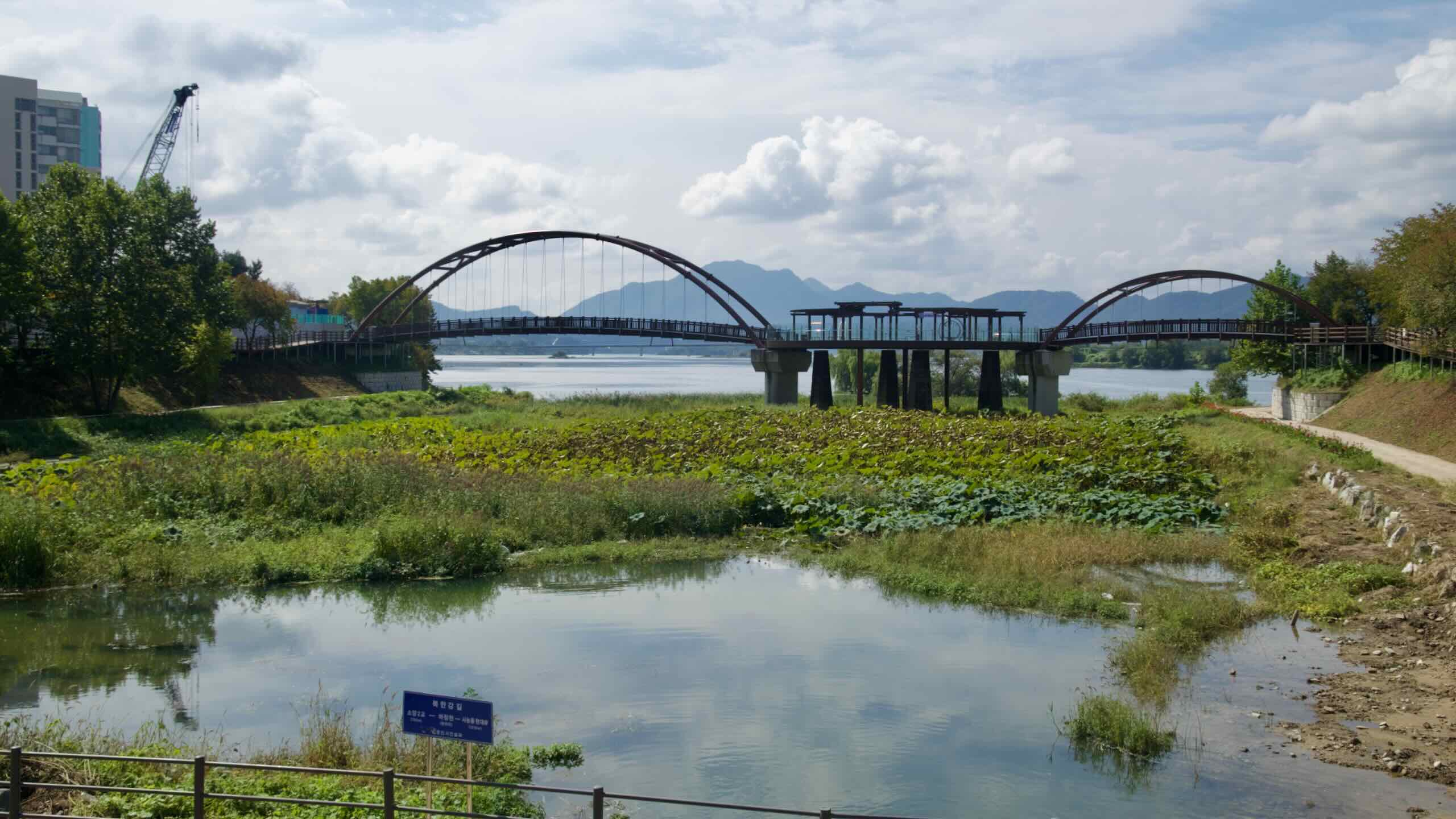
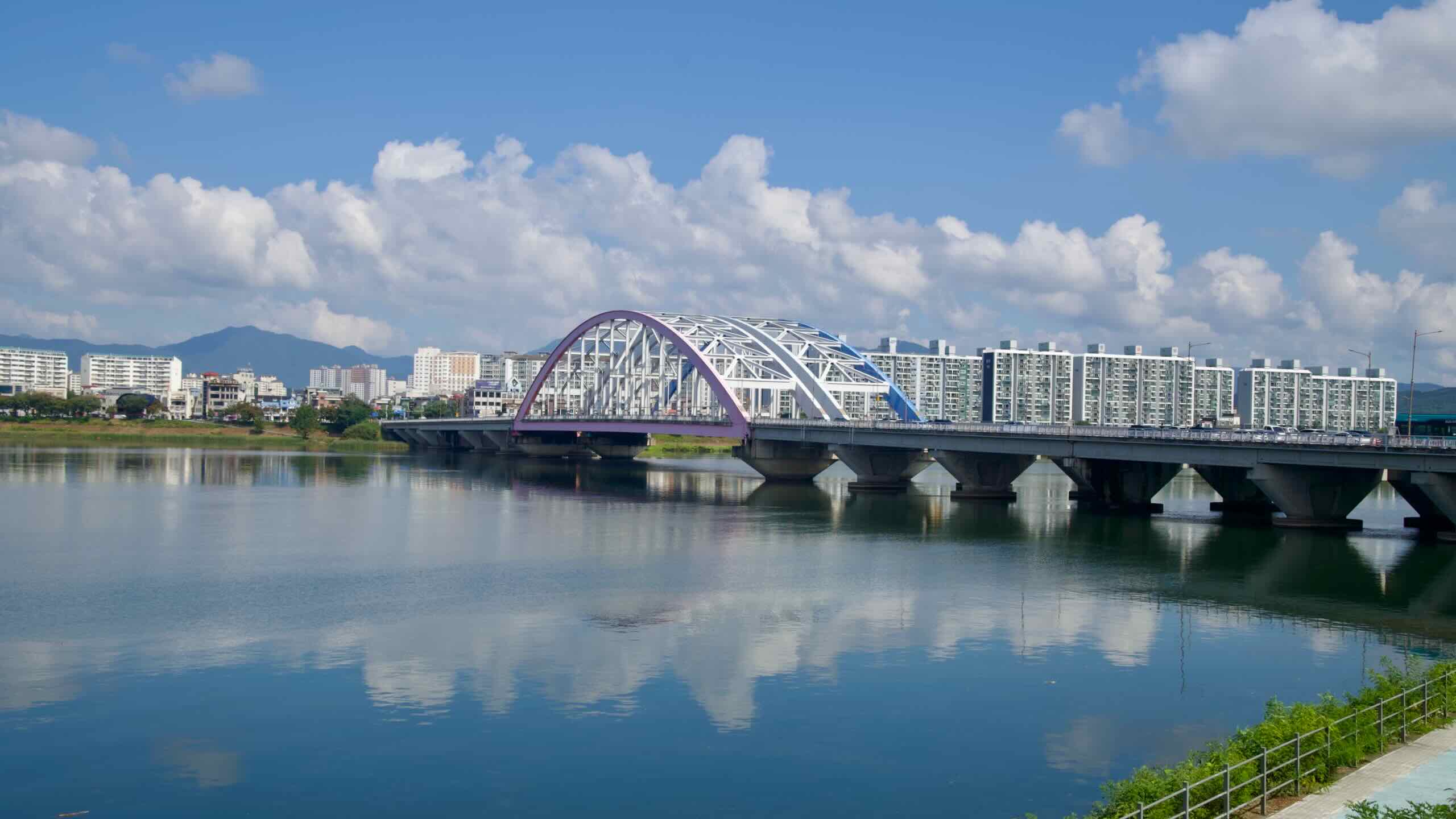
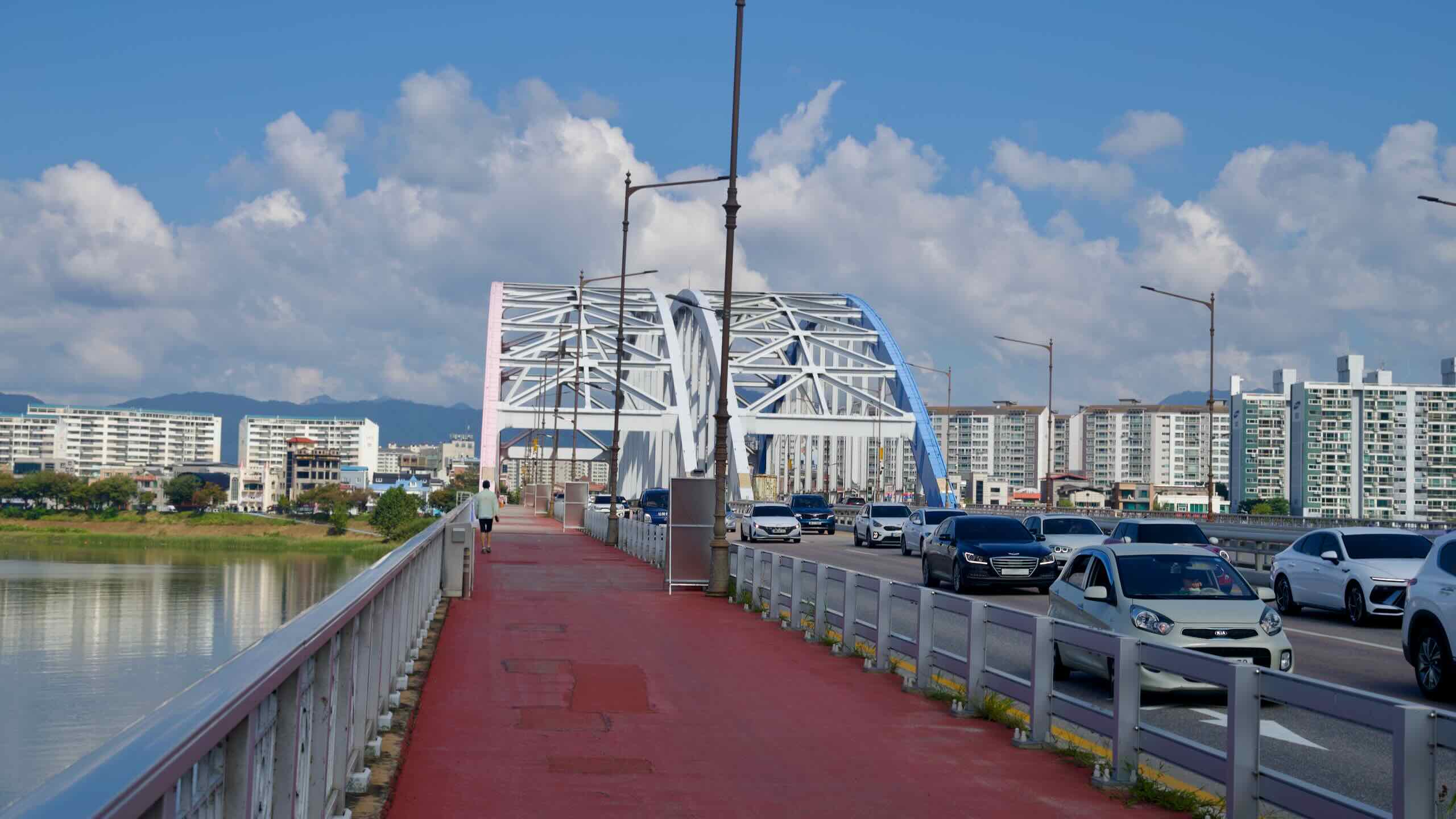
Just beyond the Soyang River Skywalk and the Lady of the Soyang River statue, meet the arching trusses of Soyang 2 Bridge (소양2교; map). Cross it north, away from the heart of downtown Chuncheon.
As you make your way across, look out over the convergence of the North Han and Soyang Rivers. In the middle of the expansive water, spot Sangjung Island (상중도; Sangjungdo; map). Once part of Jungdo (중도)—a Lake Uiam island later split in two after the Uiam Dam was completed in the late 1960s—Sangjungdo is the northeastern half of that former island.
Today, the island is mostly uninhabited, with pristine wetlands that host dozens of protected wildlife species.
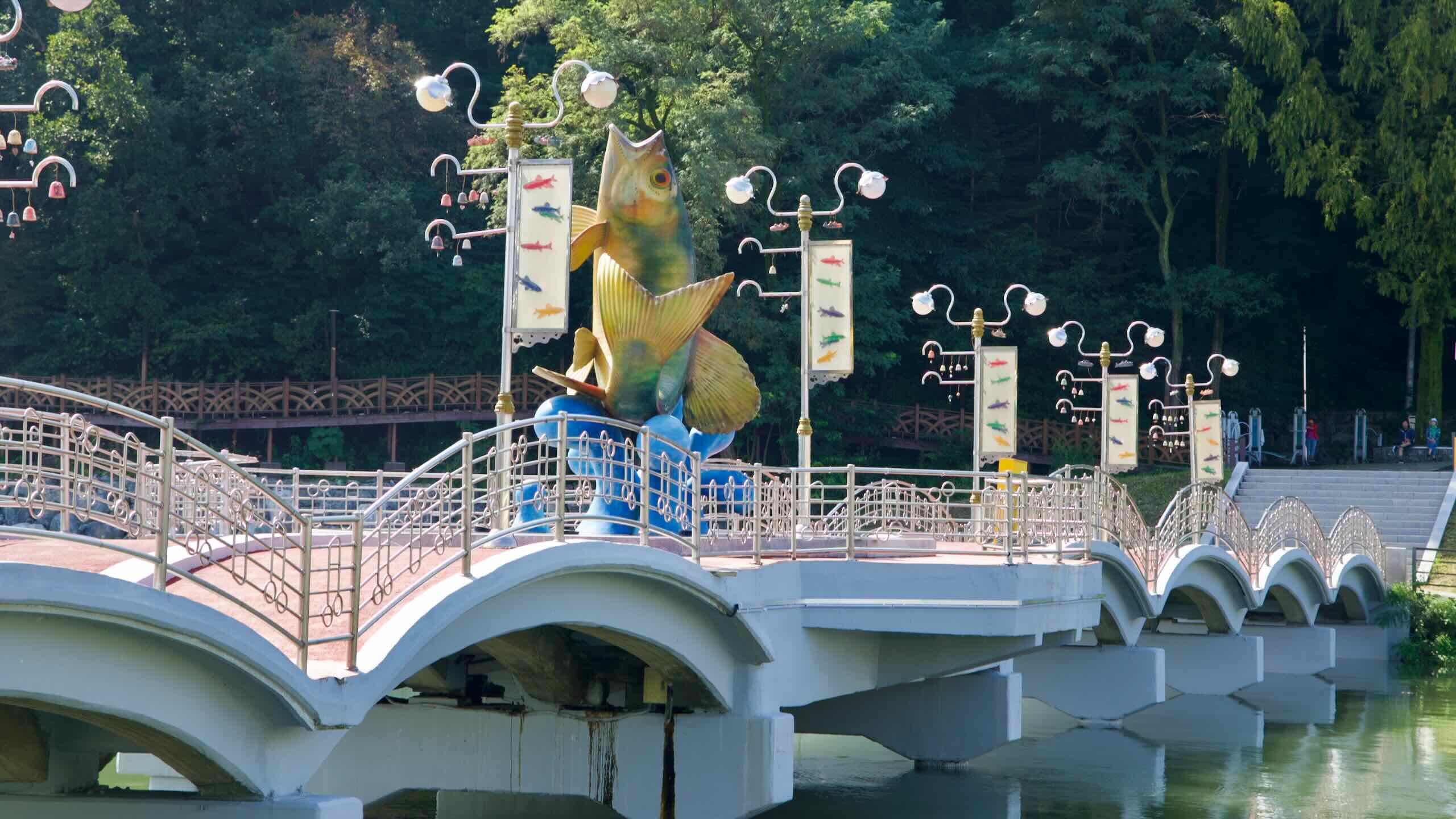
Jump off Soyang 2 Bridge and veer left onto a riverside bike path (road view). Wind your way up the North Han River’s banks, hopping around a small reservoir.
On your left, pass Yuklim Land (육림랜드; map), a small, local theme park, then follow the bike path signs onto the nearby riverside road.
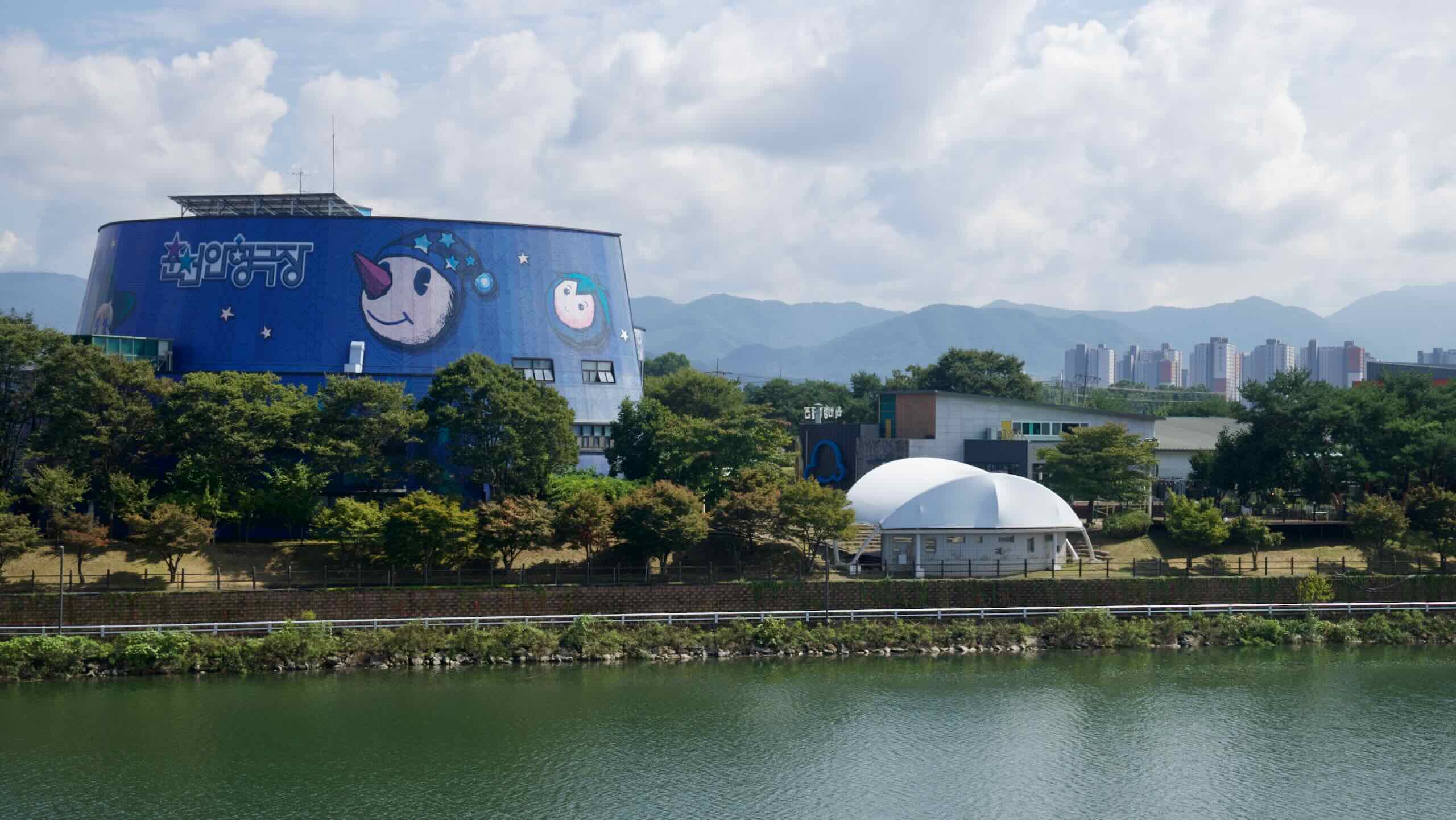
The theater grew out of the Chuncheon Puppet Festival (춘천인형극제). Launched in 1989, the festival helped establish Chuncheon as Korea’s puppetry hub and is now the largest puppet festival in Asia.
Each year in late spring, international and Korean troupes fill Chuncheon with a week of shows—everything from tiny hand puppets to large outdoor figures—with performances staged at the Chuncheon Puppet Theater on Uiam Lake and at venues across the city.
During the festival, you’ll see indoor theater pieces, street performances, parades, and hands-on workshops, plus side events at the Chuncheon Puppet Museum, which keeps a year-round collection of Korean, European, and Asian puppets. In recent years, Chuncheon has also hosted the UNIMA World Puppet Festival.
The festival led to the creation of the Chuncheon Puppet Theater in 2001 and the Chuncheon Puppet Museum (춘천인형극박물관; map) in 2004. Both are open 10 AM to 6 PM (closed Mondays and holidays) and offer several notable features:
The theater offers regular performances, a 497-seat main hall, an outdoor performance hall, and additional tent-style stages used during festival periods.
The museum focuses on puppetry history and stage culture, with displays that include Korean traditional puppetry (like
Now cross westward over Sinmae Bridge (신매대교; map), passing over the people-less but explorable Hedgehog Island (고슴도치섬; map).
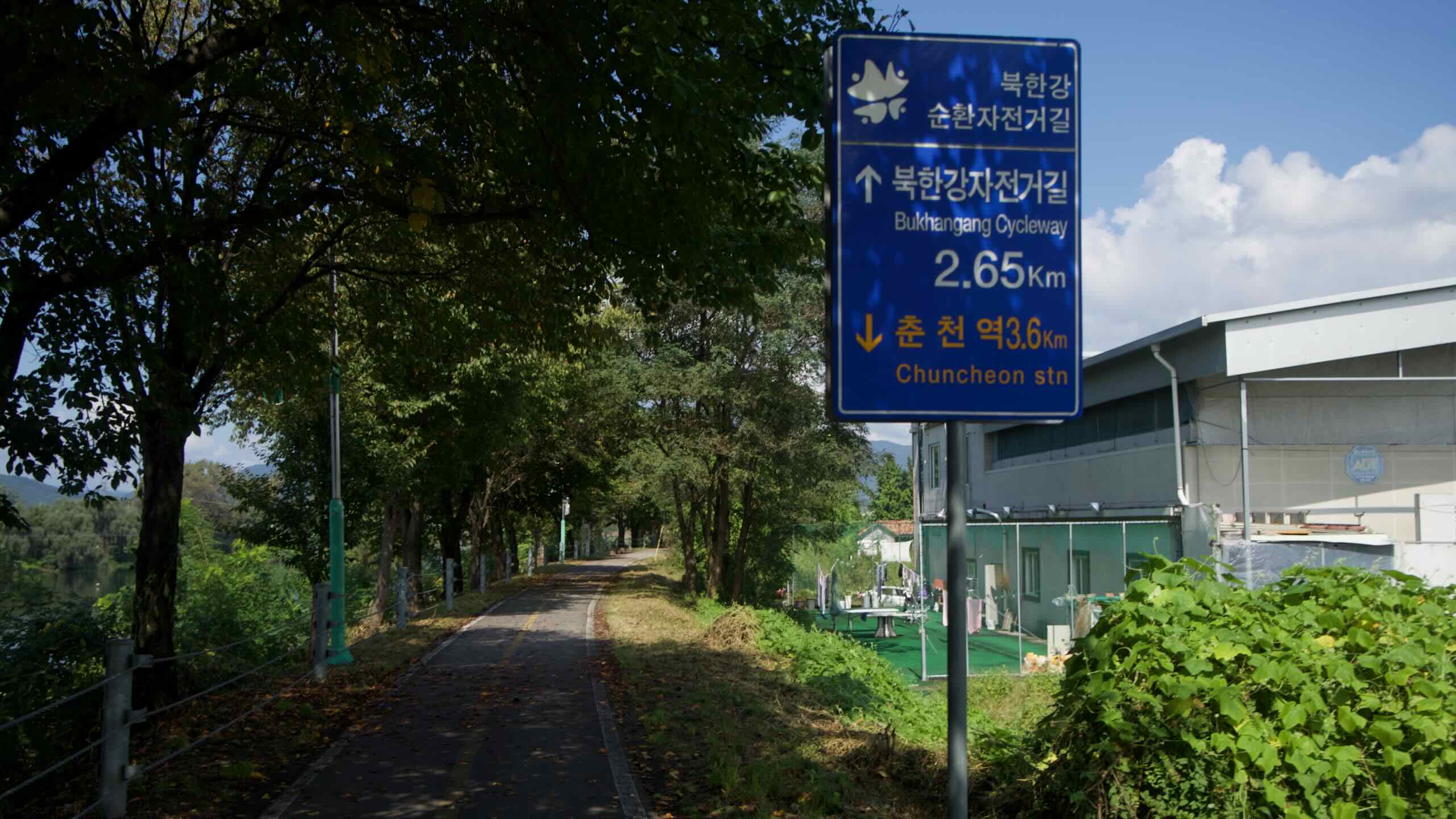
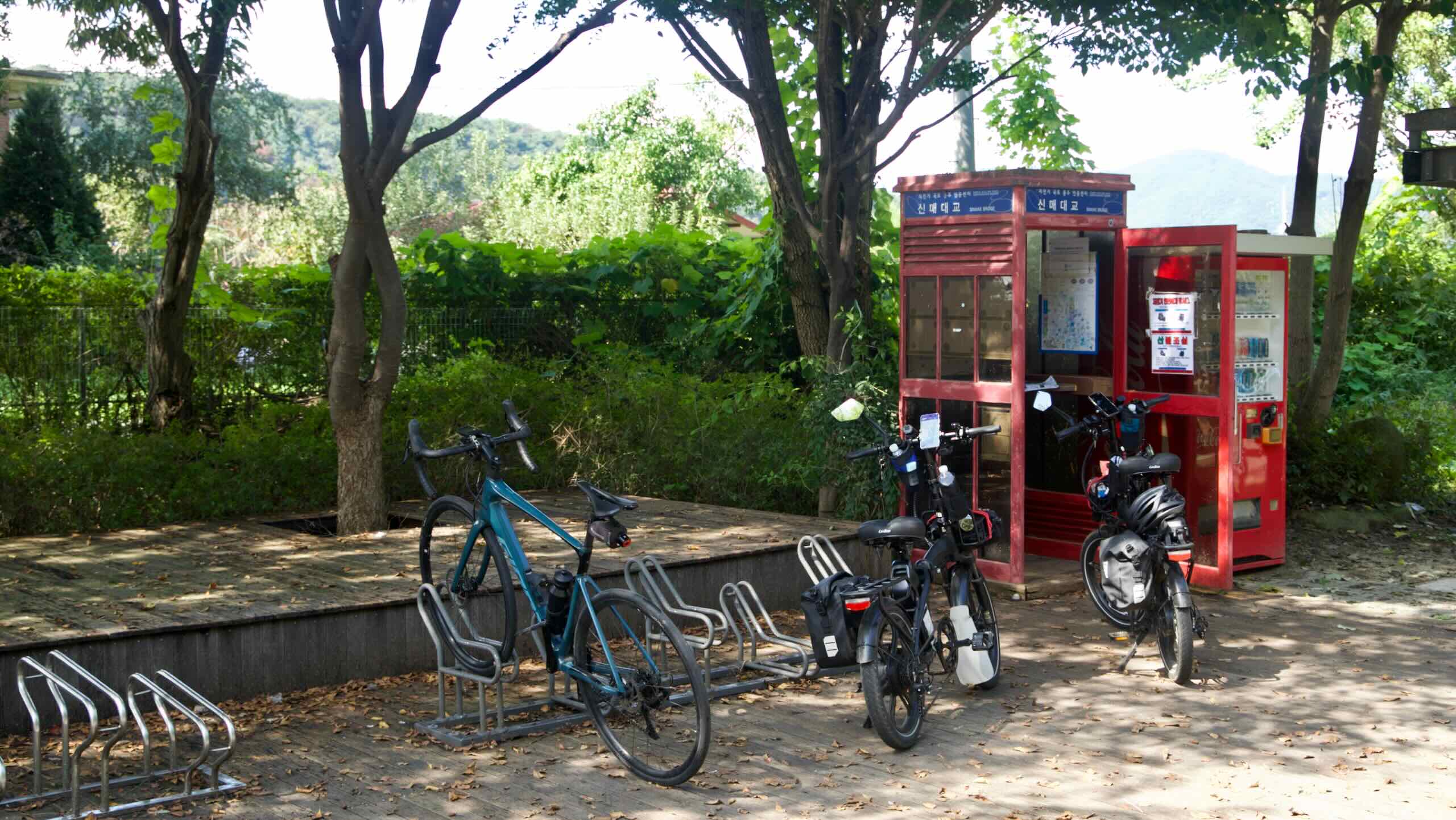
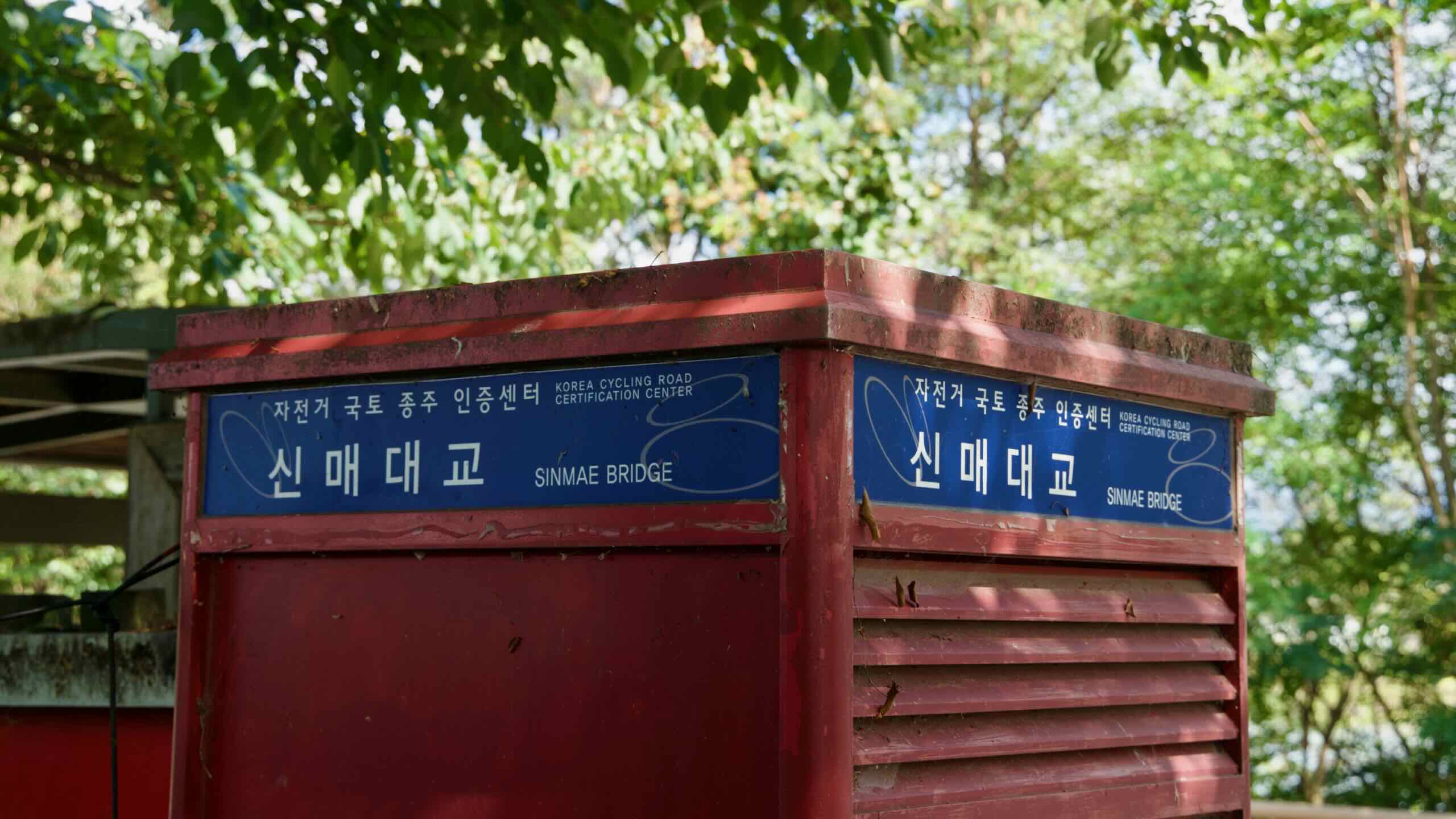
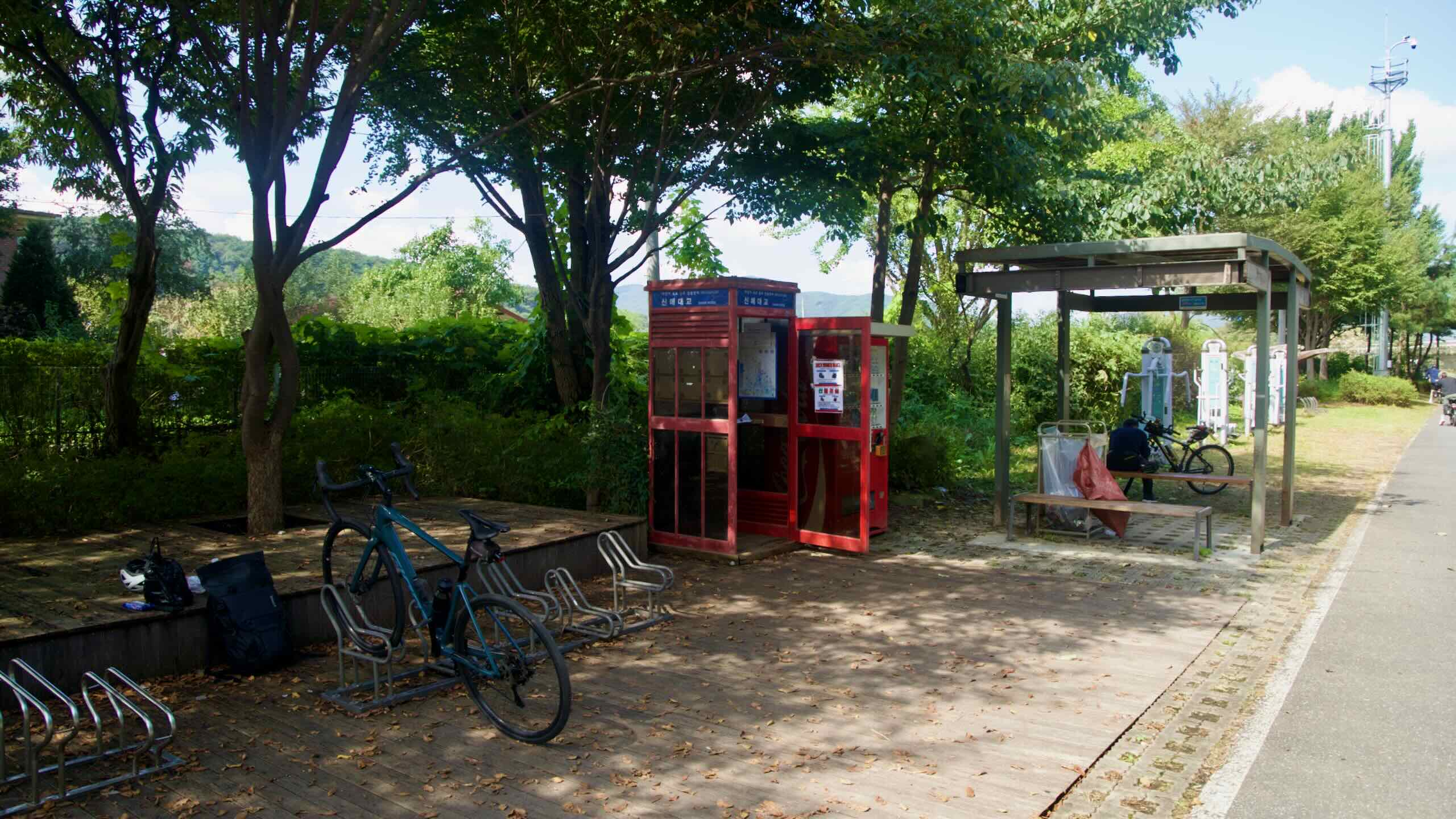
Land on the west bank of the North Han River and follow the blue cycling signs looping down to a riverside path. About a hundred meters later, you’ll come upon a red stamp booth. This is the Sinmae Bridge Certification Center (신매대교 인증센터; map) and, though it may not feel like it, the official start point of the Bukhangang Bike Path.